

Canal Restaurant
A-nrd’s Canal Restaurant in London harmoniously blends raw industrial materials with handcrafted elements, creating an inviting, lakeside dining experience that reflects its historical surroundings and encourages social interaction.
A-nrd has completed the design of Canal, a new waterside restaurant located within Mason & Fifth’s Westbourne Park development. Housed in a newly constructed building on the site of the former London Taxi Drivers’ Association headquarters and overlooking the Grand Union Canal, the project takes cues from the area’s industrial past and its waterside setting. A palette of raw finishes from exposed concrete to visible conduits forms the backdrop to A-nrd’s expressive, handcrafted interior.
The 280 sqm restaurant operated by HAM Restaurants, the team behind Crispin and Bistro Freddie, sits at the heart of a wider mixed-use development that includes accommodation, wellness spaces, cultural venues and creative workspace. Known for their immersive, highly crafted concepts, A-nrd led the interior concept and design direction in close collaboration with Dominic Hamdy of HAM, working alongside Mason & Fifth, Interior Address and others to shape the layout, atmosphere, and bespoke elements throughout. Designed to feel timeless, tactile and quietly social, Canal is a space where crafted elements and raw finishes coexist. Shifting seamlessly from day to night – from lunch through to evening drinks and late dinners – the space moves fluidly. The result is a spatially generous yet atmospheric interior, expressive in its materiality and precise in its restraint.
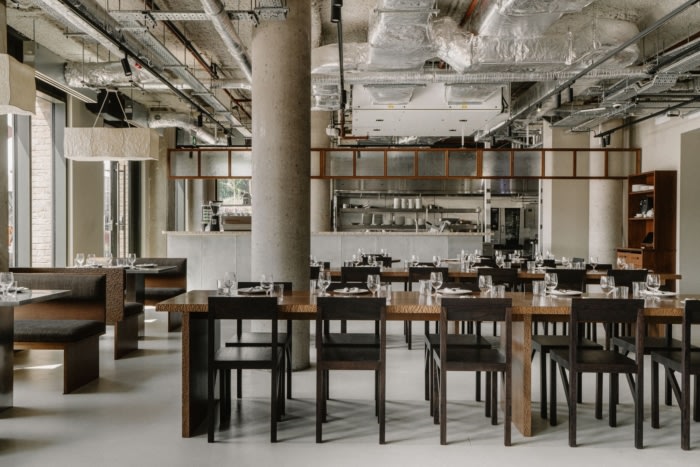
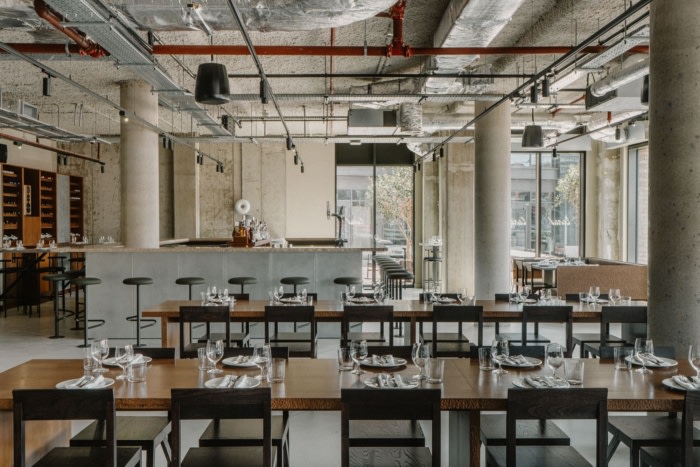
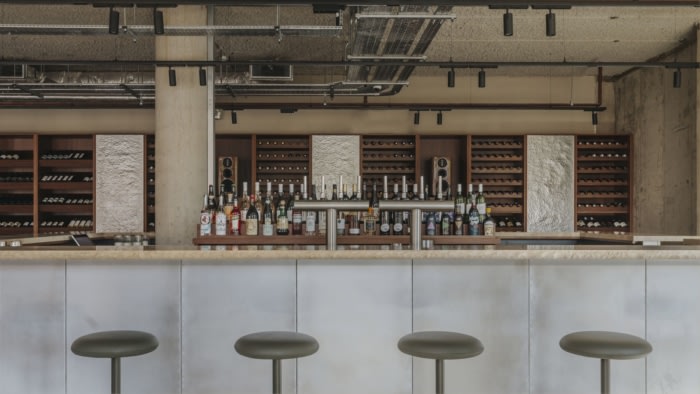
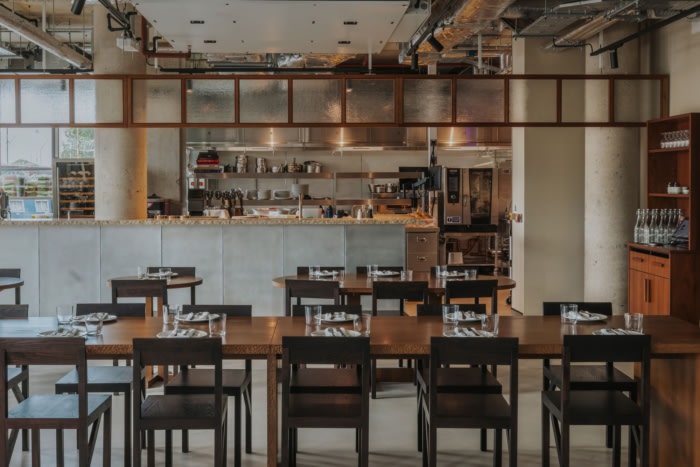
From the canal-side entrance, guests arrive at a calm, open, tonally rich 80-cover dining room defined by a layered palette of textures and natural materials. Central to the space is a sculptural island bar – a low-slung, grounding presence clad in hand-folded zinc panels with a live-edge stone top in pale cream. Its soft, angular geometry and gentle luminous finish establish the project’s key themes: tactility, contrast and material restraint. Designed as a social anchor and positioned deliberately at the heart of the micro cement floor space, the bar encourages guests to gather, pause, and linger.
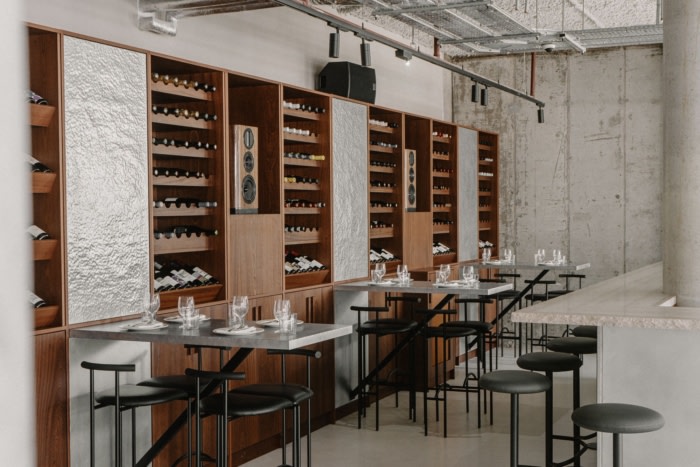
Behind the bar, a wall of bespoke wine shelving spans the full width of the rear elevation, constructed in warm Sapele wood timber with inset panels of hammered zinc that echo the central bar and kitchen canopy. The hammered zinc, with its gently dappled finish, nods to the water’s surface outside, capturing and refracting light to subtly bring the canal’s movement indoors. This shelving system introduces a highly tactile contrast to the otherwise open dining room with its textured metal surface catching ambient light throughout the day. Below, three slim, zinc-topped high tables with black steel legs and bar stools provide a quieter, elevated seating zone framed by the layered textures of timber and metal.
Moving into the dining area, guests encounter a sequence of spaces arranged around the bar and open kitchen. Opposite the windows, a row of bespoke banquettes lines the concrete wall – originally designed by A-nrd and realised in collaboration with London-based maker Jason Posnot of Or This, with development input from Interior Address. The booths are built from solid Beech wood finished with hand-chiselled detailing that gives them a sculptural, artisanal quality. Upholstered in rich brown textured fabric, they echo the warm, subdued palette that runs throughout the interior. Bespoke dining tables, also designed by A-nrd and crafted by Posnot, continue the chiselled timber language whilst a mix of zinc-clad tables catch the shifting light, mirroring the finish of the central bar.
A run of long, communal tables define the centre of the room, giving the dining area a sense of scale and sociability. Made in the same chisel-textured timber as the booths, the tables sit beneath the exposed ceiling grid and bring warmth and weight to the open floorplate.
The open kitchen, visible from nearly every seat, picks up the same material language established at the bar and is softly delineated and framed by a suspended glazed canopy crafted in timber and hammered glass which subtly refracts the light and the kitchen activity behind and introduces a semi-translucent boundary between guest and kitchen, allowing the theatre of the preparation and experience to remain present without dominating the space. The kitchen’s base cabinetry and surfaces mirror the zinc and stone palette of the bar, tying the two focal points together and reinforcing the space’s visual rhythm.
Layered lighting plays a central role in establishing mood and helps shape the changing pace of the day. Track-mounted spots work with the exposed ceiling infrastructure to create flexible zones of downlighting. Handmade sculptural washi-style pendant lights custom-designed by Findere hang in soft rectangular volumes above the window-side seating, introducing a gentle irregularity to the ceiling. Their crumpled surfaces catch light and shadow like fabric in motion, offsetting the exposed ductwork and conduits above and allowing the natural patina of the space’s finishes – from woodgrain to brushed metal – to take on a warmer tone. Donut shaped wall lights by Foscarini, positioned on the raw concrete walls, create soft illumination.
The furniture palette, procurement by Interior Address, is minimal but elevated. Seating throughout includes Frama’s wood-framed dining chairs and Massproductions’ bar stools, selected for their clean silhouettes and character. The choice of materials and detailing speaks to A-nrd’s broader design language: hand-finished rather than high-gloss; restrained rather than embellished. The emphasis is on honest construction and material longevity, nothing is decorative for its own sake, yet everything feels deliberate.
Exposed columns, raw concrete slab walls and visible conduits lend an intentional industrial rawness that grounds the space in its setting. In line with the studio’s sustainable approach and opposition to over building, these robust elements form a deliberate counterpoint to the carefully finished joinery and expressive surfaces, allowing moments of roughness and refinement to coexist without competition. Natural light floods in from the canal side, while the constant, gentle movement of the water outside contributes to the restaurant’s slow, meditative energy.
Large-format glazing along the canal-facing façade opens onto an outdoor 30-over terrace, where tables line the water’s edge beneath soft landscaping and sculptural pieces. Here, the tonal and material palette of the interior continues outside with black steel furniture and timber-edged planters establishing continuity between the calm interior and the urban energy beyond.
From morning light filtering in through the canal-side glazing, to the reflections cast by hammered glass in the evening, Canal shifts with the time of day. Its acoustics are soft, its transitions seamless. There are no hard thresholds. From entrance to kitchen pass, Canal is a place shaped by mood, material and connection. Every decision – from the texture of the wood to the placement of the lighting – supports the experience without overpowering it creating a space where guests of the hotel, locals and visitors feel equally at home.
Design: A-nrd
Contractor: Du Boulay
Photography: Cody Bamford, Adam Firman







Now editing content for LinkedIn.