
Hotel Indigo Nalati
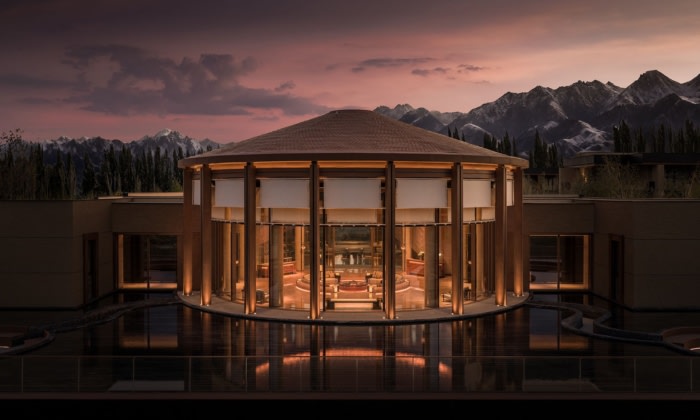
At Hotel Indigo Nalati in Nalati Town, CCD harmoniously intertwines nomadic cultural narratives with contemporary design, creating an immersive retreat that celebrates the shifting beauty of the Tianshan Mountains and the expansive steppes.
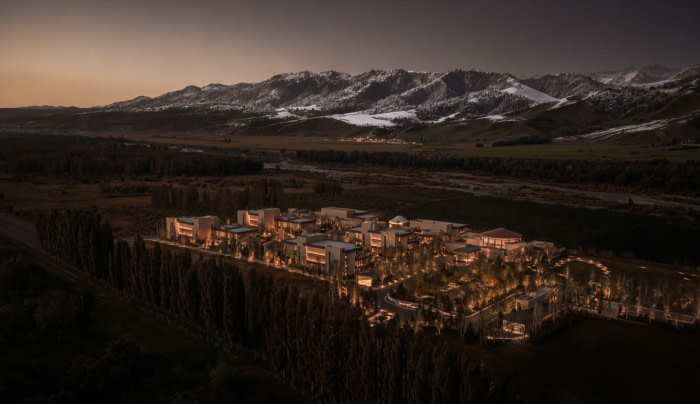
Situated at the convergence of the Duku Highway and the Ili “Figure-8” Scenic Loop, Hotel Indigo Nalati occupies a prime location in the heart of Nalati Town, part of the Ili Kazakh Autonomous Prefecture, and is embraced by vast steppes and the Tianshan Mountains. Anchored in the design theme “A Grand Journey Along the Duku Highway, Through the Seasons of Nalati,” CCD weaves mausym—meaning “season” in Kazakh—into the spatial narrative, capturing the shifting rhythms of Nalati’s four seasons and the everyday rituals of nomadic life.
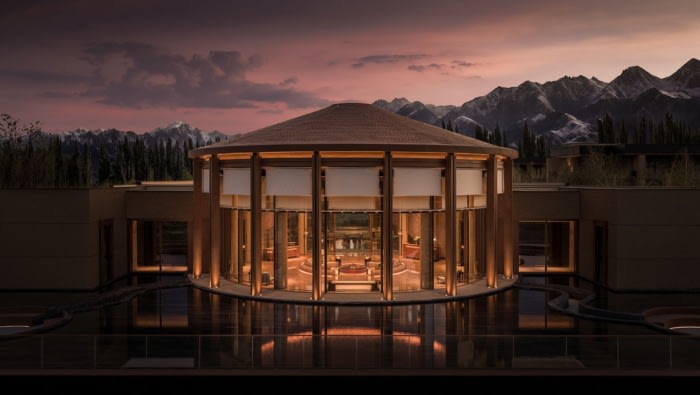
The overall design draws on the cultural lineage of steppe nomadic life. Traditional elements of yurts and winter settlements are subtly woven into the design language, quietly narrating the region’s distinctive cultural identity.
With its building volumes scattered across the open wilds, the hotel complex appears like a small forest when viewed from afar. Rooted in steppe culture, it adopts a dispersed layout, with individual structures linked by winding woodland paths. The surrounding forest landscape is seamlessly integrated into the hotel’s ecological system, creating a hospitality environment in symbiosis with nature.
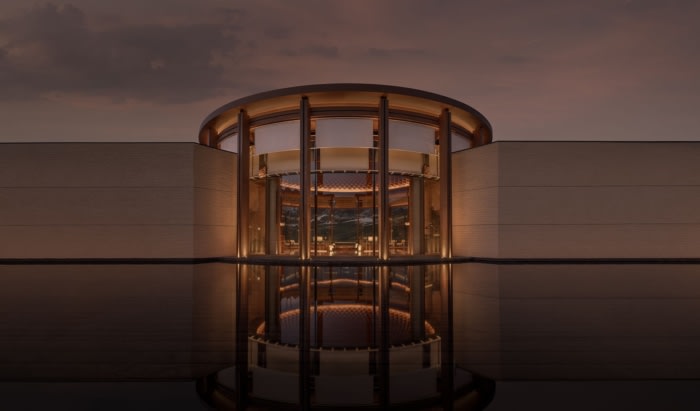
The journey begins in pursuit of light. Inspired by the Nalati sunrise, the hotel’s entrance features a curved canopy that evokes radiating sunbeams. Greeted with a traditional Aul-style welcome, guests are immediately immersed in an atmosphere rich with local culture.
Lobby
The Dome of Light
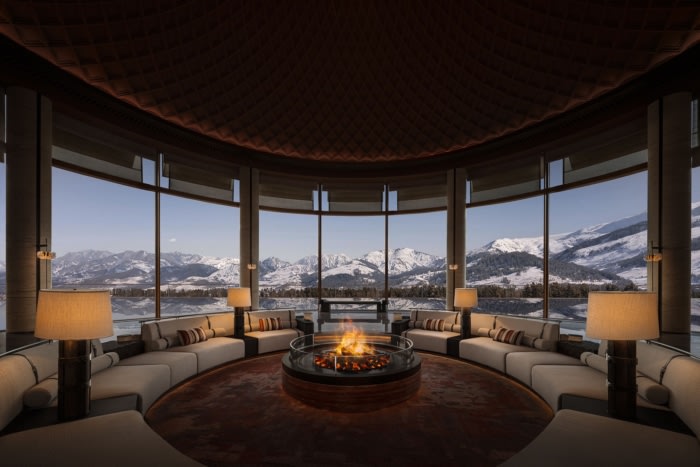
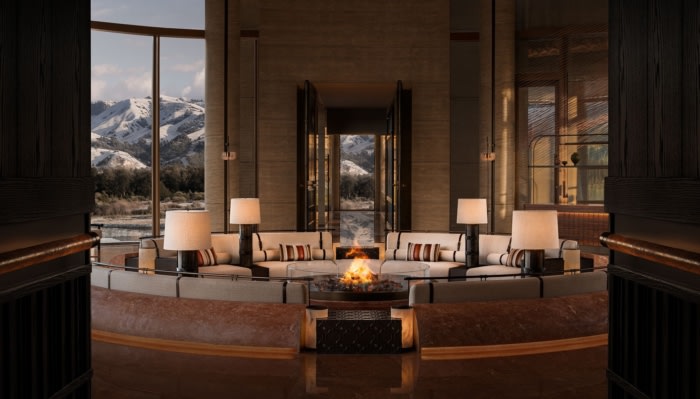
Entering the lobby feels like stepping into an intimate gathering at the heart of the steppe. The soaring dome opens like a yurt, embracing visitors in earth-toned warmth. Red brick walls murmur softly in the shifting light, as though tracing the footprints of migrating herders. Overhead, the dome unveils layered, scale-like patterns—light as feathers, yet evocative of thawing earth. These textures resonate with the rhythm of the evenly spaced columns below, creating an interplay of solidity and lightness, and revealing a serene, understated sense of openness.
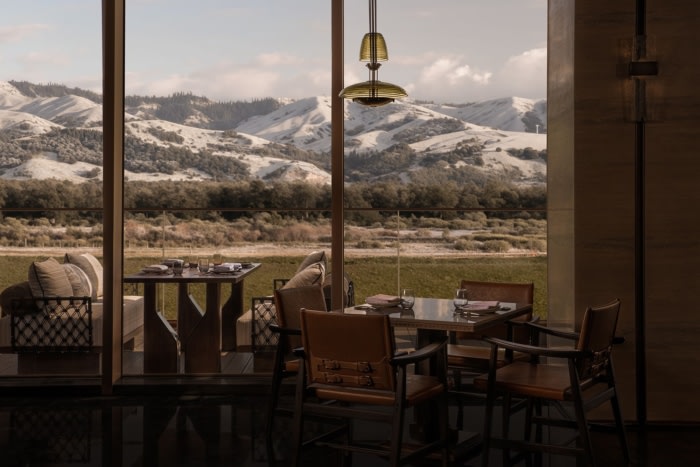
The space exudes a quiet sense of restraint, echoing the vastness and quiet composure of the grasslands. A sweeping curved window frames a boundless view, drawing the distant Nalati Grassland and the majestic Tianshan Mountains into the interior. Light becomes a poetic storyteller, tracing the shifting seasons across a brick-red canvas.
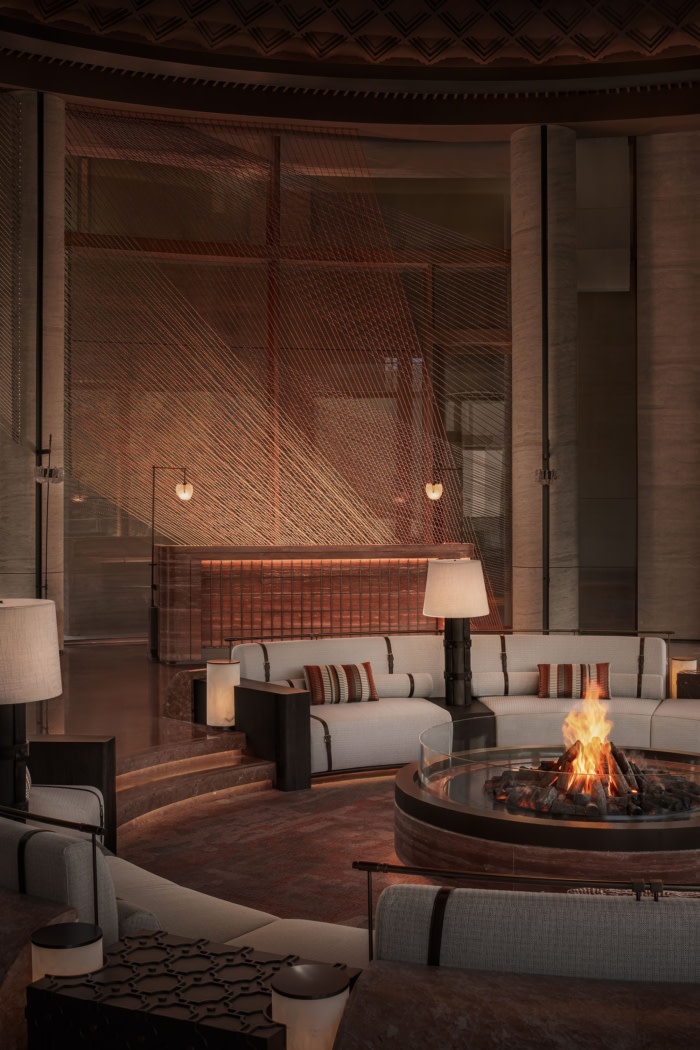
In nomadic culture, the hearth is the heart of the home—a source of warmth, light, nourishment, and shared stories. Here, the traditional fire pit is reimagined as a modern fireplace installation and spatial centerpiece. Seating around it evokes the sense of courtyard gatherings on the grasslands, where nomadic families and friends gather in shared warmth. Whether sitting alone with a book or engaging in a quiet conversation, guests feel a grounded calm in the gentle embrace of the steppe.
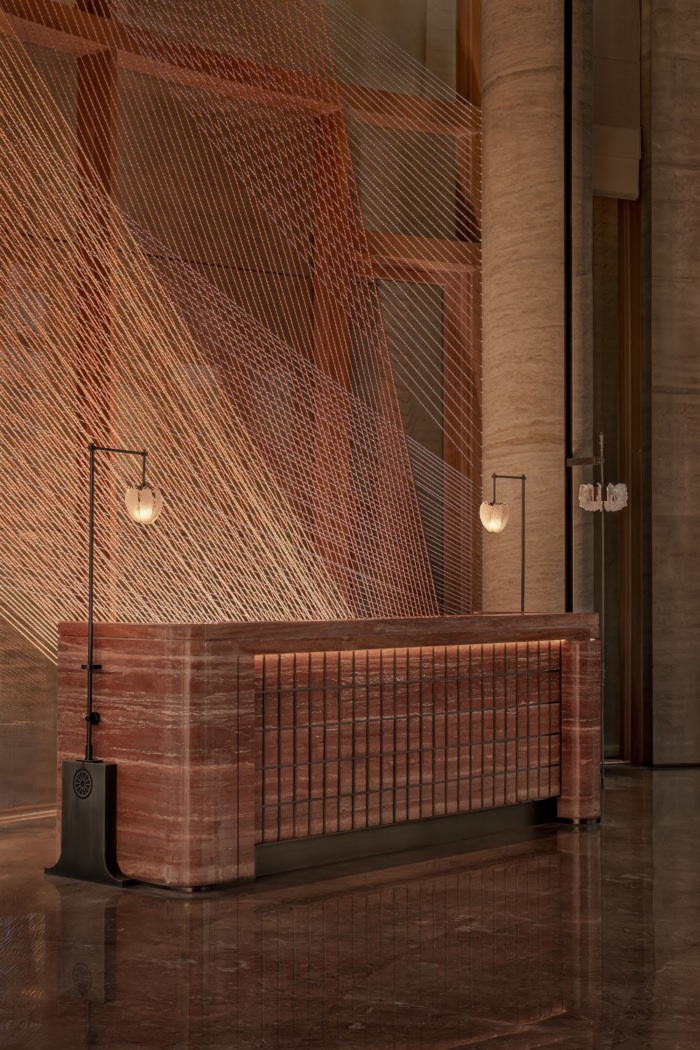
Throughout the space, craftsmanship reveals itself in subtle, thoughtful details. Motifs drawn from local ethnic traditions are woven into the carpets underfoot, while the backdrop behind the reception desk is adorned with artworks crafted through traditional felt-thread techniques. Together, they offer a quiet, wordless narrative of this land—its stories, its heritage, and its enduring spirit.
Restaurant & Bar
A Grassland Feast for the Senses
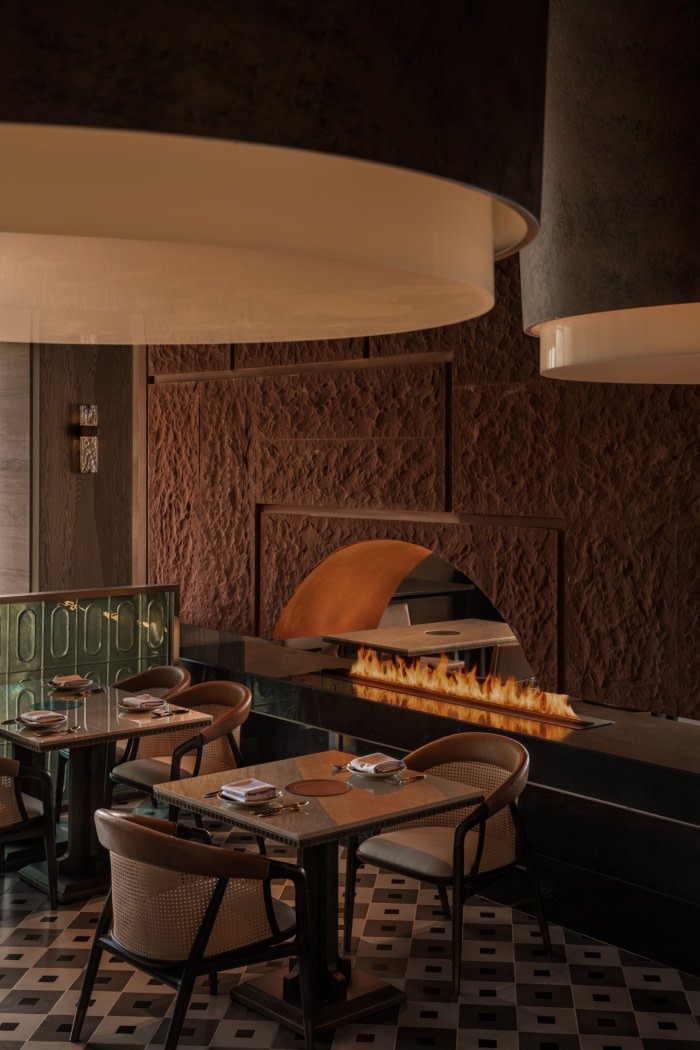
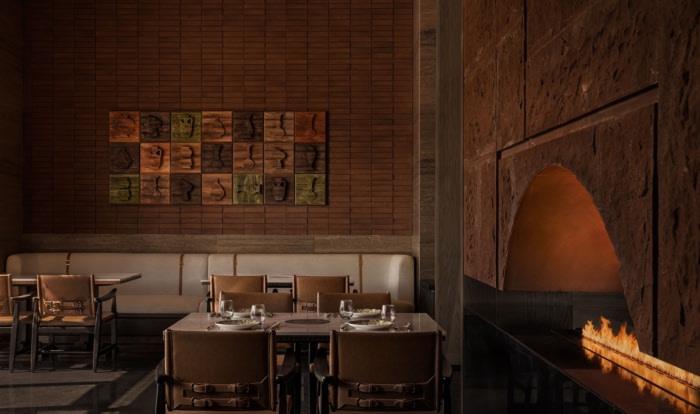
The restaurant, named “SHOW · A Neighborhood Café,” draws on local Kazakh hospitality traditions—Qiaxiu, the ritual of welcome, and Bata, the words of blessing. Its design unfolds a vivid scene of nomadic life: streams meandering across the steppe, horses pausing to drink, and yurts rising where water and grassland meet, all seamlessly woven into the space.
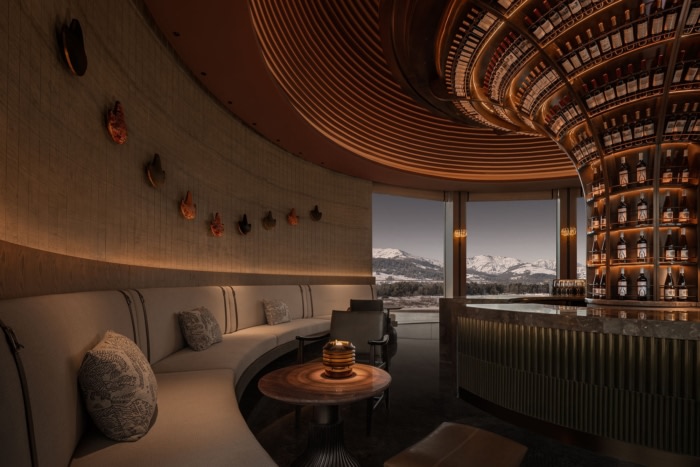
The circular bar evokes the imagery of a solitary tree on the steppe, becoming a symbolic oasis. Inspired by the subtle play of perspective, the design introduces a sense of visual flow and extension, fostering emotional resonance and immersion.
Materiality and color quietly enrich the narrative. Red bricks and washed stone finishes echo the tones of the earth, while warm wood and metal accents introduce a contemporary tactility. In dialogue with fluid curves, these elements shape a cohesive design language and imbue the space with warmth and lasting resonance.
Every design gesture is rooted in the human experience—whether settling into the circular lounge, quietly taking in the view beyond the window, or strolling along the curved paths with a drink in hand. The space is not simply defined; it becomes a journey to wander, to sense, and to find resonance.
Guestrooms
The Resonance of the Yurt
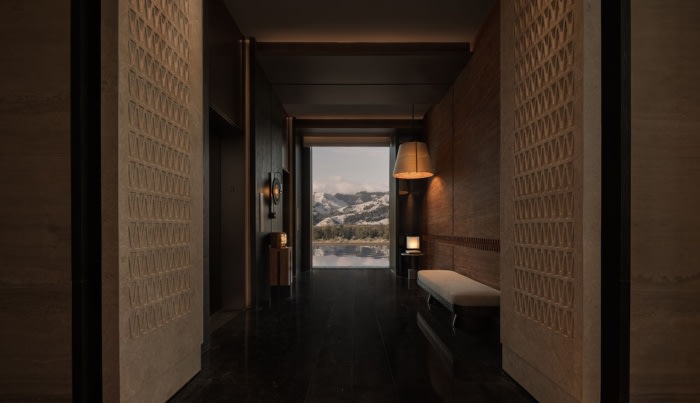
Pushing open the intricately carved double wooden doors, guests are embraced by a gentle warmth. The carvings, with their varying depths, seem to whisper stories of the grasslands, and the skylight above—drawn from the traditional yurt’s way of gathering light—anchors the space. By day, sunlight filters through, casting shifting, poetic patterns across the floor; at night, the starlit sky pours in, lulling guests into a serene sleep.
In the elevator hall, the lighting fixture draws inspiration from Crocus alatavicus—the first flower to pierce through the ice on the Nalati Grassland in early spring. Blooming against frost and snow, it embodies the resilience of life in extreme cold. The design captures this quiet yet powerful moment, weaving botanical form, lighting, and an ecological narrative into a single expressive piece.
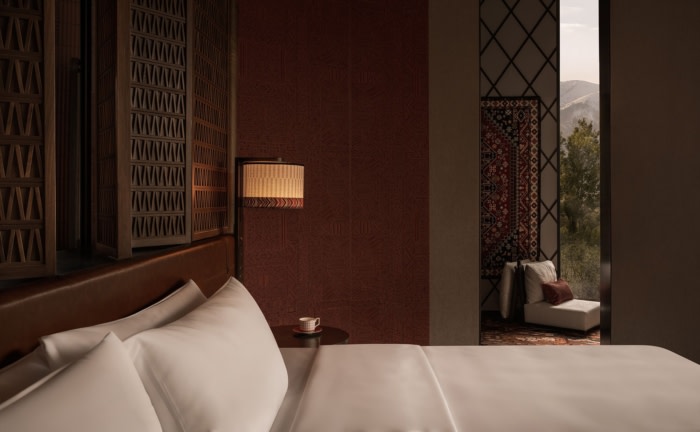
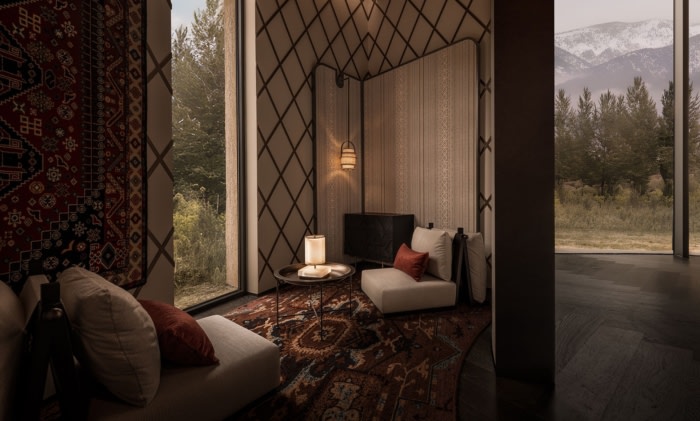
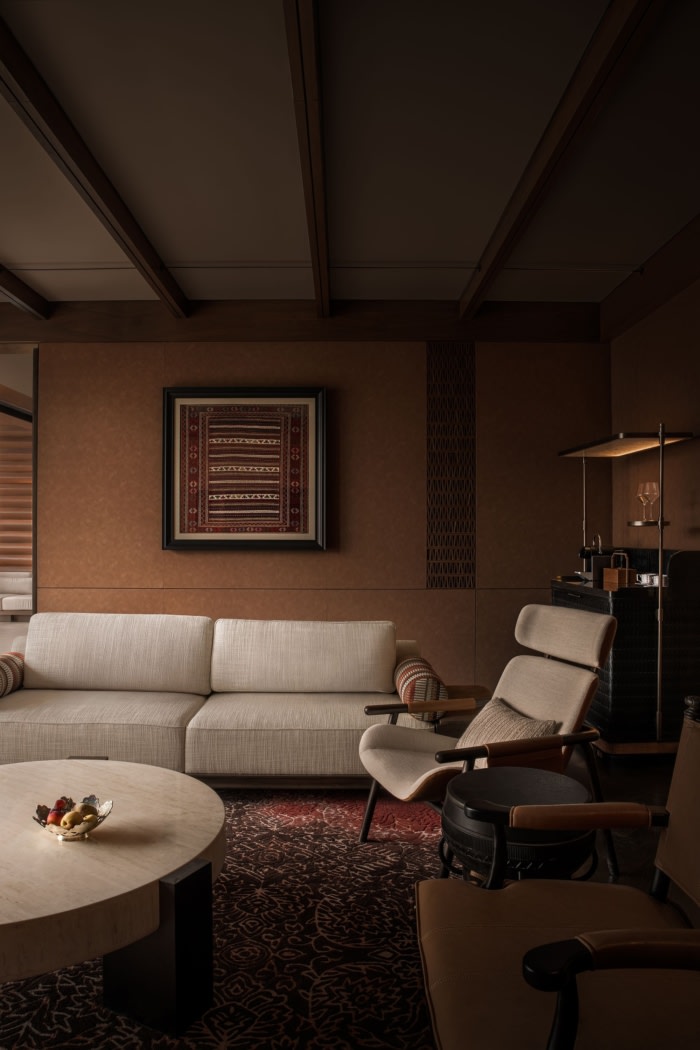
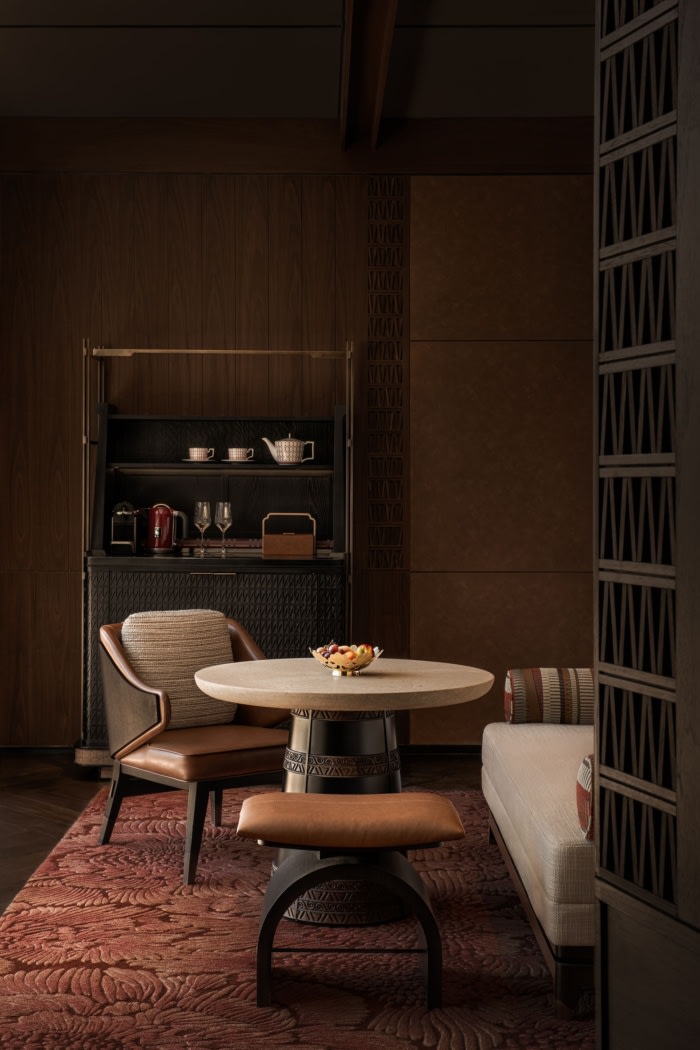
Walls and carpets draw on the tradition of felt craft—a local domestic handicraft that balances utility with artistry. From tapestries and rugs to cushions and traditional caps, its vivid colors and unique patterns reflect generations of skilled craftsmanship, carrying profound cultural sentiment and aesthetic identity. These elements are more than decoration; they carry the enduring imprint of culture.
Partitions and wall features subtly reinterpret the local yurt’s diamond-grid wooden framework—robust yet refined—bringing openness, rhythm, and ease to the space. Finely crafted accents, such as silver-plated horse tack, symbolic nods to naan and the komuz, and artworks inspired by horses and other grassland creatures, together form a warm, homelike sanctuary infused with nomadic spirit.
Falling asleep in the yurt-inspired space offers an experience attuned to nature. The rustle of reeds in the evening breeze, the distant murmur of streams, and the faint whisper of pines on the snowy mountains weave a natural lullaby. Through the skylight, the starlit sky feels almost within reach.
Thoughtful details—paintings inspired by Nalati’s wildflower atlas, local dried blossoms, delicate floral pieces, and even a bespoke “wildflower” scent diffused gently through porous stones—imbue the room with a soft, lingering sense of the grasslands.
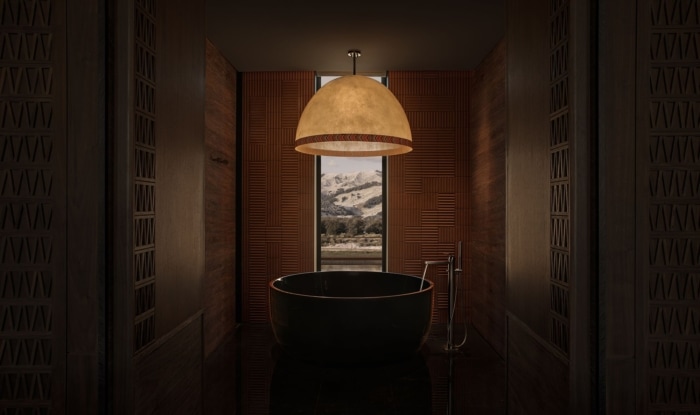
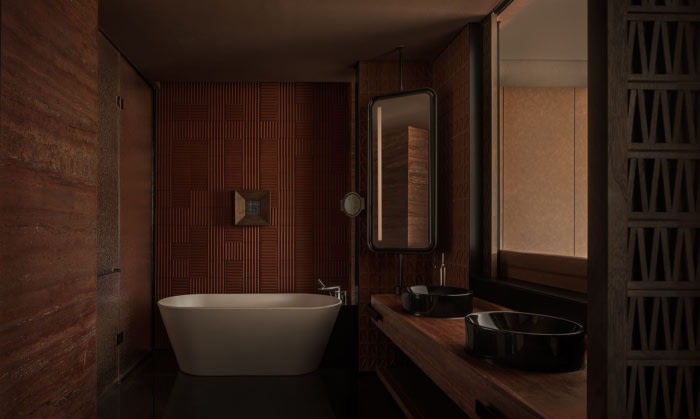
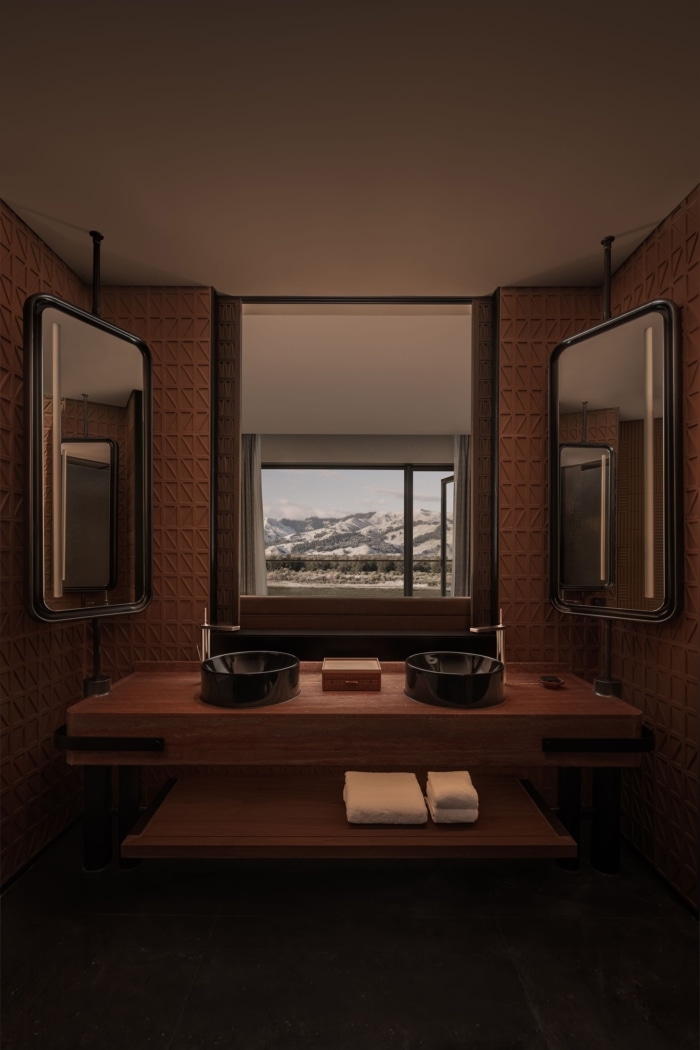
The traditional yurt’s diamond-lattice wooden framework is reimagined across the bathroom walls and partitions. Paired with warm wood tones, the space exudes quiet intimacy and a soothing calm.
At Hotel Indigo Nalati, a stay is more than a brief respite—it unfolds as a journey of the soul. The vastness of the grasslands, the gentleness of sunlight, the heartfelt resonance of local traditions, and a quiet sense of freedom, openness, and vitality linger in every guest’s memory. Here, the journey finds its echo, and the heart finds its sanctuary.
Design: CCD
Photography: Wang Ting







Now editing content for LinkedIn.