
SAP Arena Hospitality Suite – Mannheim
SCOPE Architekten’s redesign of the SAP Arena Hospitality Suite in Mannheim transforms the space into a dynamic interplay of data and cloud, fostering emotional engagement and innovative collaboration.
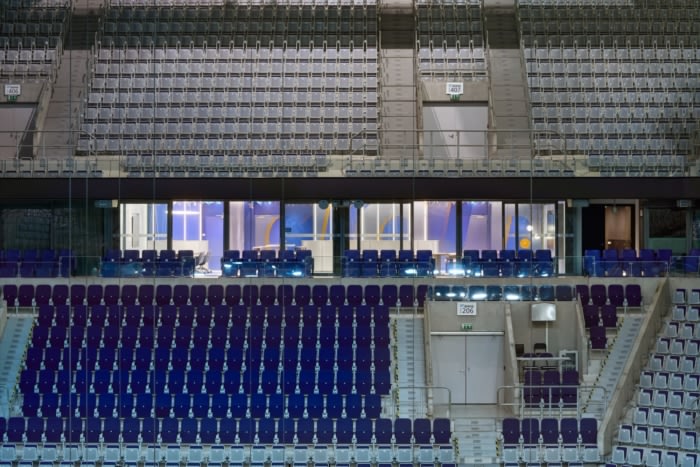
To mark the 20th anniversary of the SAP Arena in Mannheim, SCOPE Architekten realized a comprehensive make-over of the SAP hospitality suite. Within just a few weeks, the 140-square-meter space inside the multifunctional arena was transformed into a spatial expression of SAP’s evolution – from a data-driven enterprise to a cloud-based company. The result is a brand environment that makes this shift tangible and invites employees, clients, and guests into a new, sensorially technological atmosphere.
From Tech to Heart: When the Cloud Takes Shape
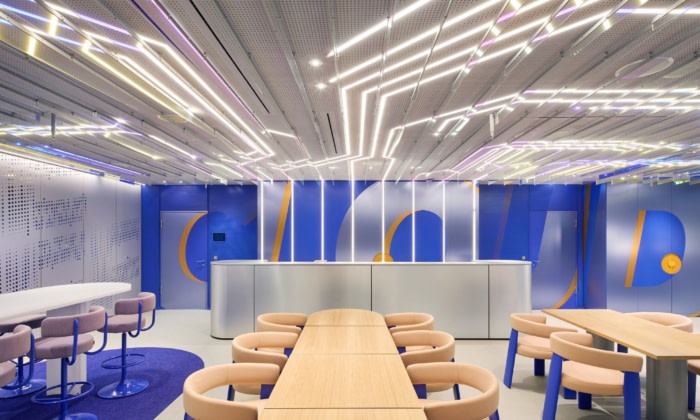
The design follows a clear narrative: from data to cloud to next future. Visitors first encounter graphic patterns and precise geometries that evoke the world of data. Gradually, the atmosphere softens: surfaces begin to flow, light becomes an immaterial layer, and subtle textures translate abstract data streams into spatial lightness.
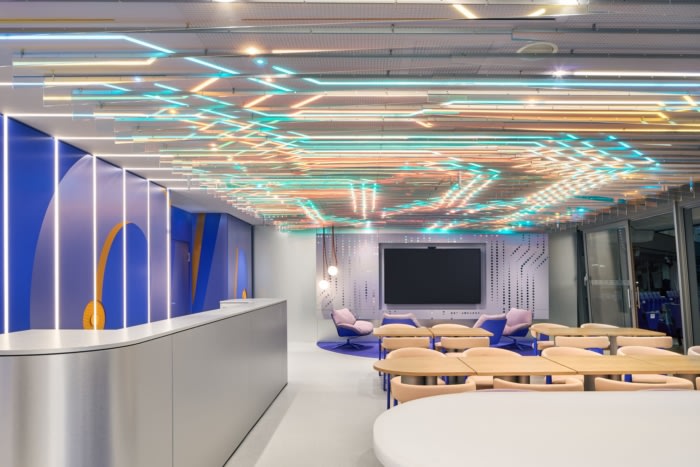
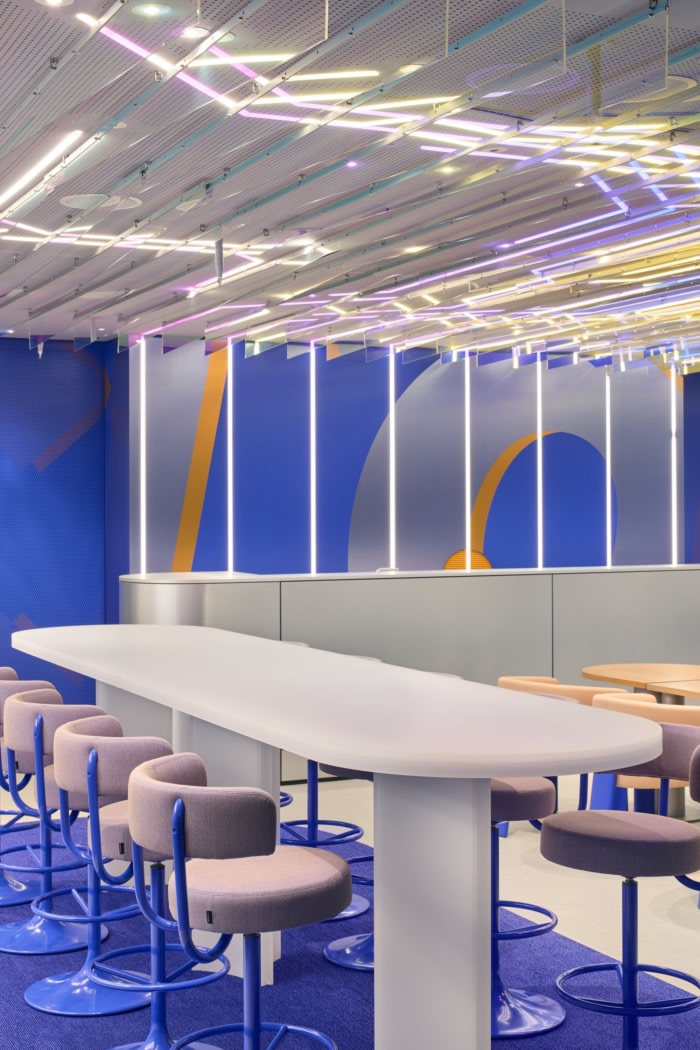
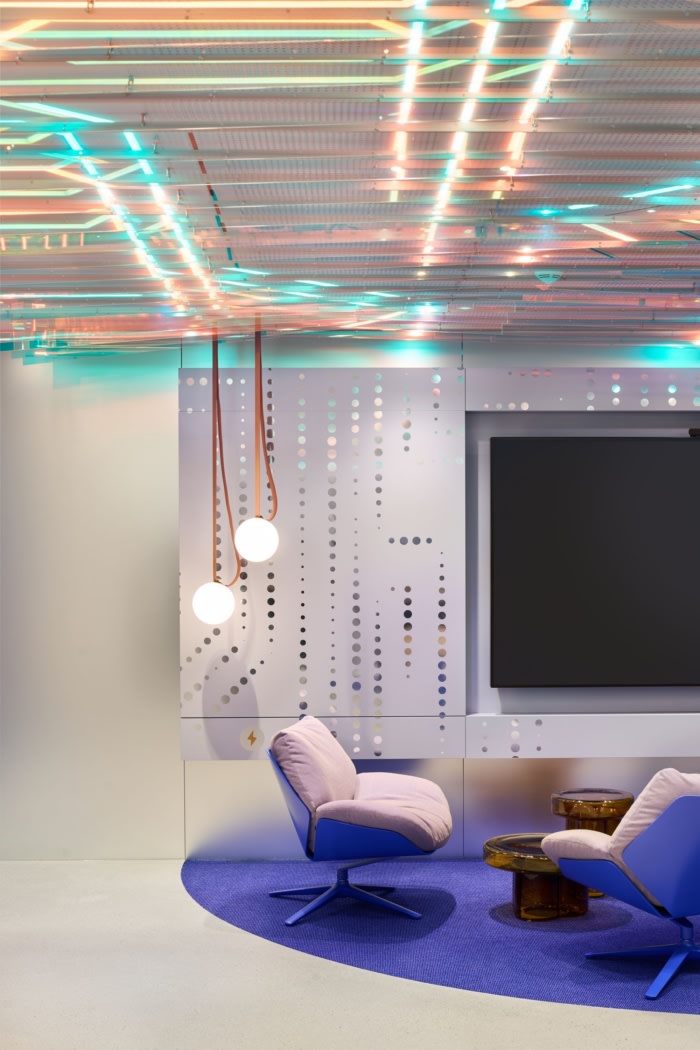
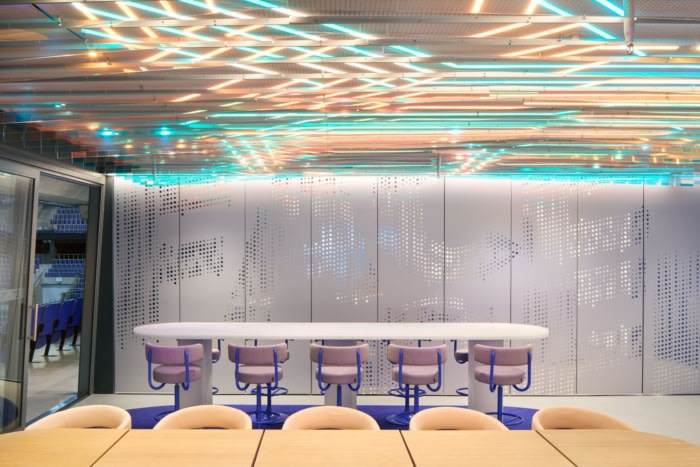
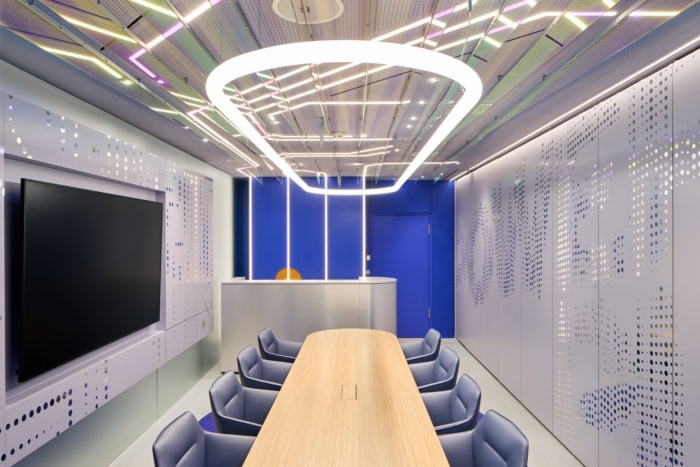
The hospitality suite is structured into three zones, each shaping distinct atmospheres and modes of use, while forming a coherent spatial dramaturgy. The lounge sets the stage – an open, media-oriented area with generous seating and a circular carpet zone. At the center, a communicative area offers modular tables and varied seating heights for exchange and gathering. A more private meeting room closes the sequence, defined by a mobile partition that creates privacy when needed. The space balances openness, interaction, and focused collaboration into a layered spatial experience.
Make-over in Motion: Alive and Evolving
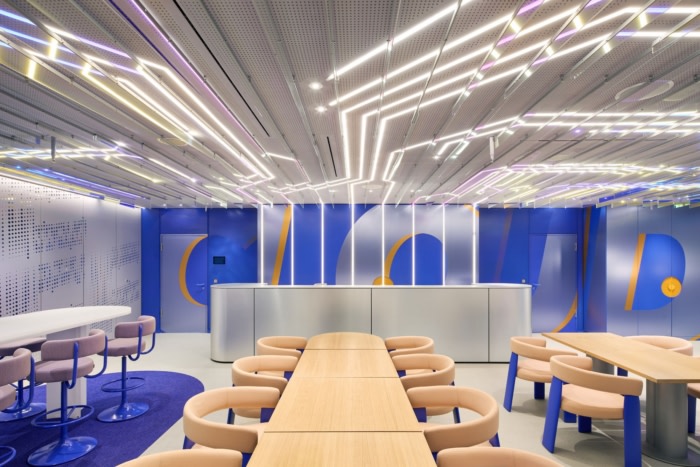
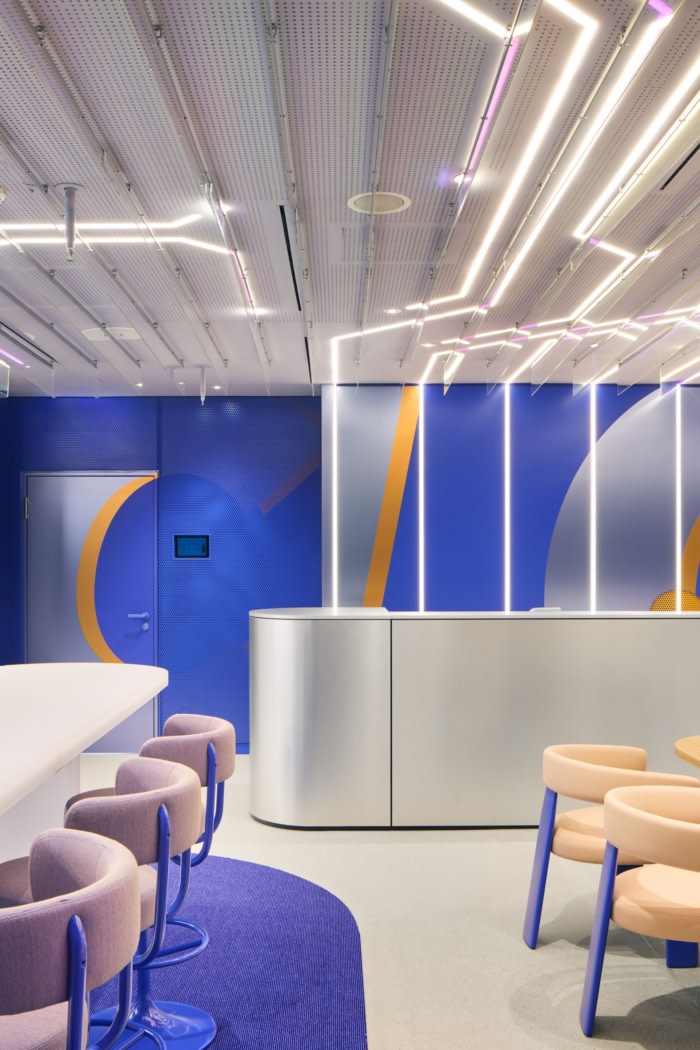
Before the redesign, the hospitality suite presented itself as functional, cool, and monochromatic – rational, yet lacking emotional depth. SCOPE Architekten transformed this clarity into a new sensorial and technologically infused language: the characteristic light elements referencing data streams were retained and integrated into a translucent lamella ceiling, condensing light and movement into a floating data network. The existing counter received a new stainless-steel cladding with gentle curvature – a precise update that shifts the material expression into the present. Deep blue carpets define the floor and add visual depth. The furniture continues the spatial language – with clear lines, soft contours, and materials balancing functionality and lightness.
Between Data and Design – Precision Meets Atmosphere
The graphic layer extends the concept further: the interplay of matte and glossy surfaces mirrors the duality of data and cloud. Droplet-like visual elements and the large typographic CLOUD installation articulate the design narrative in space. The mirrored partition with the words Face off and Power Play subtly links to the arena’s role as a sports venue. Chrome film dots reflect light and color, creating depth and dynamic spatial resonance. A palette of blues and violets shapes an immersive atmosphere – techno-logically informed, yet emotionally engaging.
Transformation in Detail
The project embraces the principle of building on what exists. Rather than replacing elements, built-ins were reworked – resurfaced, re-clad, and refined. The existing floor remained and received a new bio-terrazzo surface made from recycled aggregates and plant-based binders. With minimal intervention, maximum impact was achieved: a renewed spatial character that balances clarity with warmth and significantly enhances the quality of stay.
Through this redesign, SCOPE Architekten makes transformation tangible on two levels — within the company and within the space. The result is a place where technology and emotion, brand and atmosphere converge – showing how the future takes shape.
Design: SCOPE Architekten
Design Team: Kathrin Lewald, Julia Schmitz, Laura Grau, Mathis Weymann
Photography: Philip Kottlorz



Now editing content for LinkedIn.