
Gonzu Izakaya
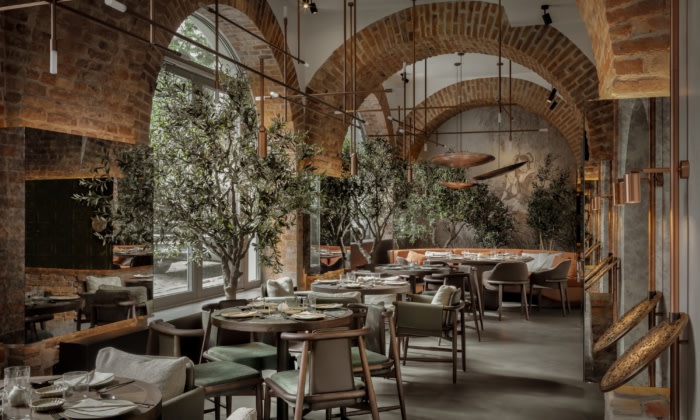
Tdot.Design beautifully reimagines a historic Riga vault into Gonzu Izakaya, combining Japanese sensibility with Baltic heritage through textured materials and fluid spaces that foster communal dining and cultural dialogue.
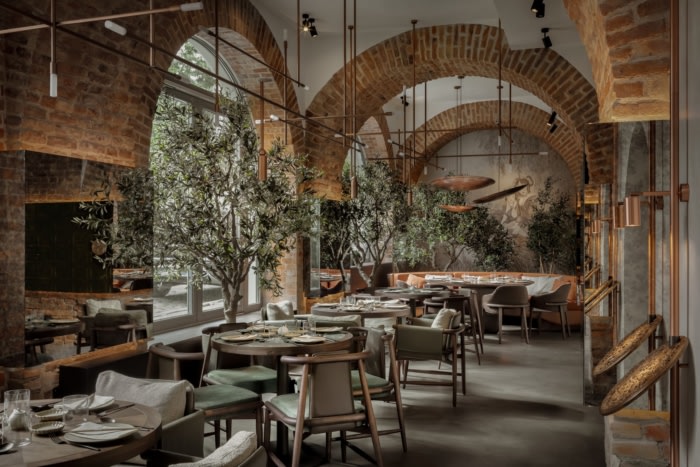
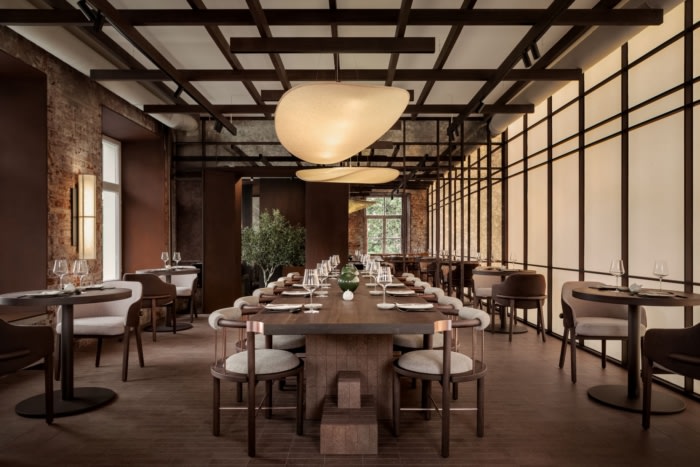
Behind a discreet historic facade in the heart of Riga, a former vaulted brick interior has been quietly reimagined as Gongu — a 600-square-metre contemporary izakaya where Japanese sensibility meets Baltic heritage with restraint, confidence and a carefully measured sense of theatre.
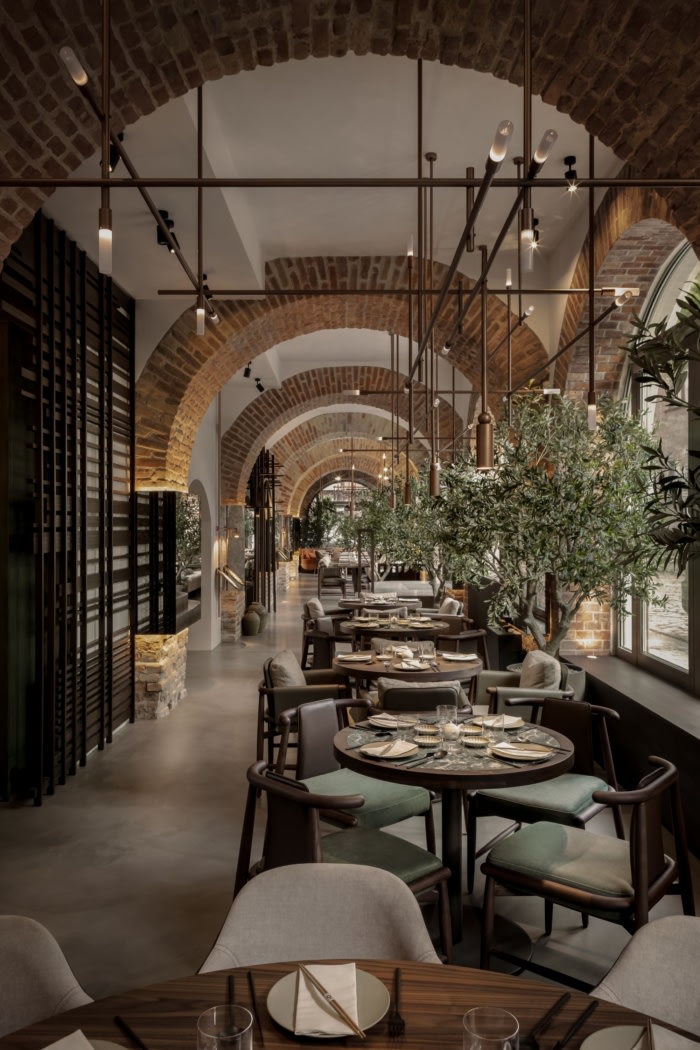
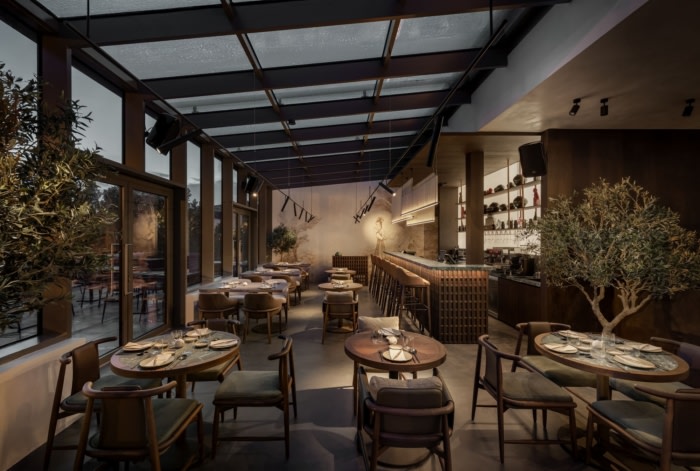
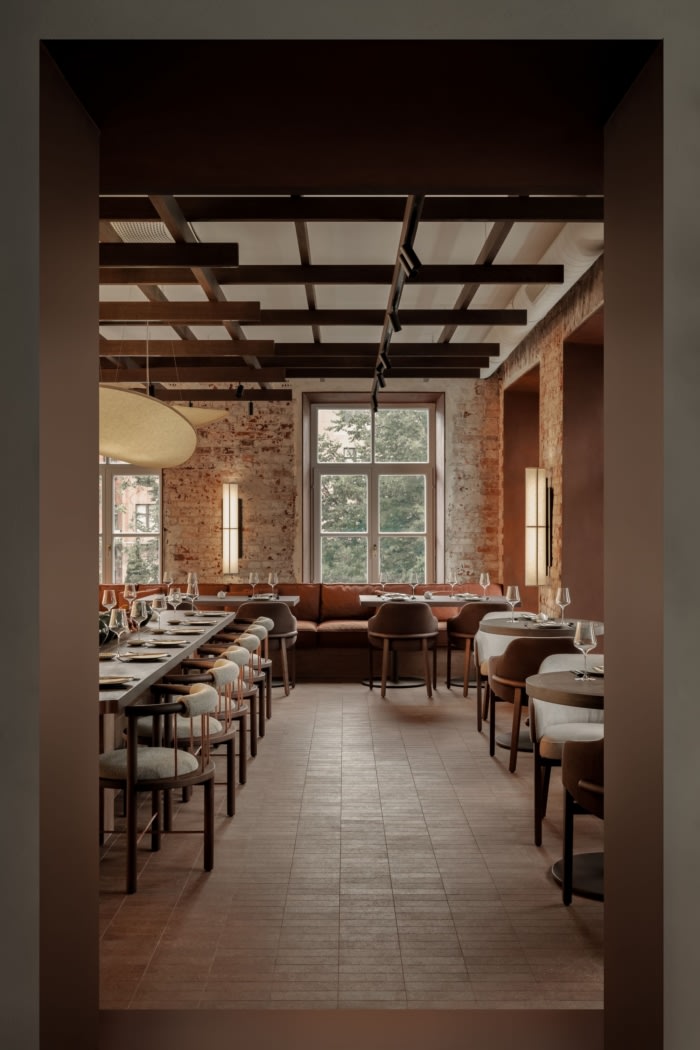
The brief was deceptively simple: to introduce the energy of a modern Japanese izakaya into one of Riga’s preserved architectural shells, without diluting the character of either. The existing brick walls and rhythmic arches were never treated as limitations. They became the narrative framework — a textured, time-marked backdrop against which a new, spirited and distinctly Asian atmosphere could unfold.
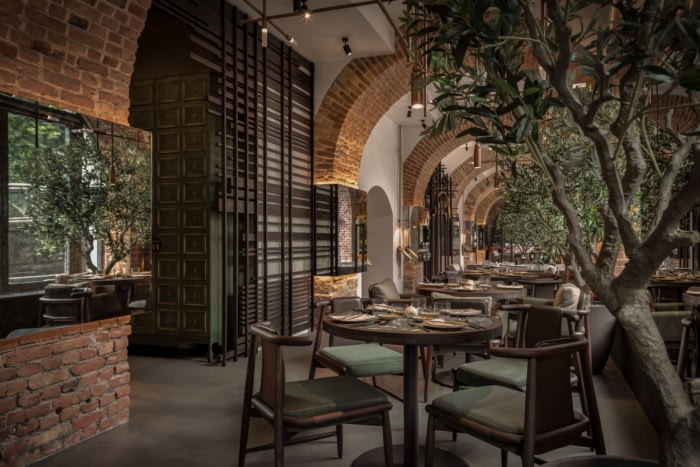
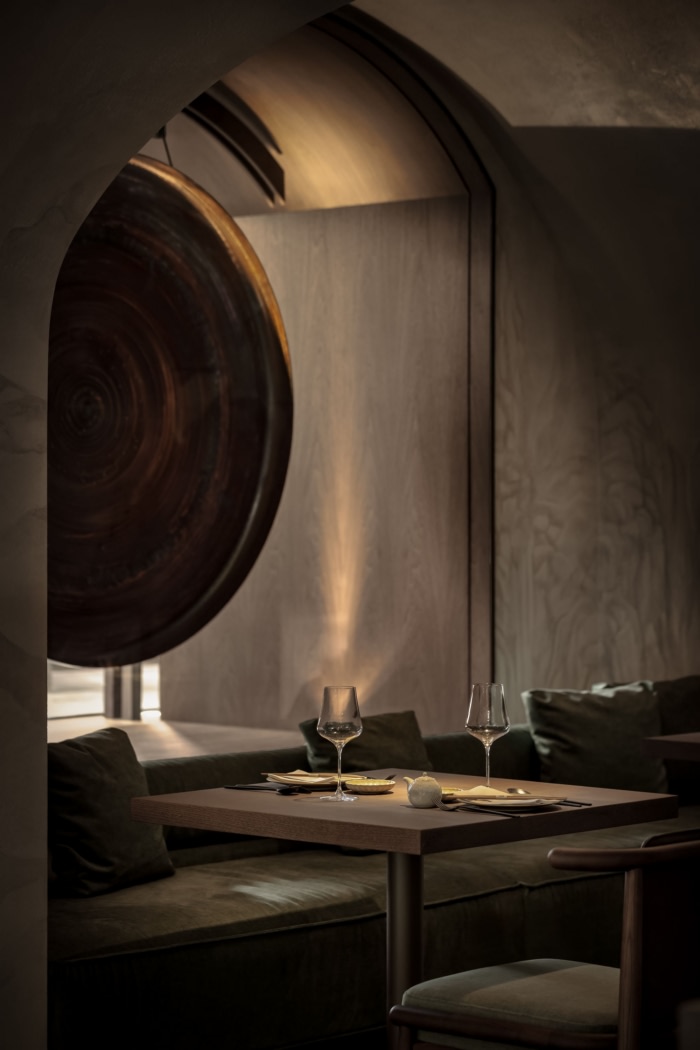
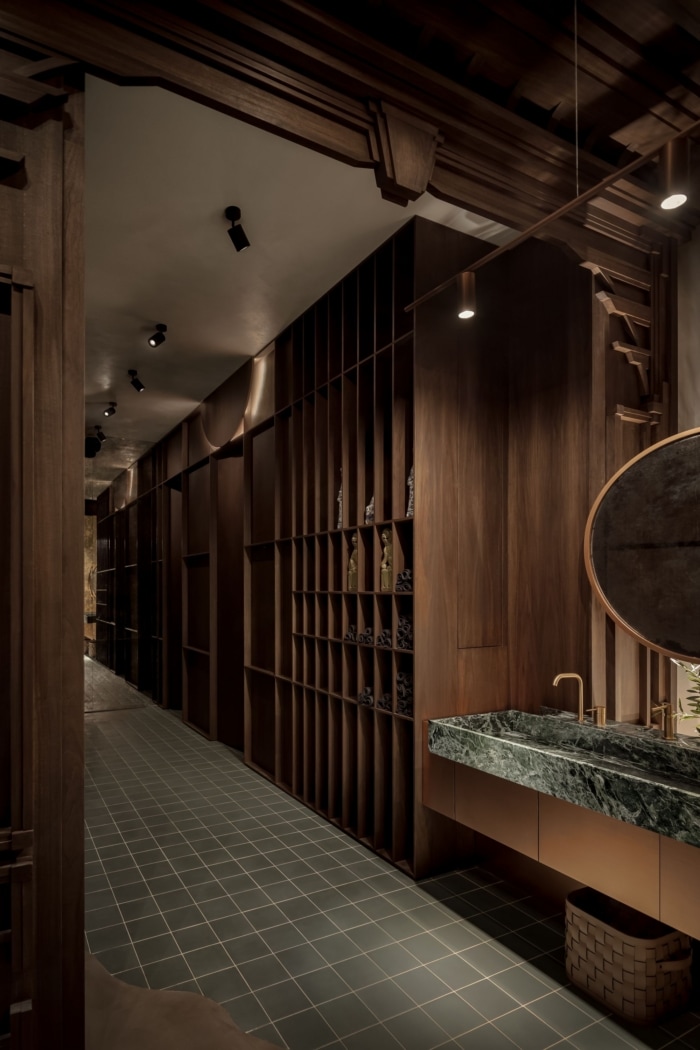
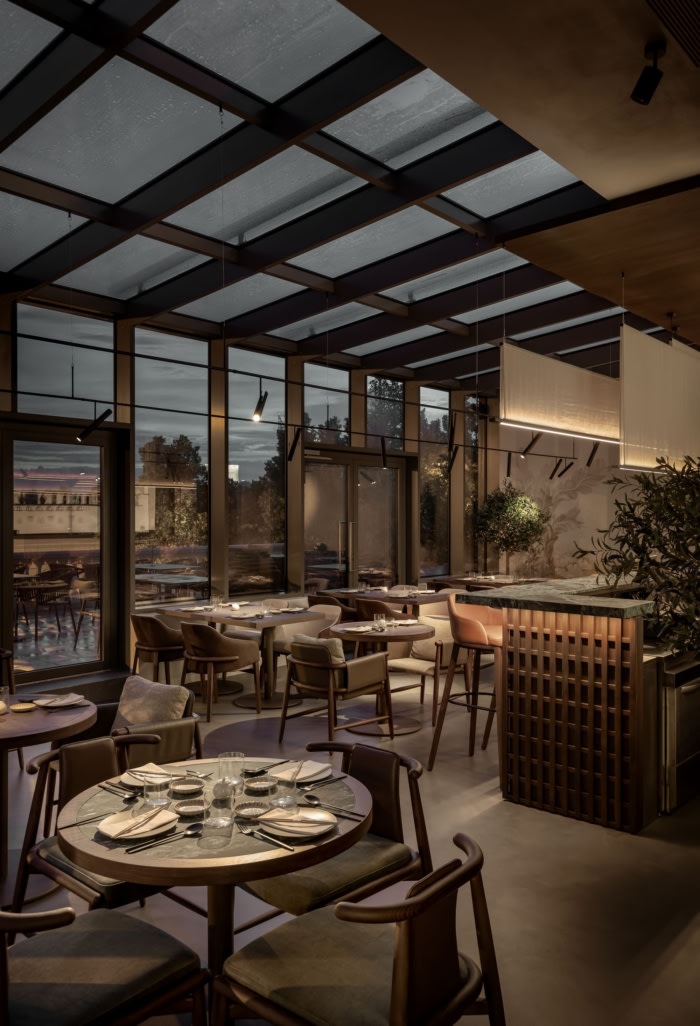
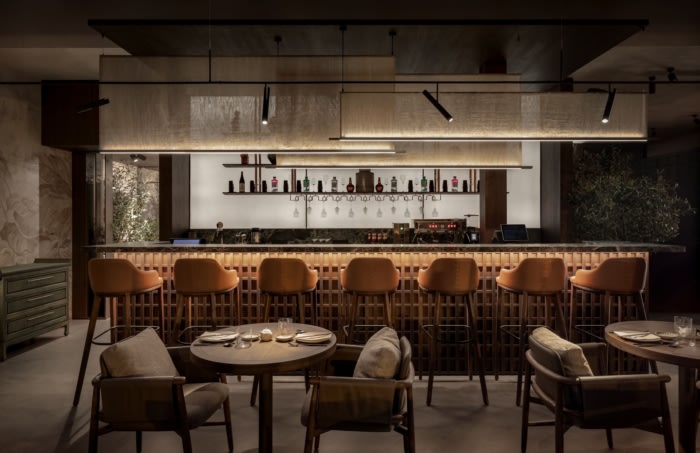
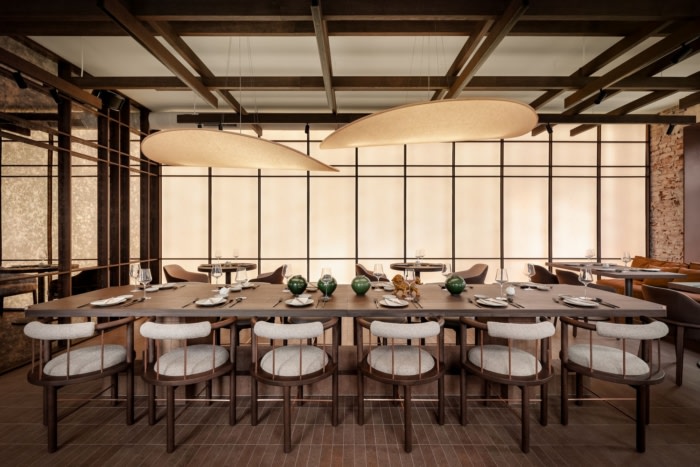
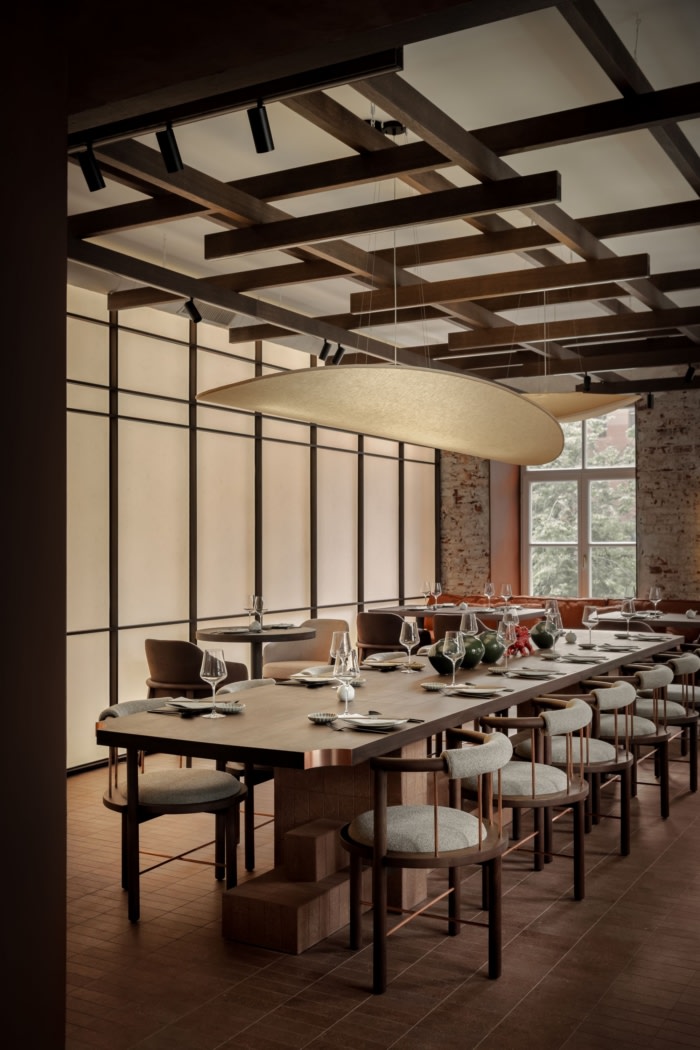
Rather than translate Japanese design literally, the team at Tdot.Design approached the project as a quiet cultural dialogue. The interior speaks in suggestion, not symbolism. Shoji-inspired screens soften the dining zones with a layered glow, filtering light and movement into intimate pockets. A precise timber grid runs through the space, grounding the composition with structure and tactility. Reinterpreted portals — subtle architectural echoes of torii gates — appear along the circulation axis, framing moments of transition rather than announcing themselves as motifs.
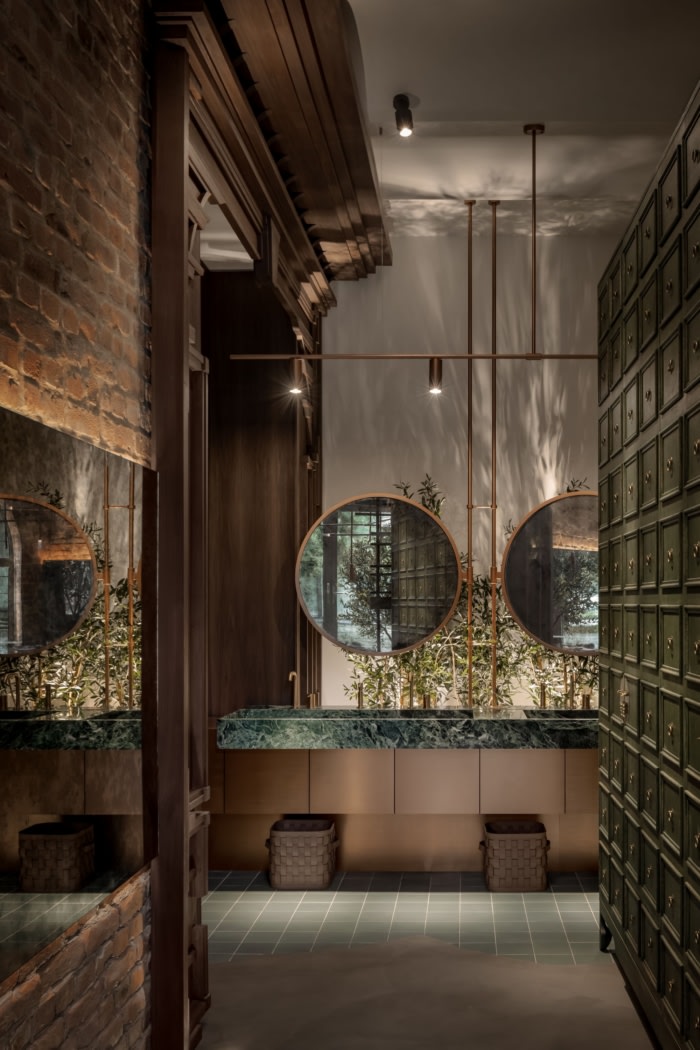
Materiality becomes the project’s primary language. Softly pink copper details converse with the roughness of the original brickwork. Timber, warm sand-toned surfaces, deep green accents and terracotta hues build a restrained yet emotionally rich palette. While corten steel was initially envisioned for the portal structures, the concept was refined into more nuanced aesthetic interpretations, preserving the industrial depth of the idea while allowing it to appear in carefully placed architectural vignettes rather than dominant gestures.
Movement through the restaurant is fluid and uninterrupted. The open kitchen anchors the plan, drawing guests into the choreography of cooking and sound — a sensory bridge between dining and performance. The historic arches act as spatial markers, gently defining zones without interrupting the continuity of the interior. Their sculptural geometry reappears throughout the design — in curved banquettes, circular mirrors and softened lighting compositions — forming a quiet, recurring architectural rhythm.
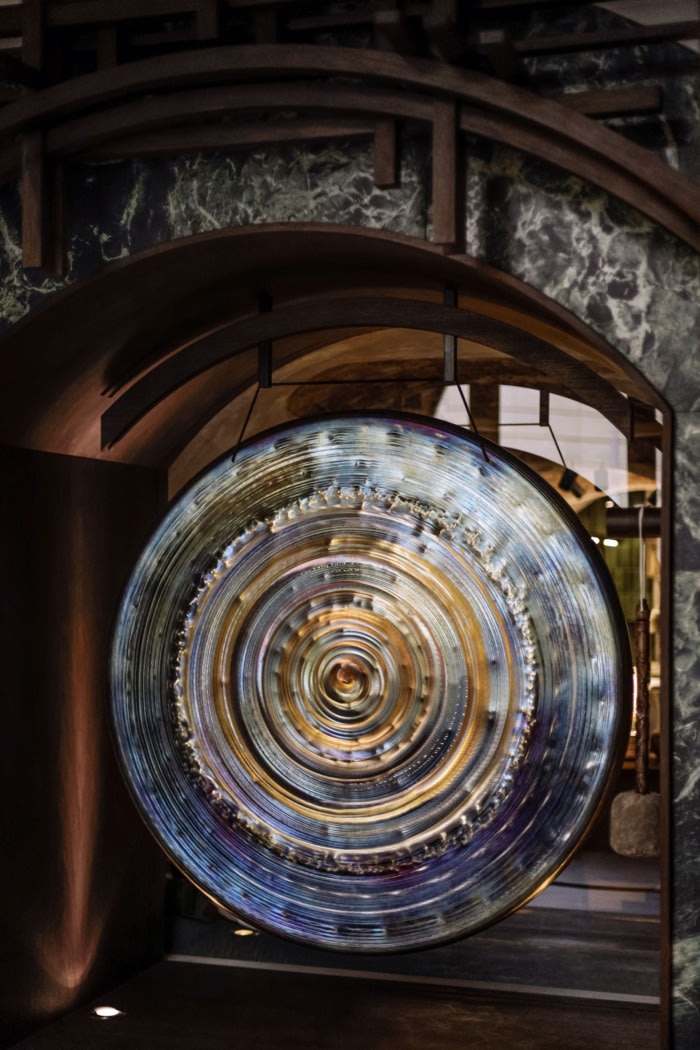
At the emotional centre of the restaurant stands its most symbolic element: a monumental gong, measuring 1.5 metres in diameter. Initially conceived as a sculptural intervention set within one of the architectural portals, the object unexpectedly reshaped the entire identity of the project. Three years later, it became the name of the restaurant itself.
The gong was sourced in Bali and transported to Riga specifically for the project, accompanied by a custom-crafted beater with a carved handle bearing the restaurant’s name — a small but deeply personal detail embedded into the daily life of the space.
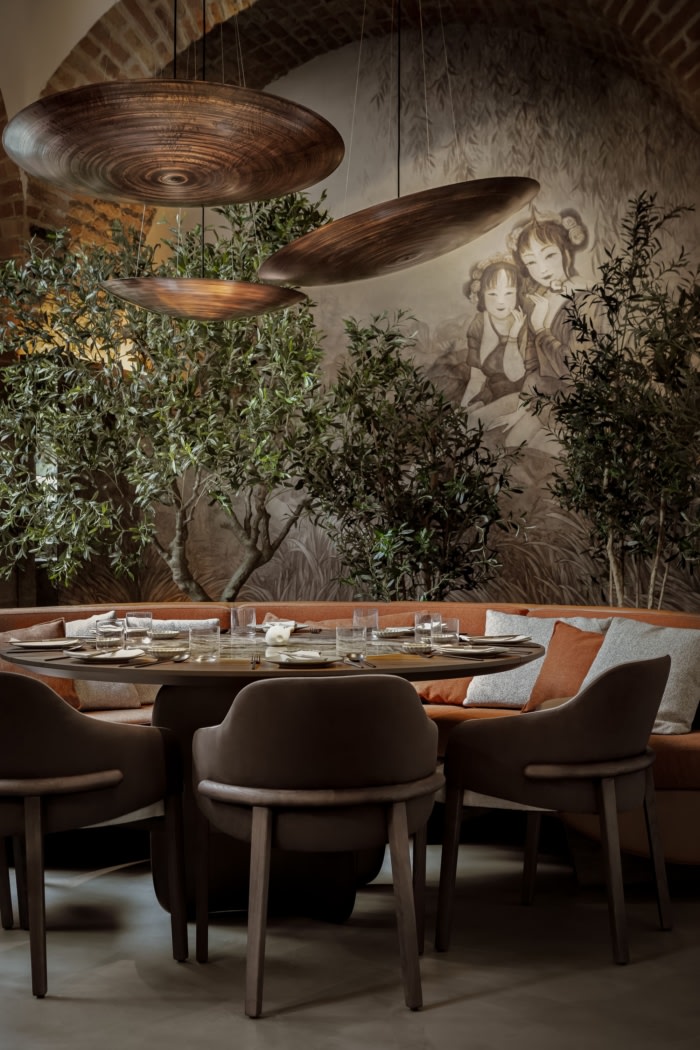
Equally central to the social character of Gongu is the communal table — a typology deeply rooted in Japanese dining culture, yet still uncommon in the Baltic context. Treated as a vivid architectural accent, the table rises from the floor as a continuous tiled base, visually anchored into the interior as if it were part of the original structure. Its presence encourages spontaneous interaction, shared rituals and collective energy, quietly redefining how guests occupy the space.
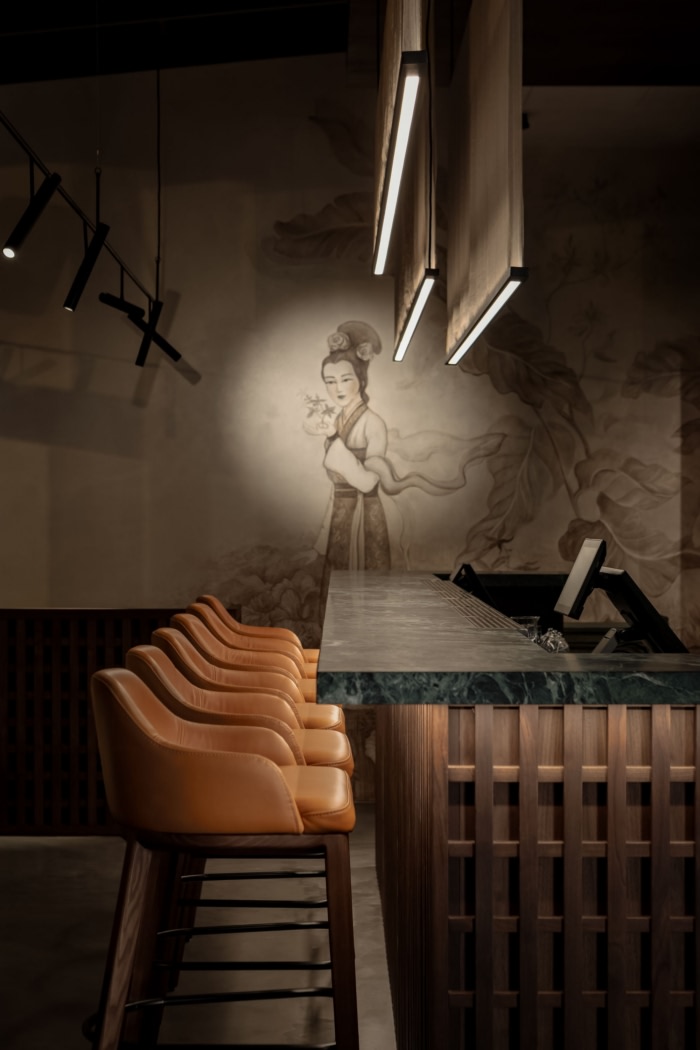
A softer counterpoint emerges through a series of feminine silhouettes illustrated across selected walls. Introduced deliberately against the weight of brick, metal and dark walnut, these graceful figures bring warmth and tenderness to the atmosphere — adding intimacy to an otherwise bold material composition.
From concept to completion, the entire project was developed and delivered by the Tdot Design team, including custom-designed furniture and decorative lighting. Copper, wood, marble and natural fabrics form the backbone of the material palette, while the majority of bespoke elements were produced in Ukraine.
The process of material selection unfolded over several meticulous stages. With the design team distributed across multiple countries, samples were first shortlisted through photographs and video presentations, then reviewed again by the FF&E manager together with the chief designer via live video sessions. Only after this second evaluation were physical samples submitted for final approval.
This layered process ensured that every surface, texture and finish was aligned — allowing the interior to read as a single, unified composition where even the smallest details remain interconnected.
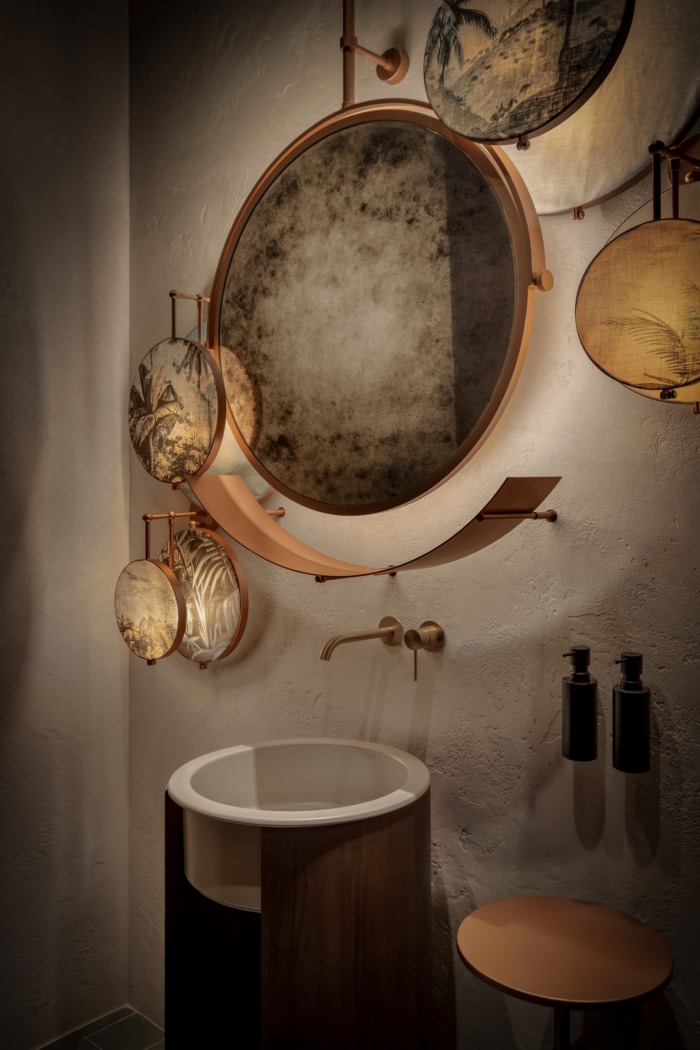
Custom decorative lighting above the large round tables, as well as wall luminaires featuring dragon plates, were produced using traditional casting techniques, bringing subtle craftsmanship into the contemporary setting. Aged glass panels for the walls — marked with controlled scratches and rust-like patina — were sourced from Italy, adding depth and a sense of lived-in imperfection to the surfaces.
The wall murals were hand-painted by a Ukrainian artist using monochrome watercolours and an etching-inspired technique, carefully referencing the atmosphere of traditional Oriental painting without direct quotation.
Even the restaurant’s most private spaces were treated as part of the narrative. In the restrooms, fabric-covered lamps softly diffuse the light, creating an unexpectedly cozy, intimate environment — one that invites guests to pause, reflect, and inevitably, capture the moment.
Design: Tdot.Design
Design Team: Liubov Tuzovska, Oksana Mian, Kate Babych
Photography: Ivan Avdeenko



Now editing content for LinkedIn.