Wuhan Banquet Jubilee Garden (Hankou Riverside Branch)
LDH Design’s Wuhan Banquet Jubilee Garden harmoniously blends Eastern aesthetics and cultural resonance, transforming a historic structure in Wuhan into a vibrant dining experience that celebrates the city’s rich heritage.
LDH Design has always focused on the dialogue between space and people, nature and culture. The team believes that good design is not about replicating traditional forms, but about allowing culture to be perceived and experienced anew in the present.
In the Wuhan Banquet Jubilee Garden project, LDH Design adopted “Eastern Aesthetics” as the core concept, infusing the dining space with artistic sensibility and enabling historical culture to resonate with contemporary life within the interior.
Wuhan, known as the “River City,” is characterized by the convergence of two rivers and a historical backdrop of blending northern and southern cultures. Through spatial layout, material language, light and shadow manipulation, and circulation organization, the team aimed to make this diverse urban character tangible and felt in every corner of the space. Once again, LDH Design integrates Chinese culture into interior design, ensuring that the space not only serves its culinary function but also facilitates the renewal and regeneration of cultural memory.
Spatial Order: Traditional Axial Logic Meets Contemporary Interior Experience
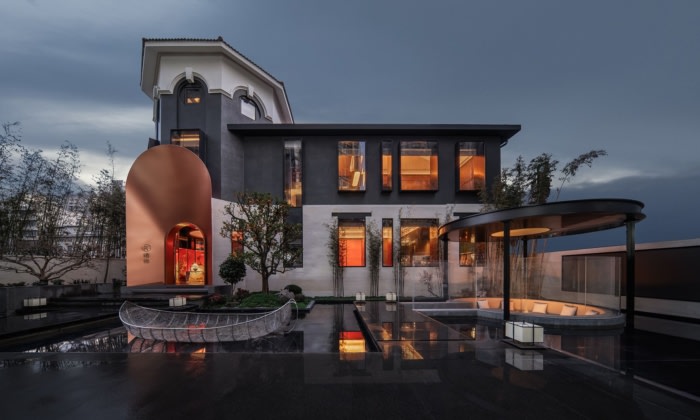
The project is situated within a historic building from the concession era, featuring a robust architectural fabric. While respecting the original structure, LDH Design focused on enhancing the interior spatial experience. A symmetrical axial layout was used to establish a clear spatial hierarchy, where progression through circulation paths, light, scenery, and functional areas forms a continuous journey.
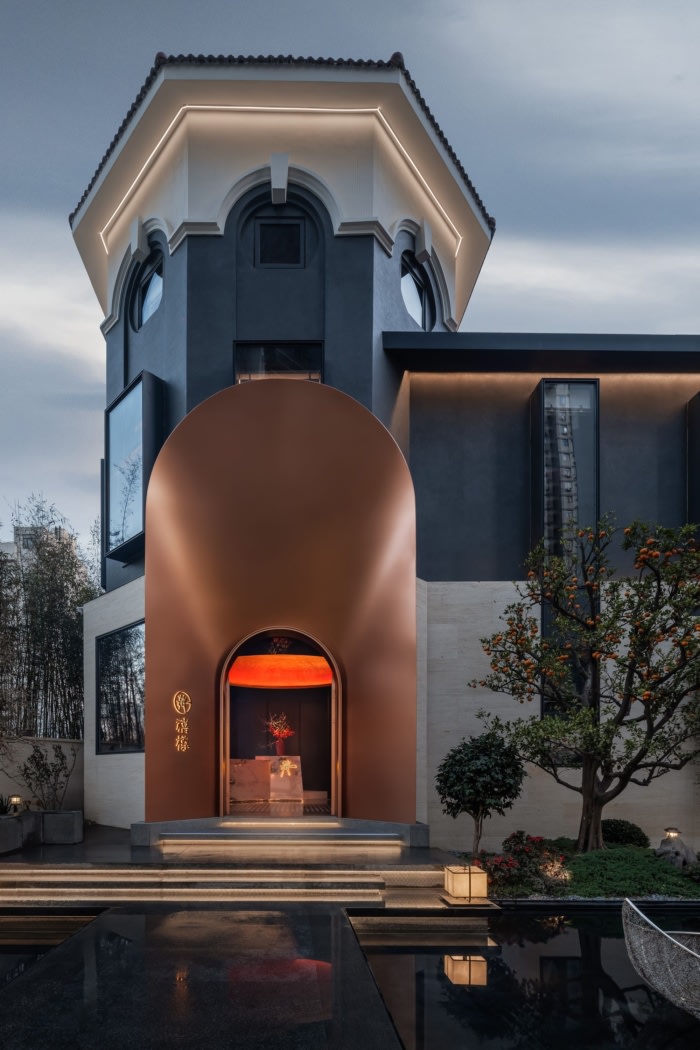
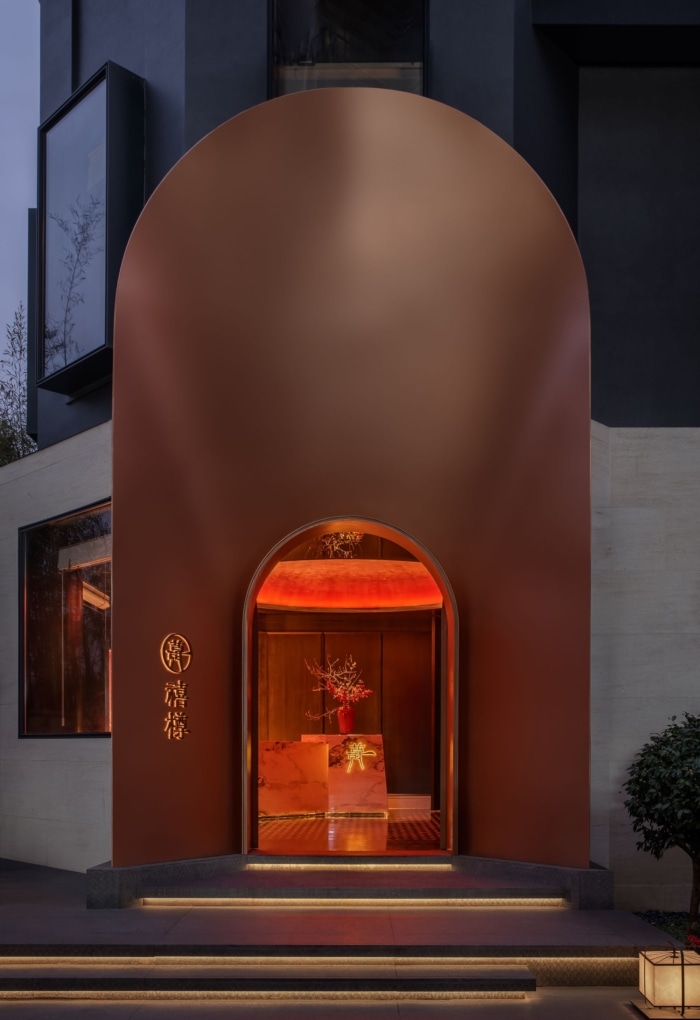
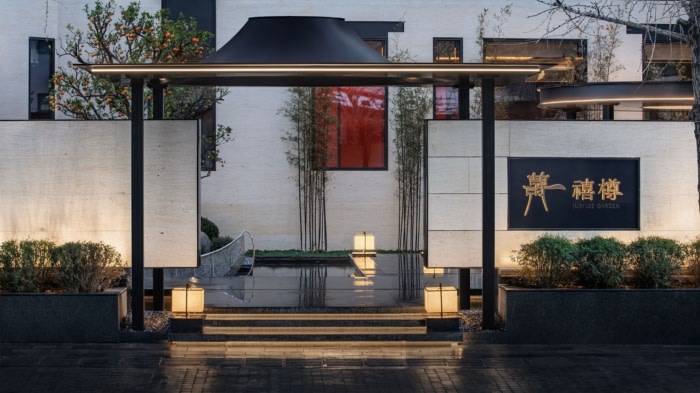
The entrance, guided by a stone-frame water curtain, extends the sound of flowing water and the play of light and shadow indoors. Reflections on the water, the texture of blue bricks, and metallic finishes create contrasts, allowing guests to sense the pulsating rhythm of Wuhan’s rivers as they enter. This transition from exterior to interior emphasizes a balance of movement and stillness, ensuring the building’s solidity enhances the spatial experience without dominating it.
Courtyard-Style Layout: Natural Infiltration and Interior-Exterior Interplay
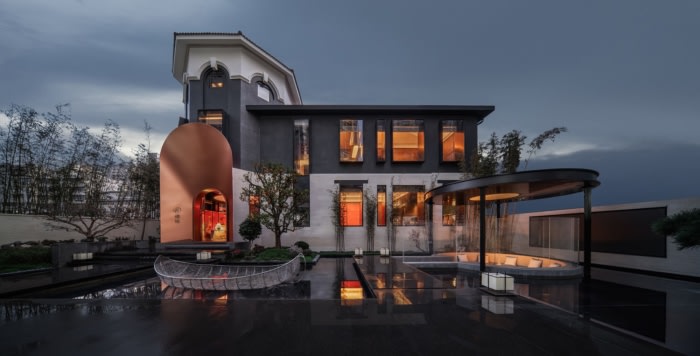
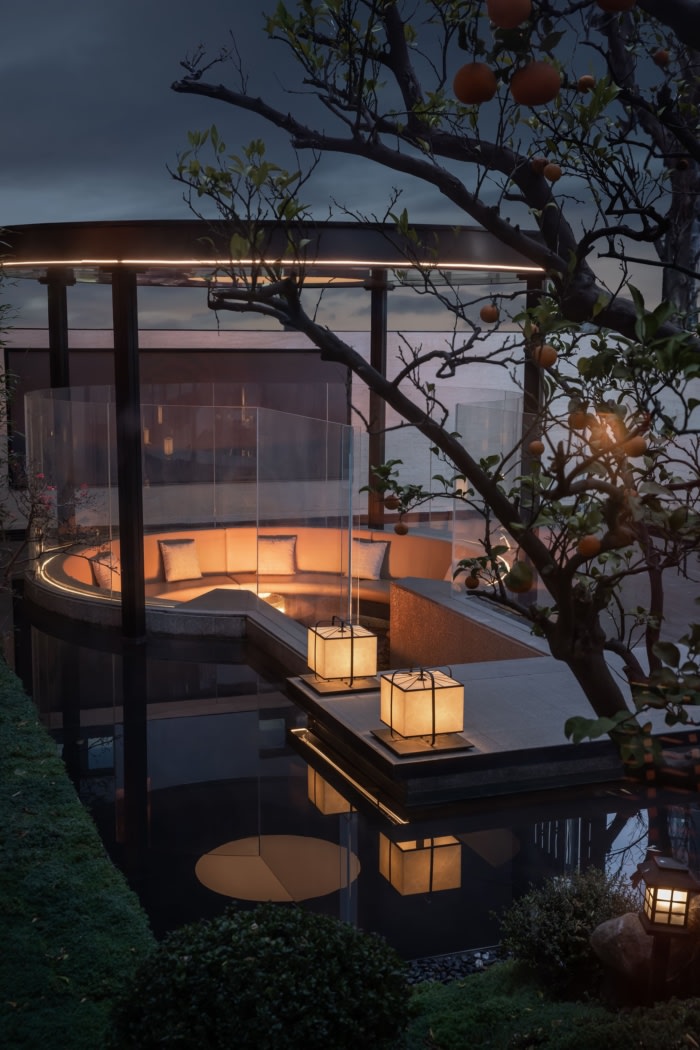
LDH Design introduced the “courtyard” concept into the interior, using sequential spatial design to enhance layering. A shallow pool and orange trees form a traversable landscape interface, while interplaying light and reflections evoke an atmosphere of “tranquility coexisting with vibrancy.”
The courtyard’s design serves not only as a visual guide but also as a circulation strategy. Through the combination of water, trees, light, and stone steps, a gradual experience unfolds from the outer courtyard to the inner hall. Light reflects across water surfaces, walls, and metal finishes, embodying both the gentleness of the Yangtze River and the vitality of pier culture, allowing guests to perceive a sense of “river flow entering the space.” LDH Design emphasizes that the spatial rhythm is shaped by natural elements, materials, and light, extending and embodying the spirit of Eastern architecture within the interior.
Functional Zoning and Circulation
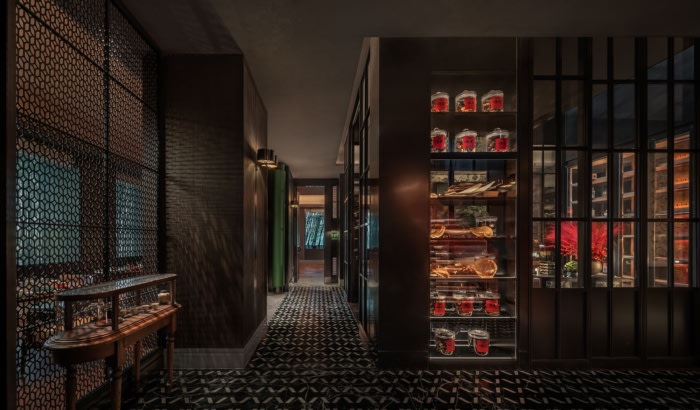
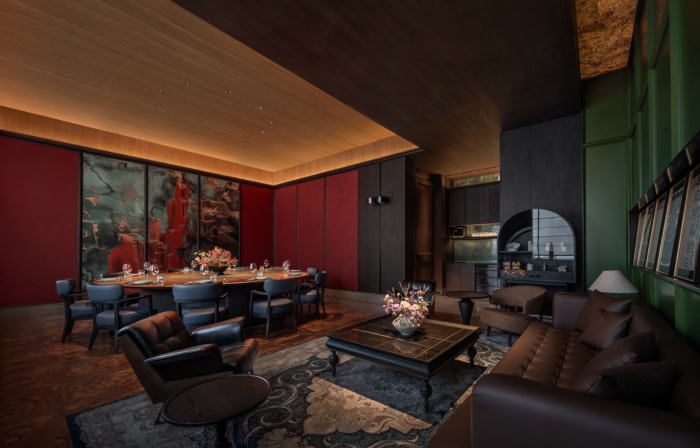
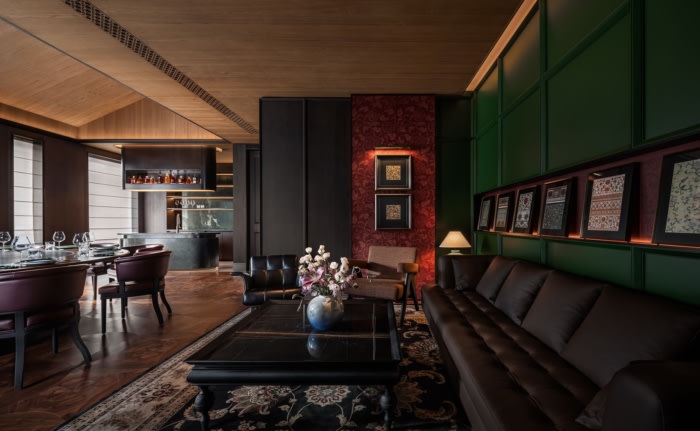
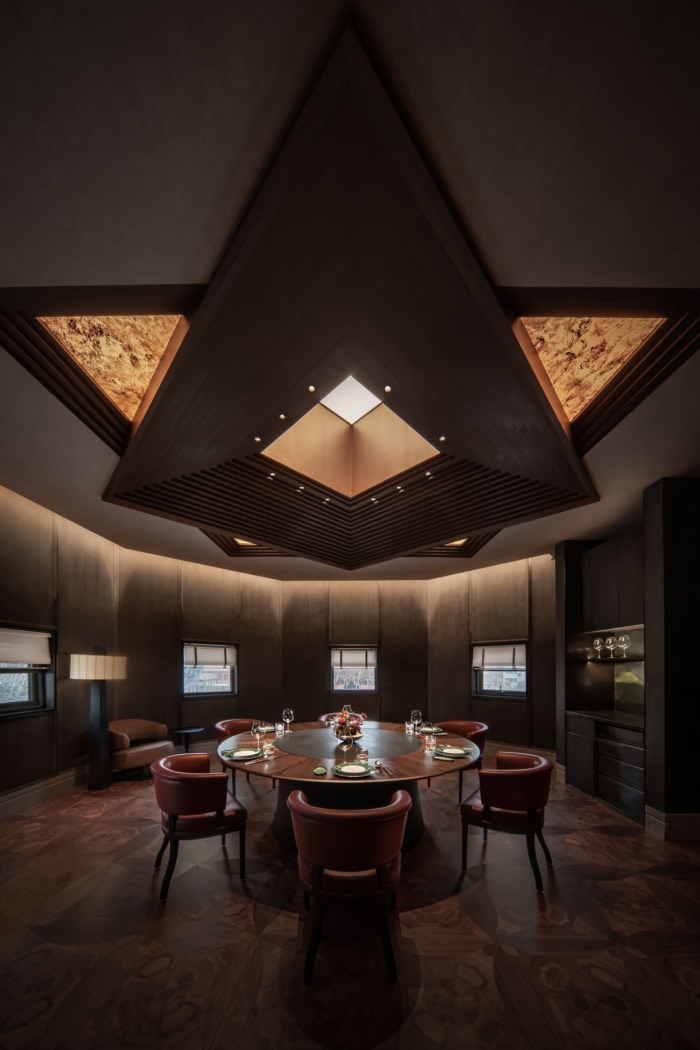
The three-story space is organized as follows: The ground floor serves as an open, well-lit public reception area and main hall. The second floor features semi-private dining zones, divided by screens and grilles to balance intimacy and openness. The top floor houses private rooms and banquet areas, where materiality, lighting, and furniture arrangements enhance a tranquil and comfortable atmosphere.
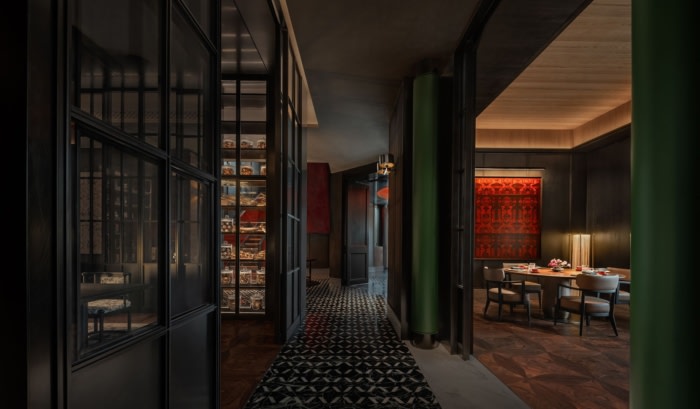
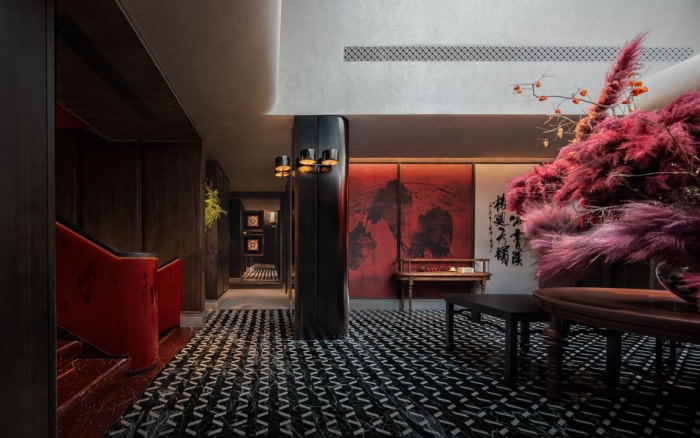
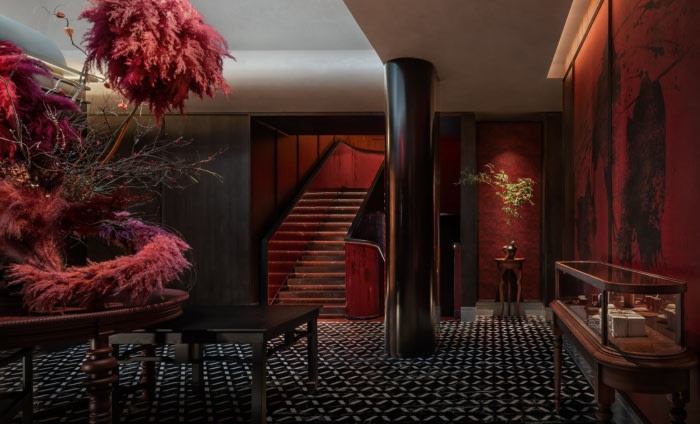
Using a symmetrical layout and a circular staircase, LDH Design guides visitors from the courtyard to the main hall and onward to private rooms—creating a gradual journey from “outer to intermediate to inner” zones. Spatial proportions, ceiling heights, corridor widths, and furniture placement were meticulously calibrated to ensure clear sightlines, balanced lighting, and atmospheric immersion at every point of pause.
The circular staircase directs visual flow, with red jade steps extending the rhythmic experience. Screens, window openings, and layered lighting work in concert to create a progressive spatial cadence, reinforcing the perception of sequence.
Materiality and Color: Translating Cultural Symbols
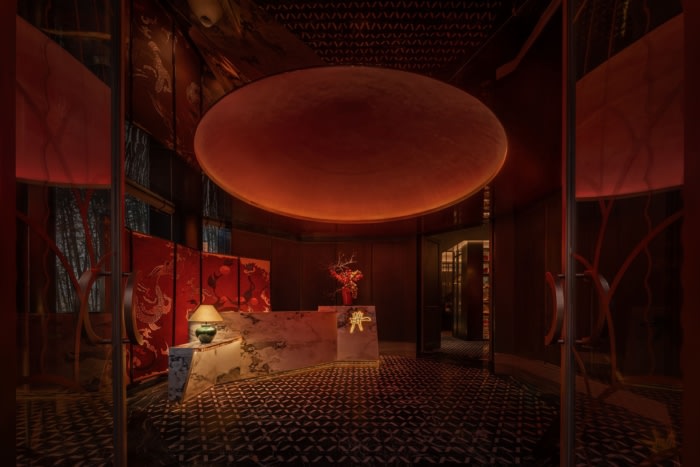
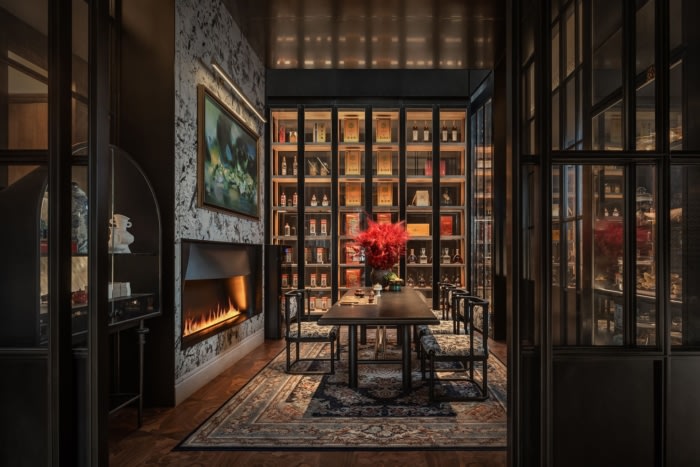
The palette features red jade, bluestone, bronze-like metal, and wood, dominated by three core tones: smoked gray, Chinese red, and bronze gold. Each hue serves a narrative role:
· Smoked gray evokes dusk over the riverbank, grounding the space in calm.
· Chinese red symbolizes the glow of pier lights, infusing warmth.
· Bronze gold echoes the textured history of concession-era walls, engaging in dialogue with contemporary metallic details.
These materials fulfill functional demands while creating a continuous visual flow. Through textural contrast, color interplay, and light reflection, LDH Design allows guests to tactilely and visually engage with the cultural depth of the River City.
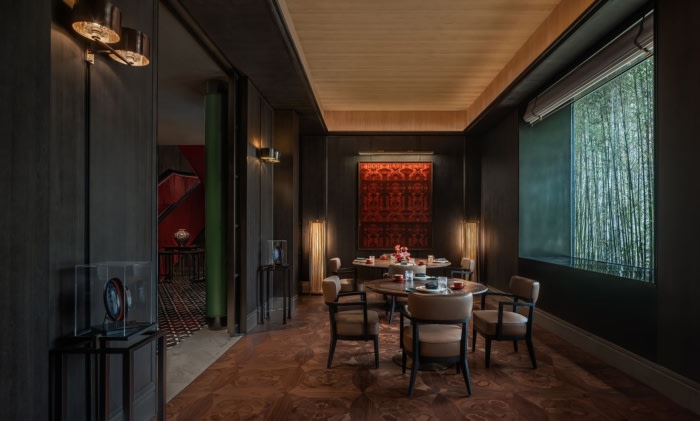
Traditional elements like Han embroidery, Han opera colors, and floral motifs are reinterpreted into spatial language. Abstract Han embroidery screens soften boundaries in private rooms, while embossed floral patterns on red jade walls shift delicately with changing light.
These details reflect LDH Design’s pursuit of cultural reinvention—crafting a space that is both modern and regionally distinctive.
Light and Nightscape: Shaping Mood and Ambiance
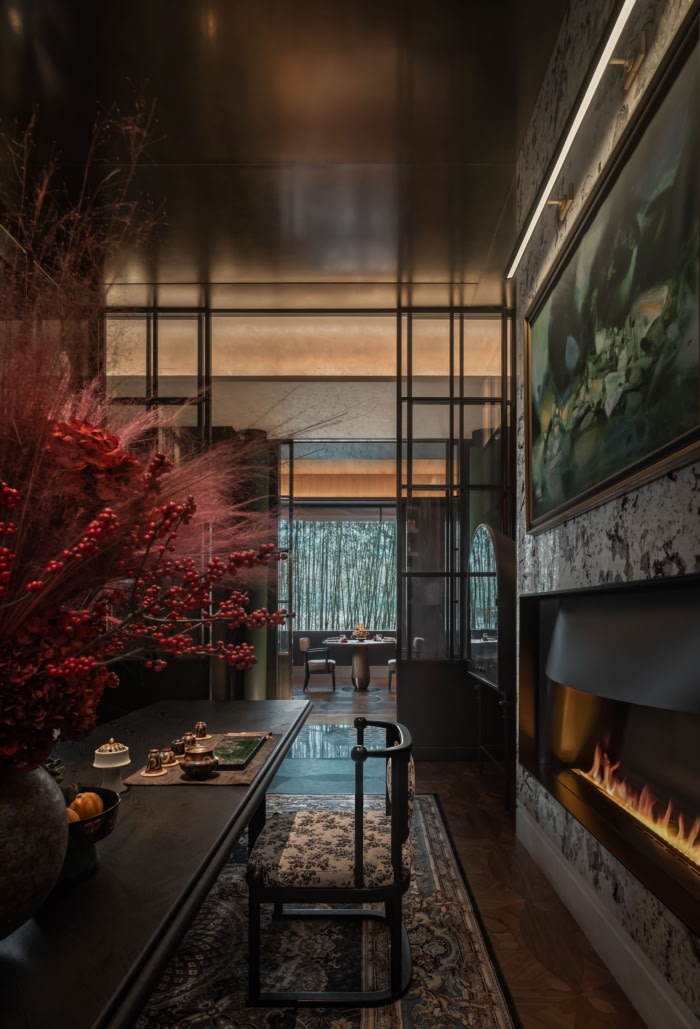
As night falls, lighting becomes a key medium for emotion. A layered system—incorporating pendants, linear lights, concealed sources, and reflective surfaces—allows illumination to flow across red jade, ebony, and blue brick, creating a continuous yet soothing visual experience.
Window openings continue the borrowed scenery technique, drawing the riverside night indoors. Bamboo shadows, water reflections, and artificial light interweave, allowing guests to sense the river breeze and the city’s pulse.
The play of reflection and shadow adds rhythmic depth, turning every moment of pause or movement into an emotional experience.
Interior Practice of Cultural Regeneration
In Wuhan Banquet Jubilee Garden, LDH Design transforms historical textures into perceptible spatial experiences. Using light, material, shadow, and sound as mediums, the design redefines how people connect with culture.
A progression from light to dark, open to intimate, mirrors the Wuhan lifestyle—vibrant yet restrained. The space moves people not through opulence, but through detail and atmosphere: light seeping through brick joints, swaying bamboo shadows, glowing red walls—each a point of emotional connection.
With interior design as the narrative core, LDH Design turns “cultural regeneration” into a tangible daily experience. Historical depth is felt through materiality, light, circulation, scenery, and detail—not superficial replication. This is more than a dining venue—it is a resonant journey through urban memory, Eastern spirit, and contemporary life.
Wuhan Banquet Jubilee Garden (Hankou Riverside Branch) represents LDH Design’s full vision of “cultural regeneration”:
Through interior design, the city’s historical context, the essence of its rivers, and modern lifestyles are rewoven into space. The design respects traditional logic while interpreting it with contemporary techniques—ensuring culture is not only seen but felt and remembered.
Like a mirror, this space reflects Wuhan’s passage from history into the present—and showcases LDH Design’s mastery over culture, ambiance, and experience in interior architecture.
Design: LDH Design
Photography: Wang Ting