
Cateto Club
Cateto Cateto’s Cateto Club in Marbella is an experimental homage to Costa del Sol’s 1960s nightlife, showcasing a vibrant interplay of form, color, and light within a fluid, cylindrical design.
Cateto Club emerges as an experimental and ever-evolving space, a tribute to the clubs of the Costa del Sol in the 1960s, where stars such as Frank Sinatra and Brigitte Bardot once danced. A place that moves between that imaginary and the contemporary club scene.
It is also a small —and deliberately sensual— homage to the work of Mario Bellini and to the enduring relevance of his aesthetic legacy. A project that looks, without forced nostalgia, to the Relax Style: a time when pleasure was a way of life and hedonism, almost a discipline; an aesthetic conceived by and for enjoyment.
A universe of saturated curves and vibrant color engages in dialogue with the radical imagination of Verner Panton —in the year of his centenary— and with a closer, almost domestic memory: the Aqua-Tec diving club along the N-340 in Fuengirola, the brutalist 3 towers of Torremolinos, or the Ciudad Sindical de Vacaciones Tiempo Libre in Marbella. Popular icons reinterpreted through a contemporary lens.
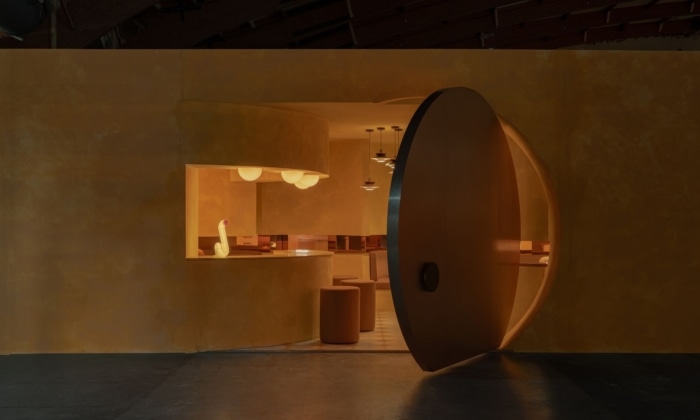
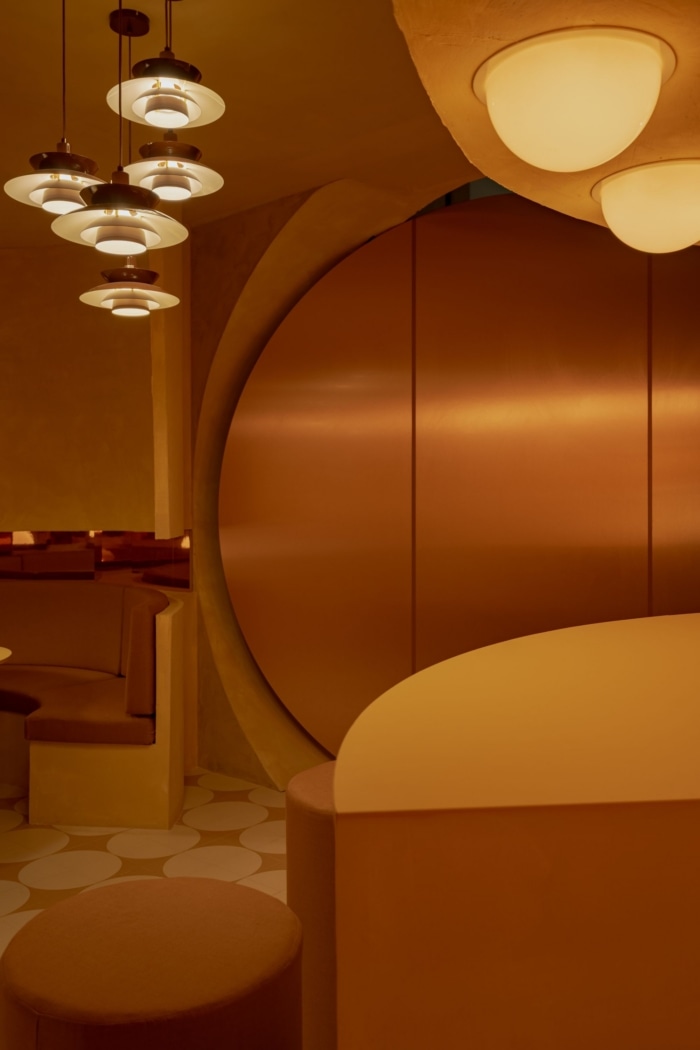
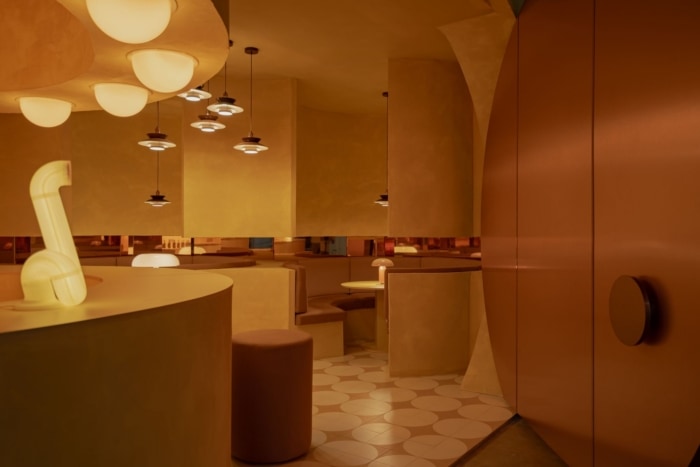
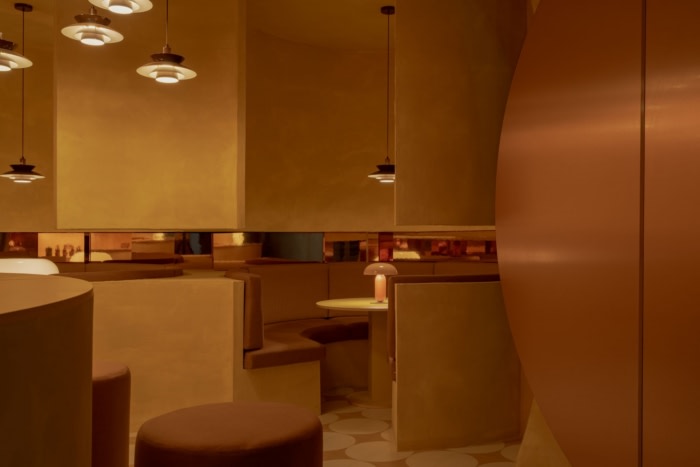
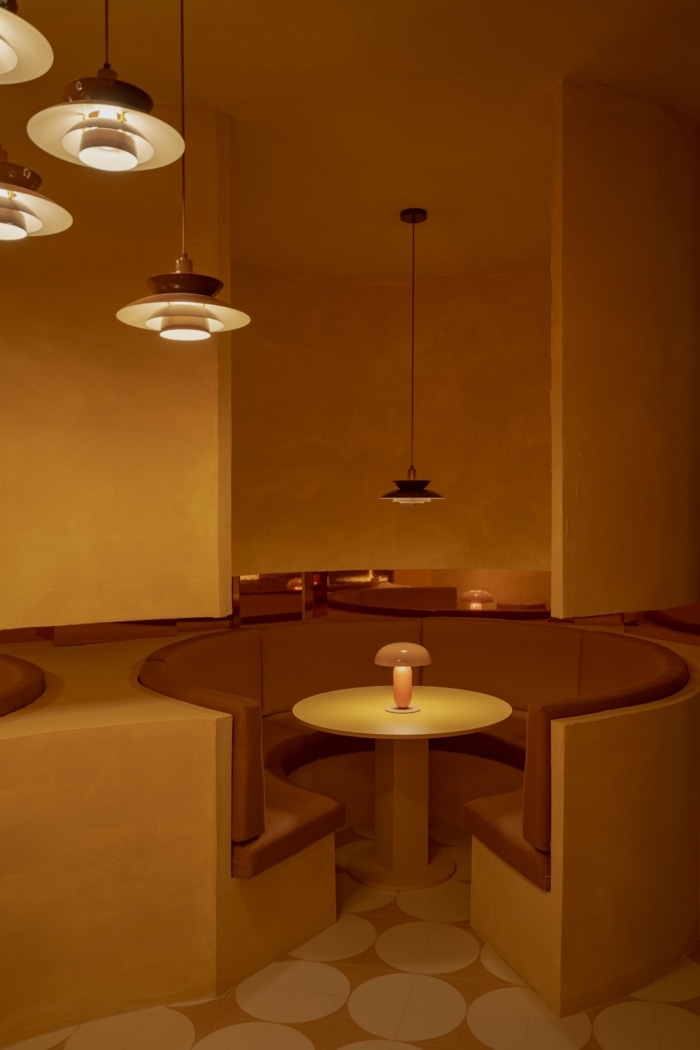
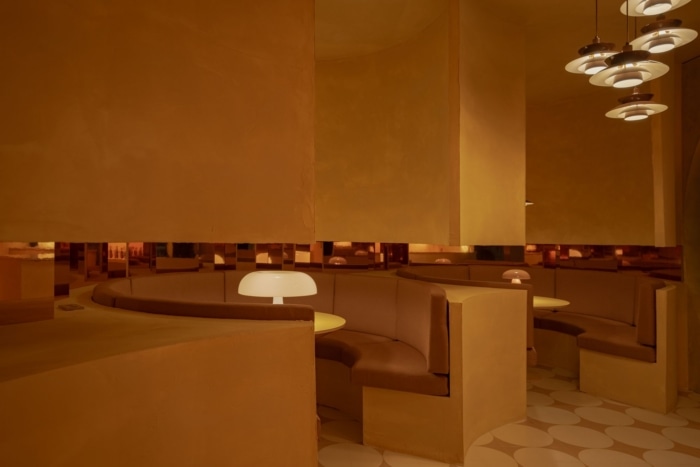
The result is a deeply architectural space where form, color, and light take center stage. Without superfluous ornament, the experience is built from essentials. The entire project is articulated through a single gesture: the exploration of the cylinder. A geometry that unfolds across multiple scales and readings: as void —or negative space— in the seating alcoves; as mass in the bar and stools; extruded in the Sentry Sculpture Light, designed by Ewan Lamm for Ultramar Studio; sectioned in doors and thresholds; or imprinted as a pattern across the ceramic flooring. A coherent, almost obsessive language that brings unity to the whole.
Lighting is completed with iconic pieces such as the Panthella by Louis Poulsen, the Nesso by Artemide, and the Gambosa by Marset, reinforcing an imaginary that sits between the pop and the retrofuturistic. A coherent, almost obsessive language that gives unity to the whole.
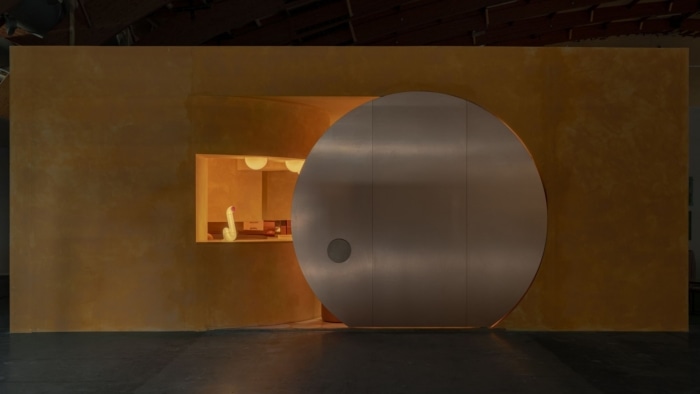
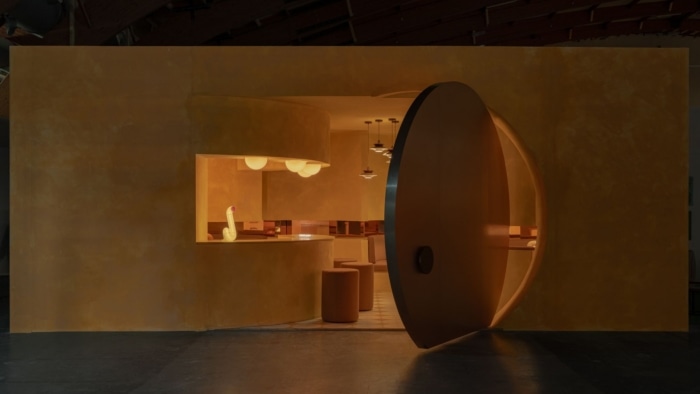
The circular entrance door becomes an iconic element: a three-meter-diameter piece that captures attention and plays with the “I am a monument” effect theorized by Robert Venturi. A direct nod to the entrance façades preceding the nightclubs along the N-340 in Montemar, Torremolinos, where architecture functioned as spectacle —almost like the Strip in Las Vegas— competing to capture the attention of passing drivers.
There is also room for imperfection, for traces of the unfinished. In Cateto Club, these are in fact a statement of intent. They respond to a way of building deeply rooted in that era: rough finishes, honest textures, the value of the coarse, and the vernacular as identity. References resonate here, from gotelé finishes to the whitewashed outdoor furniture of the Marbella Club, or places such as the Hotel Miami in Torremolinos, where this natural imperfection defined a distinct aesthetic.
The space further transitions into a second state through an artistic installation by interior landscaper Charo Benitez alongside Alejandro Cateto. This intervention revisits the current state of abandonment of many of these emblematic 1960s Costa del Sol buildings —such as the Ciudad Sindical de Vacaciones Tiempo Libre or the Aqua-Tec diving club in Fuengirola— now left unused, where vegetation spontaneously reclaims the space.
This installation embodies precisely that idea: gerberas and sunflowers emerge through the cracks of the space as both a critique of this abandonment and a form of reclamation. A statement that the Relax Style aesthetic can still, once again, bloom.
Local materials, golden accents, and a fluid architecture come together to create a small retrofuturist paradise.
Design: Cateto Cateto
Builder: Race Construcciones
Photography: Loveladrillo


Now editing content for LinkedIn.