Kafeterija Café Vračar
KIDZ studio’s renovation of Kafeterija Café Vračar in Beograd artfully combines a unified design system with a focus on flexible, context-driven spaces, enhancing the café’s dynamic atmosphere and community engagement.
Kafeterija is a specialty coffee chain founded in Serbia, known for its focus on high-quality coffee and everyday urban spaces. The Vračar project marks the fourth collaboration between KIDZ and Kafeterija, where all projects are based on a unified design system developed within the studio. In this case, the task was not a new build, but the renovation of one of the brand’s existing and significant locations.
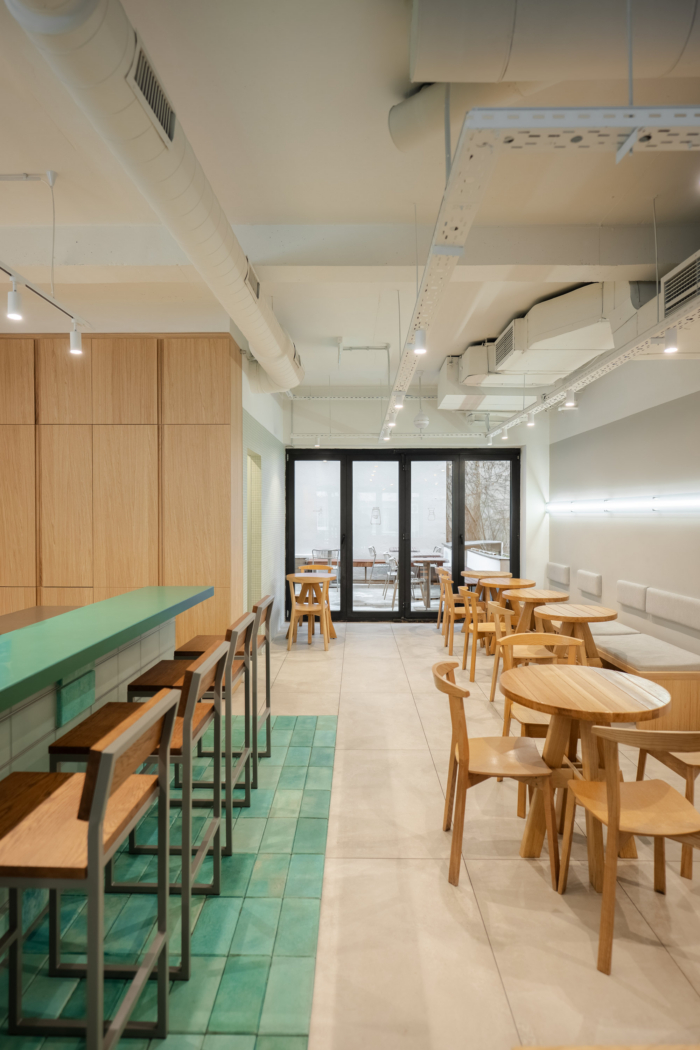
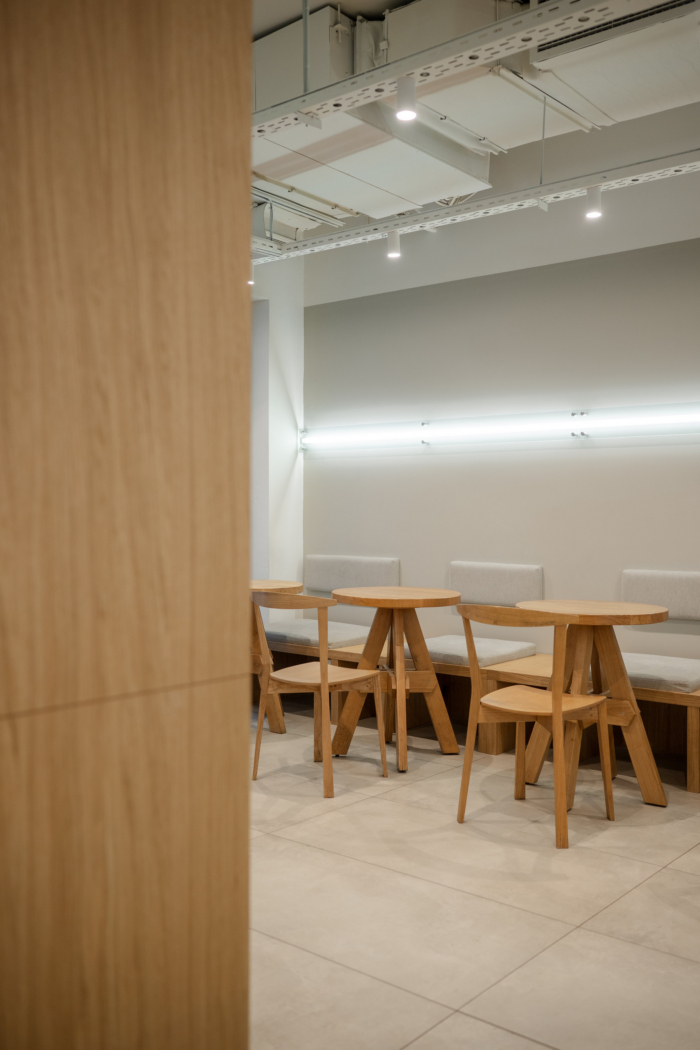
The design system we developed does not impose a rigid visual style; instead, it functions as a set of core principles and tools that allow for creating spaces with different atmospheres. It is built around four key elements: finishes, lighting, the bar, and seating types. Each of these can vary from project to project while maintaining an overall logic.
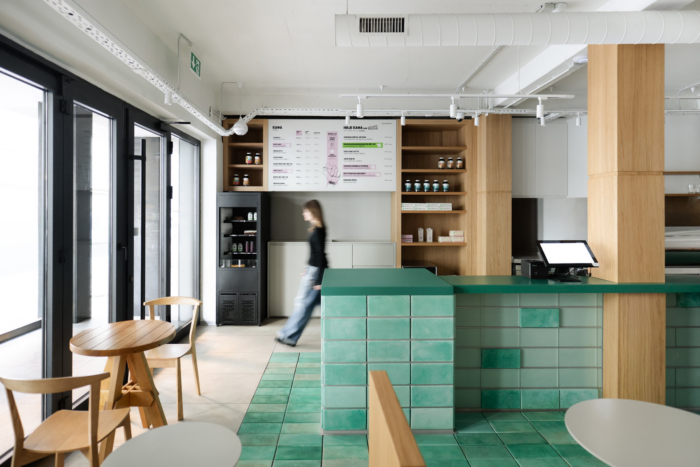
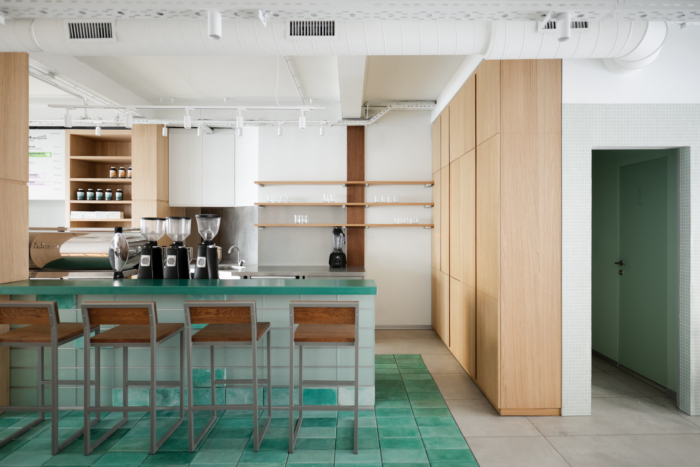
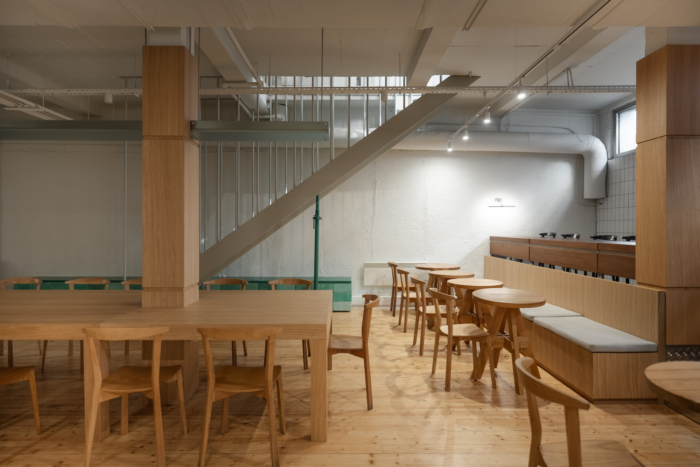
One of the system’s principles is to work with a focal point within the space. Each project introduces one more expressive element—most often the bar—which stands out through its material or structural solution. The rest of the interior is resolved in a calmer manner, allowing the space to remain flexible and adaptable to different contexts and locations.
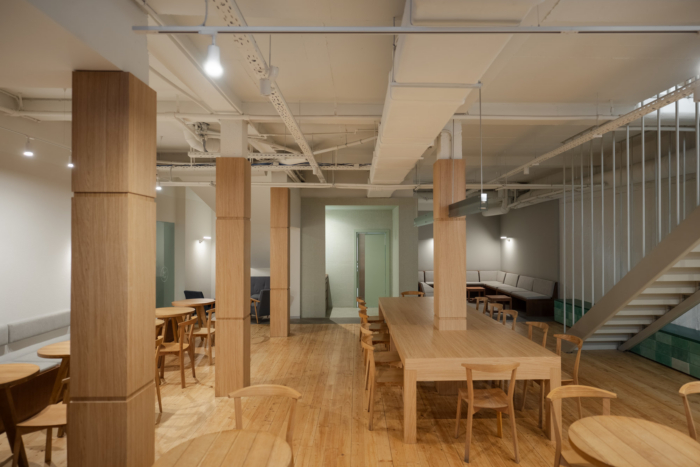
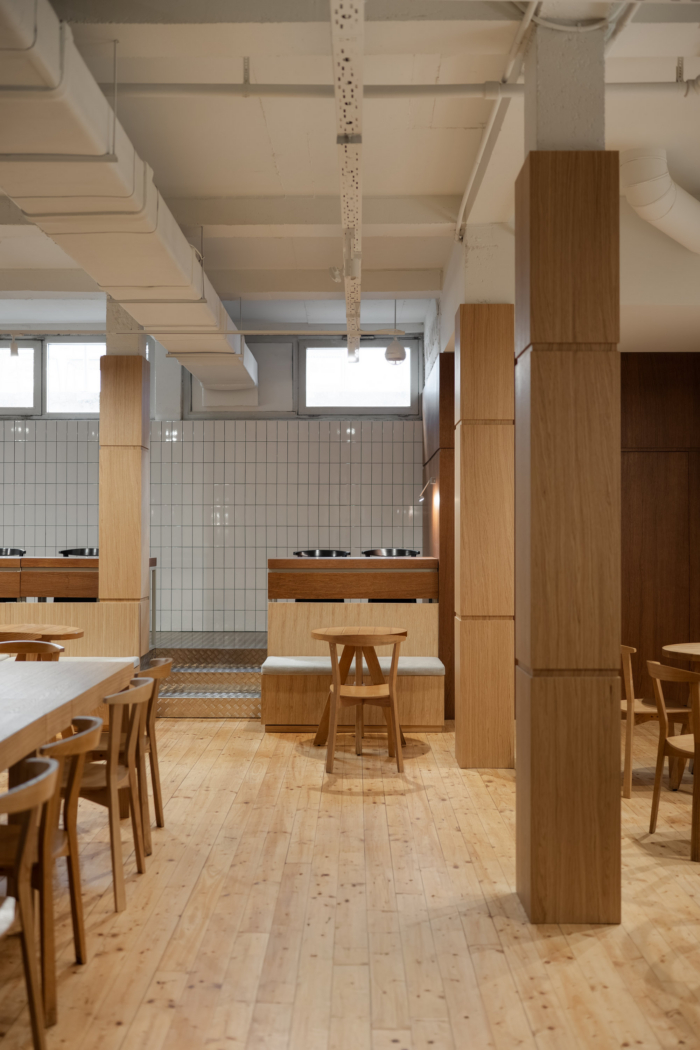
The material palette is composed of simple, almost “utilitarian” solutions: two types of wood, metal (ranging from rough finishes to stainless steel), light base tones, and accent colors—most often green or the brand’s signature pink. An important part of the approach is working with the existing structure: architectural elements are not concealed but preserved and emphasized.
In Vračar, several scenarios were initially considered, but ultimately a lighter and more open spatial type was chosen. This decision relates both to the scale—the café spans two levels—and to the context, as it is one of the older and key locations of the chain, situated in a student neighborhood.
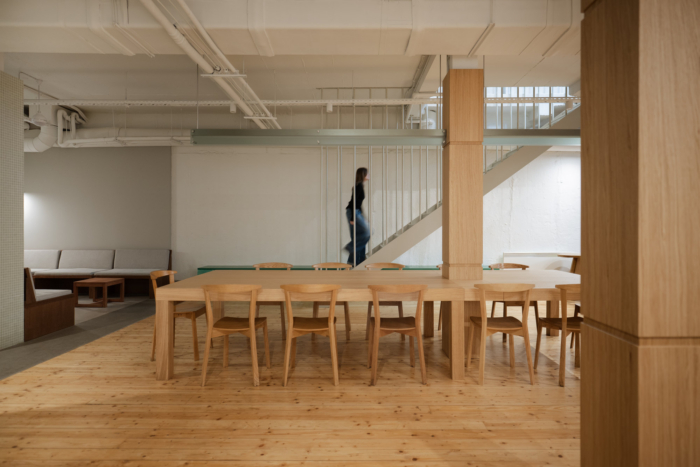
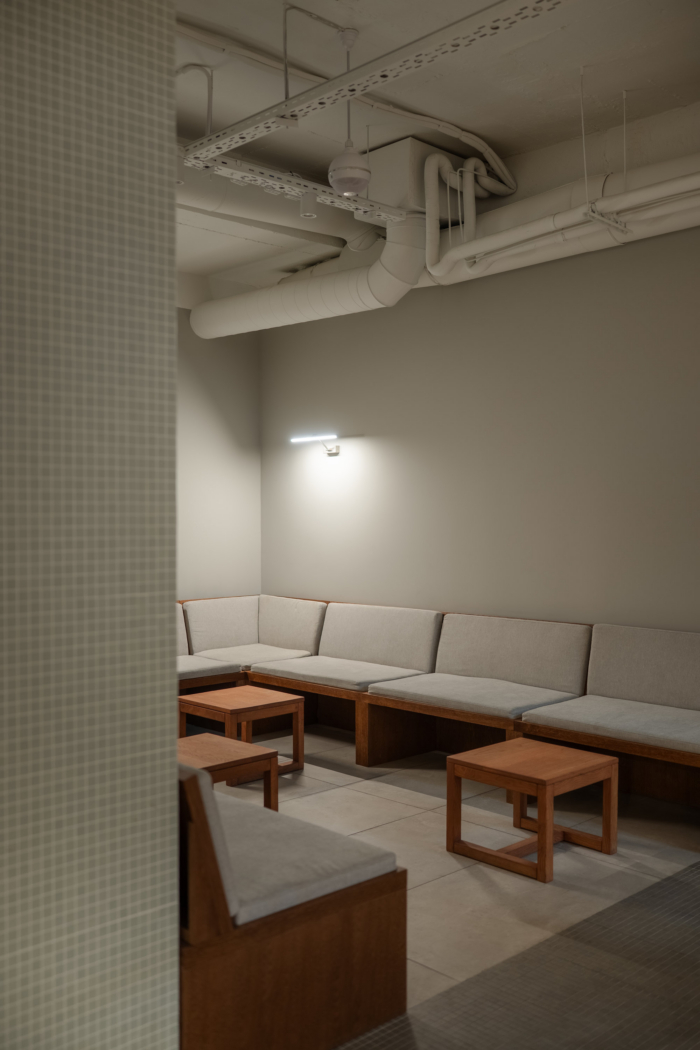
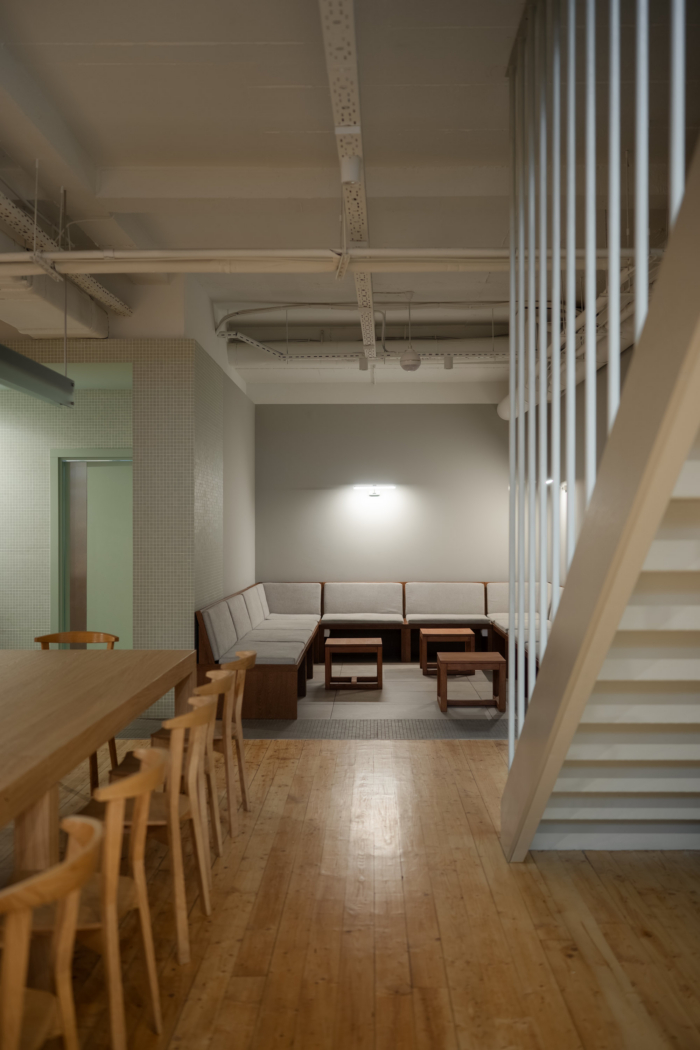
The lower level became central in terms of usage scenarios. Its logic is closer to that of a “campus”: it features a large communal table for work, areas for groups, more secluded spots, and a variety of seating types—from standard tables to lounge areas and individual “desks” for solo work.
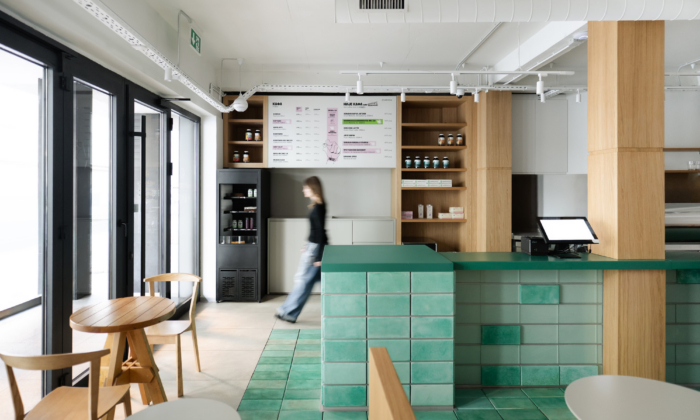
The ground floor, by contrast, is more transient and dynamic: visitors stay for shorter periods, with higher density and faster turnover. It is directly connected to the street and terrace, functioning as a lighter layer of the project.
The bar in this project is designed through a combination of colored concrete blocks and semi-transparent materials. It is emphasized not only through materiality but also architecturally—as a central element around which the space is organized.
As a result, the space is shaped not through a singular complex concept, but through the consistent application of the system and precise, situation-specific decisions—taking into account the existing context, constraints, and real usage scenarios.
Design: Kidz Studio
Design Team: Egor Bogomolov, Valerij Egorov, Valeria Dzhigil, Katarina Dragojlovic, Maria Kolpacheva, Dmitry Ivanov, Polina Dyachenko
Photography: Ljubo Ašćerić