
Sanshanlaichi Resort
Studio InTo入舟建筑’s Sanshanlaichi Resort in Xialang Village artfully integrates semi-outdoor spaces and pitched roofs, creating a harmonious retreat that reflects the Lingnan region’s natural beauty and climate.
A Lingnan Interpretation of Semi-Outdoor Space
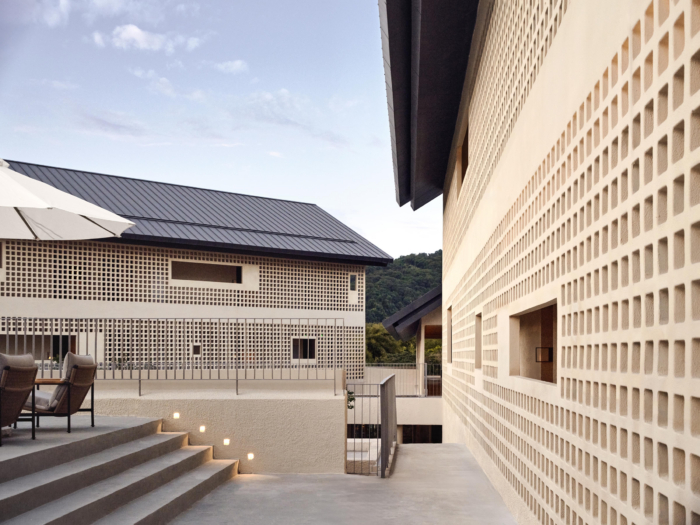
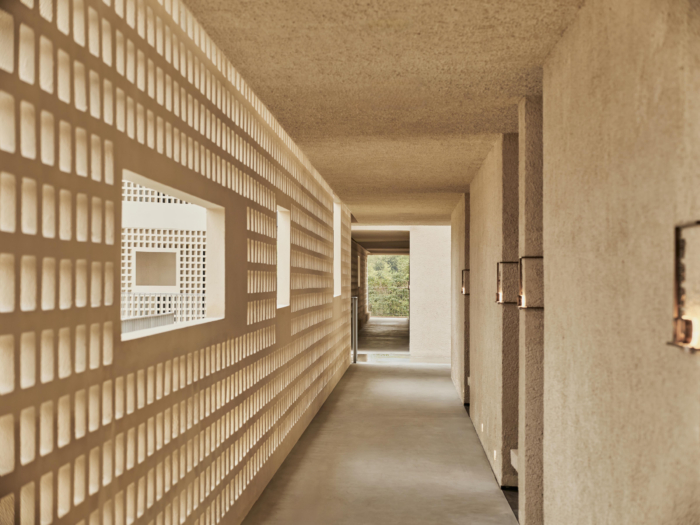
Architecture in the Lingnan region has often responded to hot, rainy climates through open, fluid spatial forms and light, permeable interfaces. This project continues that construction logic. Through the turns and transitions of semi-outdoor spaces, together with the continuity of the corridors, the overall spatial structure is organised. The shifted volumes further generate a series of openings and transitional interfaces, allowing the building to establish a natural dialogue with its surroundings.
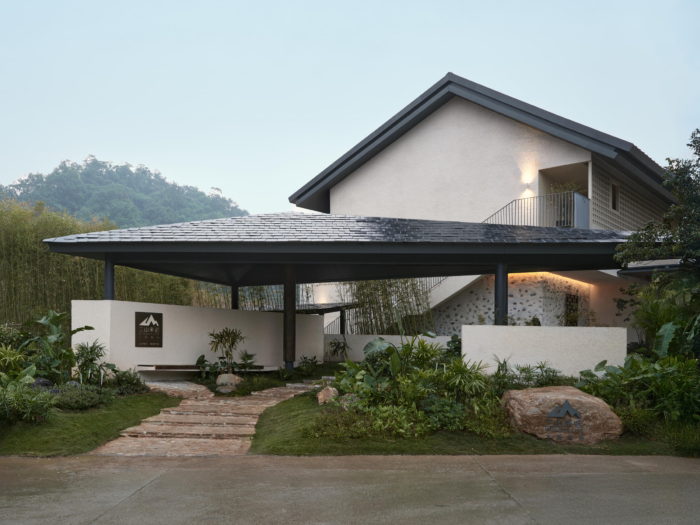
The entrance is set away from the main road and is reached through a bamboo path. This extended approach slows the arrival sequence and creates a gradual transition between the building and its environment. For visitors, the transition is not only spatial, but also psychological: as one moves towards the entrance, the noise of everyday life is gradually left behind, and the quietness of mountain living begins to unfold.
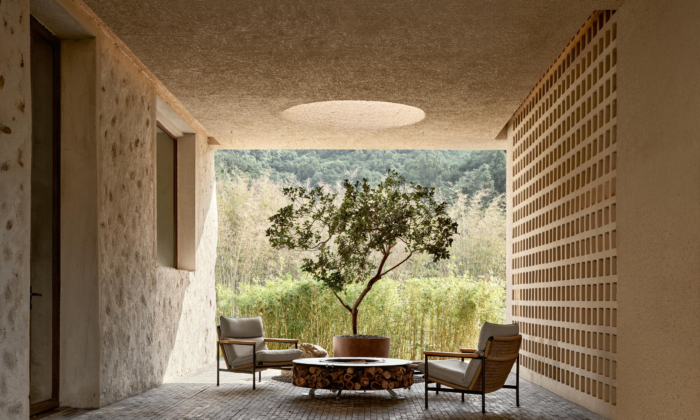
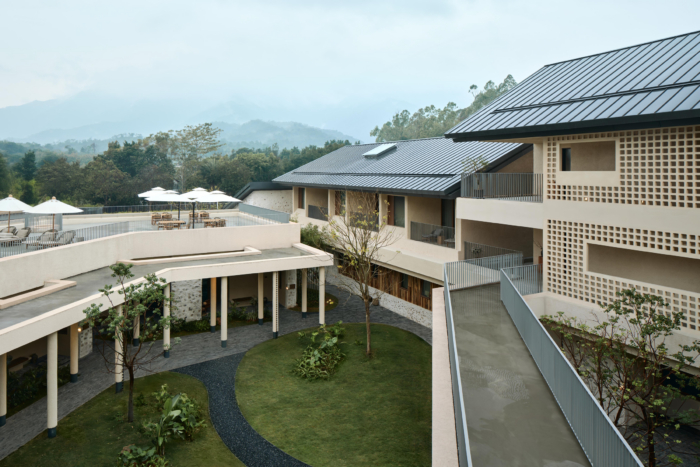
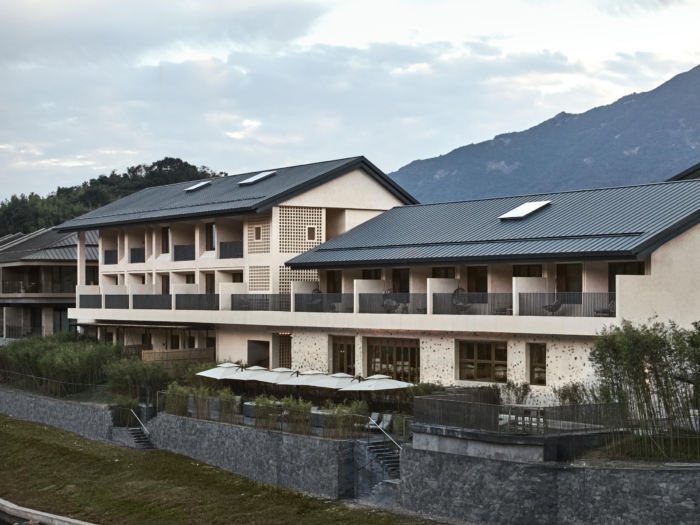
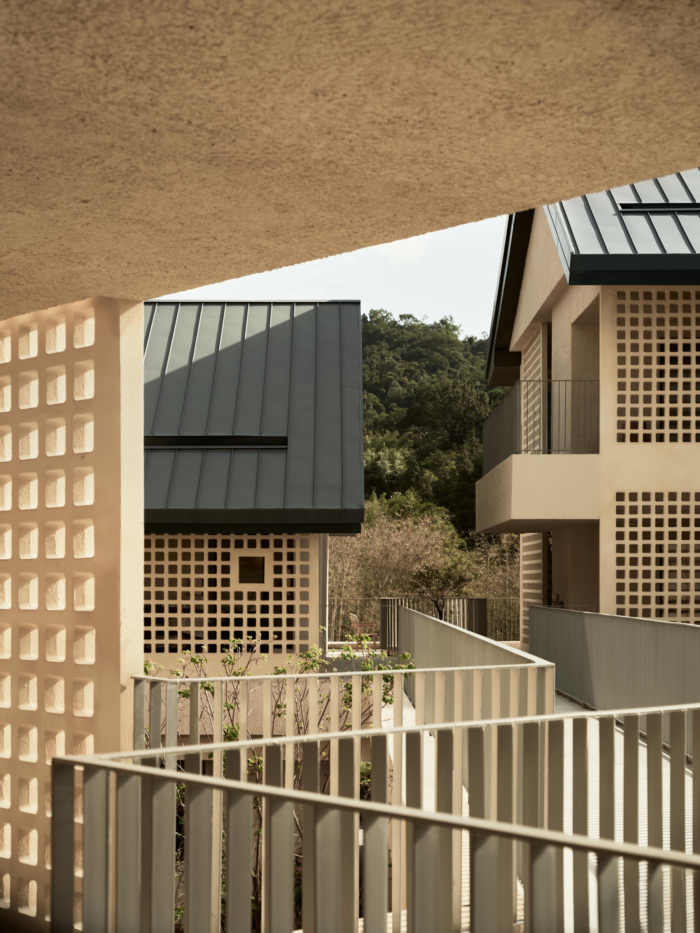
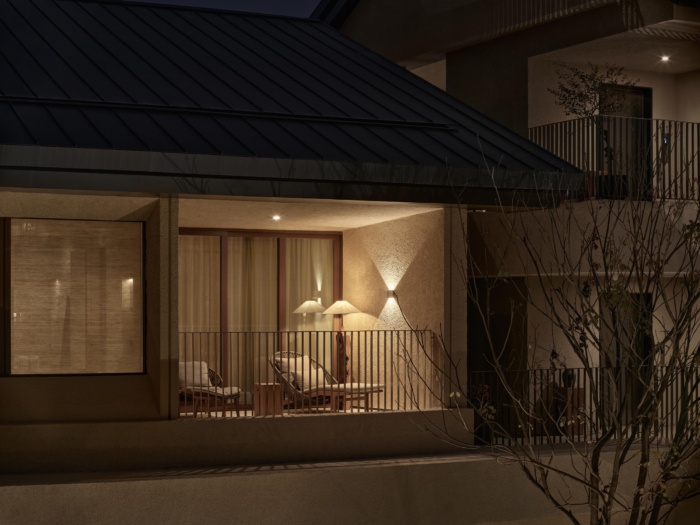
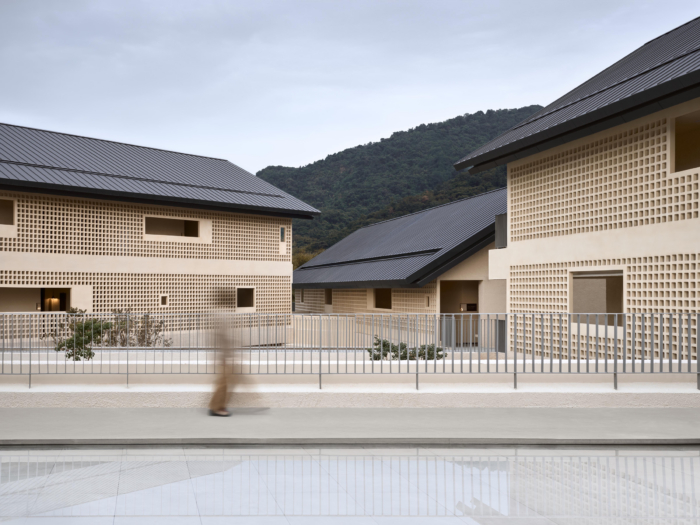
Semi-outdoor spaces connect the gaps between the volumes, forming continuous interfaces for circulation and pause. As one moves through them, the scale of space, light and shadow, and viewing angles constantly change, allowing the surrounding environment to enter the building in a more dynamic way. The staggered pitched roofs integrate the volumetric composition while responding to both climate and context: they echo the outline of Mount Luofu in the distance and adapt to the hot, rainy conditions of the site.
Local Construction and the Drama of Light
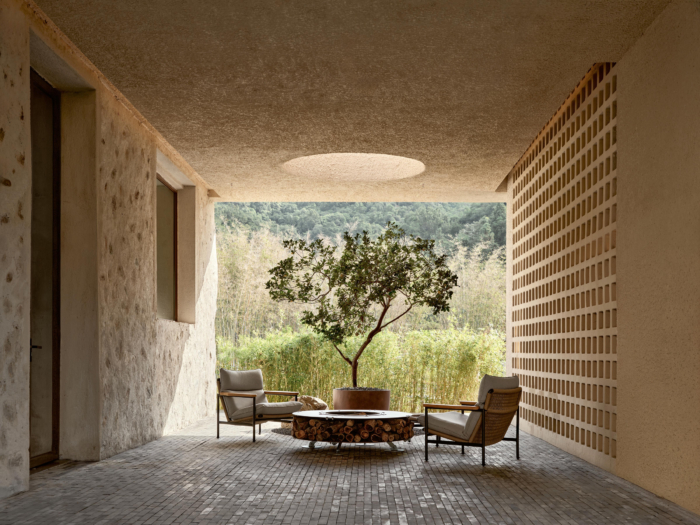
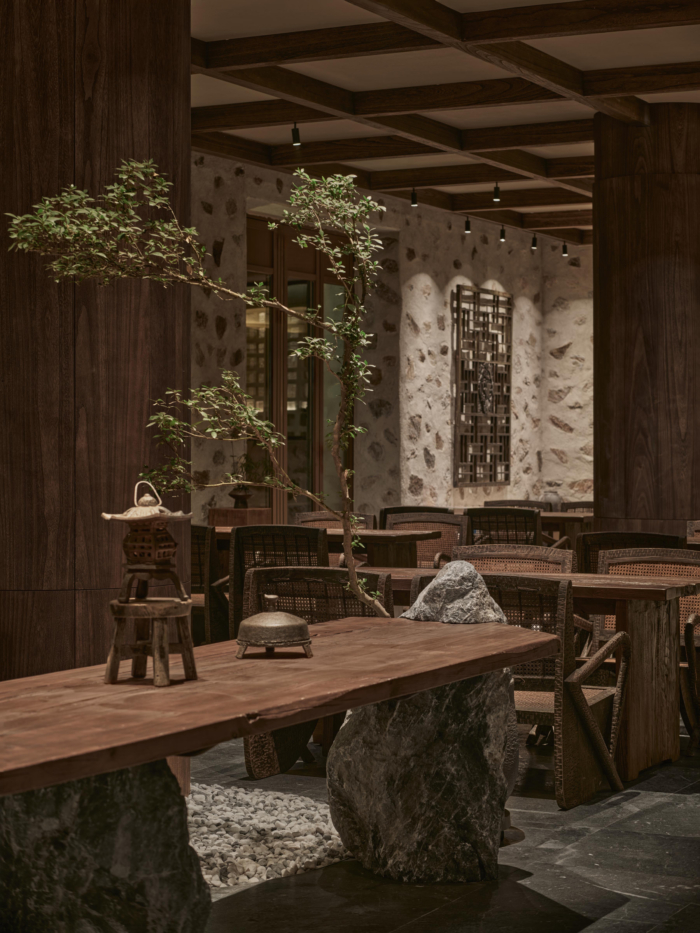
Rubble stone walls establish a plain and natural material foundation for the project. Extending from the exterior façade into the interior, the stone becomes an important medium connecting different spatial layers. The rough texture formed by the stacked stone reveals changing patterns of light and shadow under natural light.
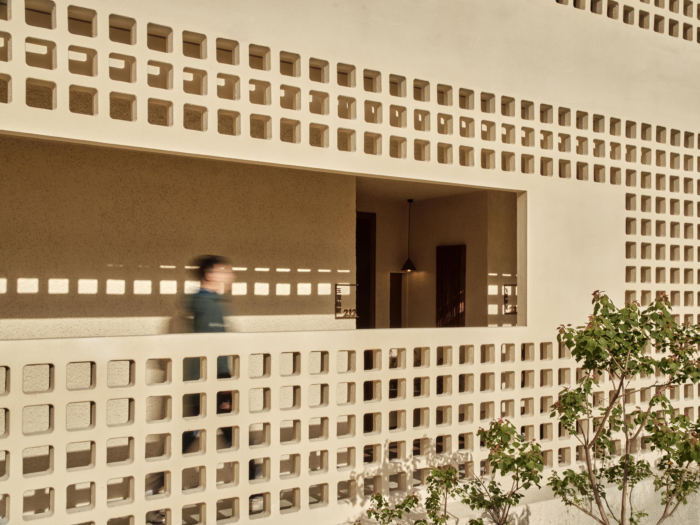
Facing the inner courtyard, perforated brick walls are used in response to the strong sunlight and hot climate of the Lingnan region. This semi-transparent treatment provides shading while preserving ventilation and visual permeability. It also allows mottled light to enter the semi-outdoor spaces outside the guest rooms, creating layers of light and shadow that change over time.
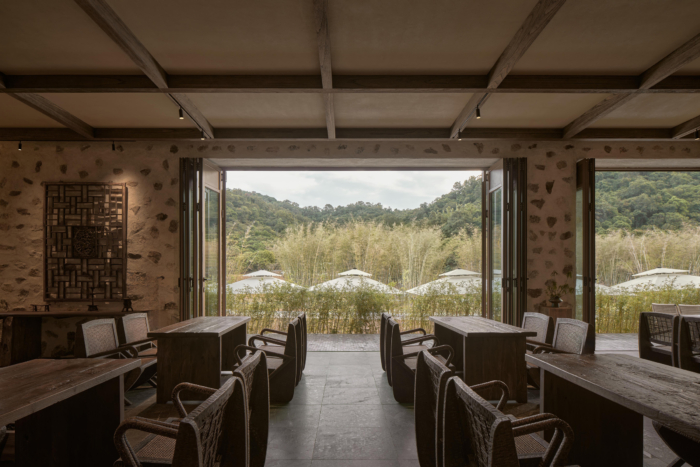
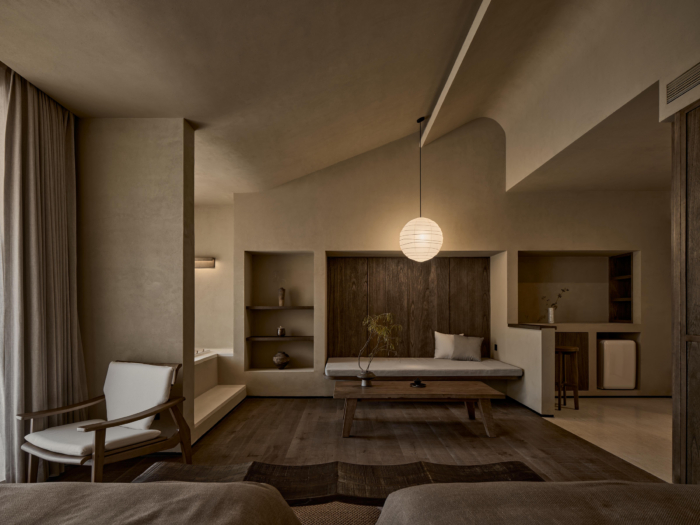
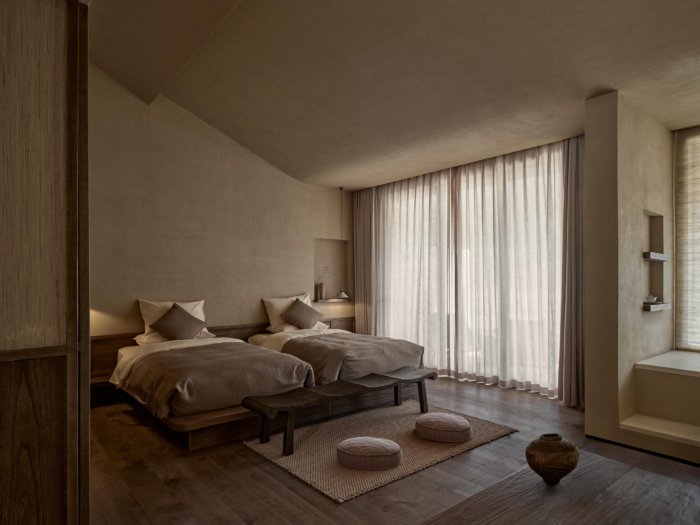
The interior design continues the architectural language of material and space, responding to the surrounding natural environment in a restrained manner. The public areas are oriented as much as possible towards the bamboo groves and streams. Through framing and borrowed views, the landscape of water and bamboo is brought into the interior. Interfaces opening towards the river further enhance the openness of the space, weakening the physical boundary of the building and strengthening the connection between living space and nature.
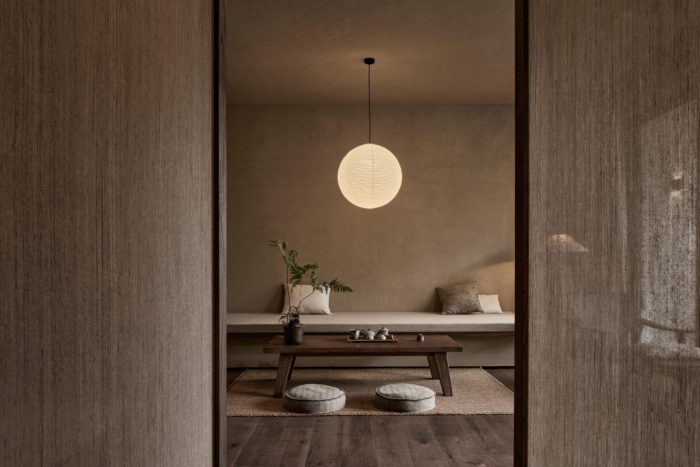
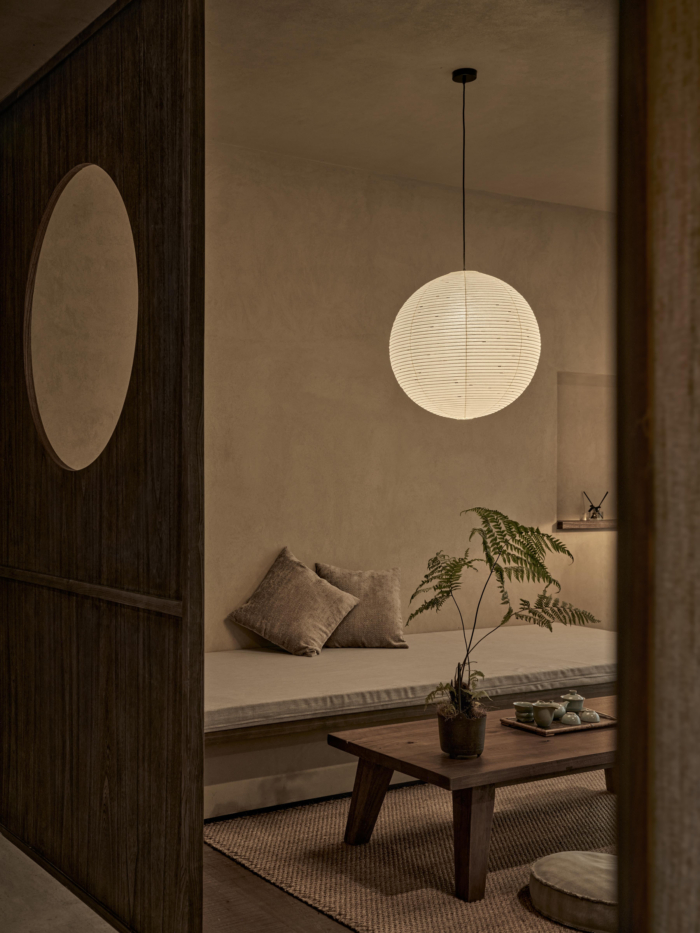
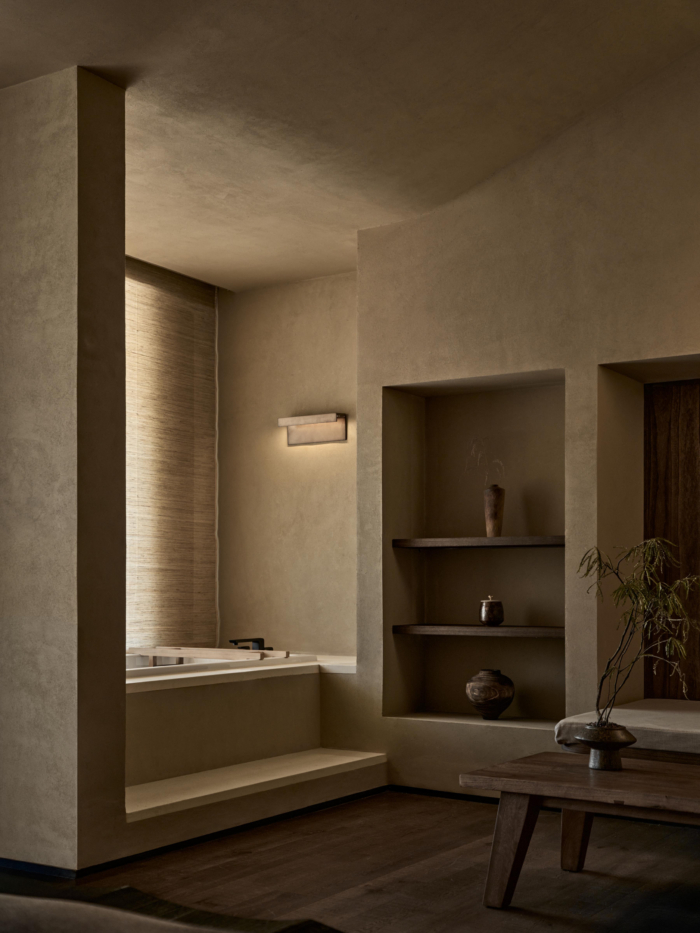
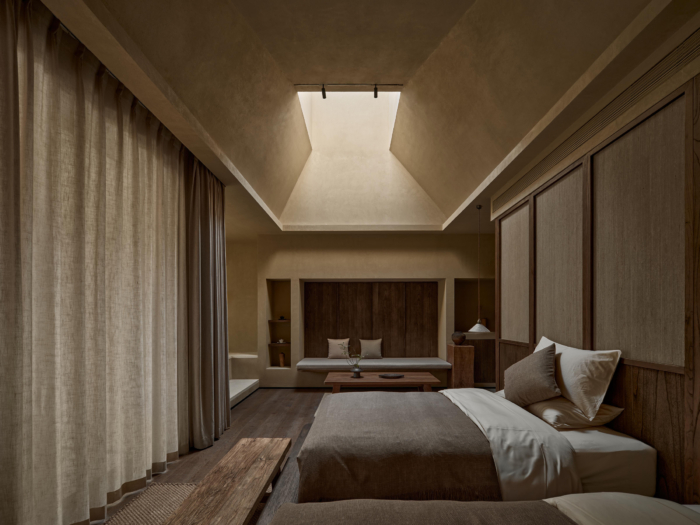
In the public areas, rubble stone walls form a rustic base, while solid wood elements and furniture with a natural character add warmth to the rough and grounded material atmosphere. The result is a calm interior that retains a close relationship with nature.
Architecture as a Point of Balance
In Xialang Valley, the design responds to the site’s climate and environmental conditions through low-tech and locally grounded construction methods. Semi-outdoor spaces, pitched roofs, and material interfaces work together to integrate light, natural ventilation, streams, bamboo groves, and distant mountains into a coherent spatial logic.
The project is less a direct expression of seclusion than a local experiment in balance. Through the opening, closing, and calibrated scale of semi-outdoor spaces, the building responds to the existing texture of the site. Its final form is not a symbolic depiction of retreat, but the natural result of site conditions, programme requirements, and construction logic. With restraint, the design embeds itself in nature and establishes a continuous, everyday balance between architecture and environment.
Design: Studio InTo入舟建筑
Design Team: You Xing, Xu Wanli
Contractor: China Construction Fourth Engineering Bureau Corp., Ltd.
Photography: Liu Zhangyue


Now editing content for LinkedIn.