
Shu Pavilion Restaurant, Shanghai
AD Architecture’s Shu Pavilion Restaurant in Shanghai masterfully blends Sichuan culinary heritage with contemporary design, offering an intimate riverside dining experience that harmonizes tradition and modern aesthetics along the Huangpu.
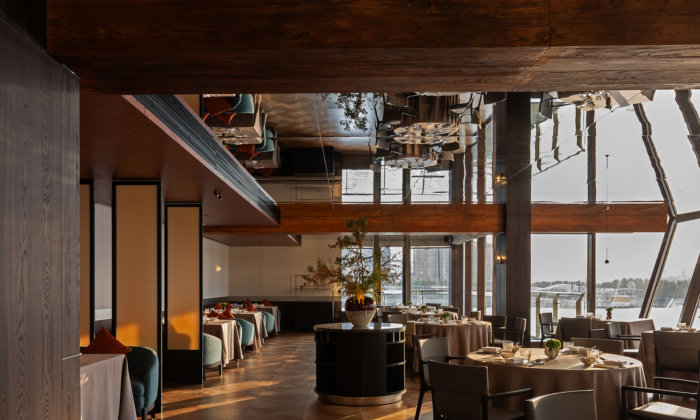
Rooted in Shanghai’s refined urban sensibility, the project adopts a contemporary design language to orchestrate a dialogue between tradition and modernity, East and West, everyday warmth and understated elegance along the Huangpu River. Eschewing overt symbolism, the space speaks through materiality, light, and narrative, intertwining the distinctive charm of Sichuan cuisine with Shanghai’s effortless sophistication, while the river becomes a fluid, ever-changing backdrop.
The Huangpu River winds through the city, reflecting the glamour and rhythm of urban life along both banks. Its waters carry echoes of Shanghai’s past and the pulse of its present, while passing vessels animate the ever-changing urban panorama.
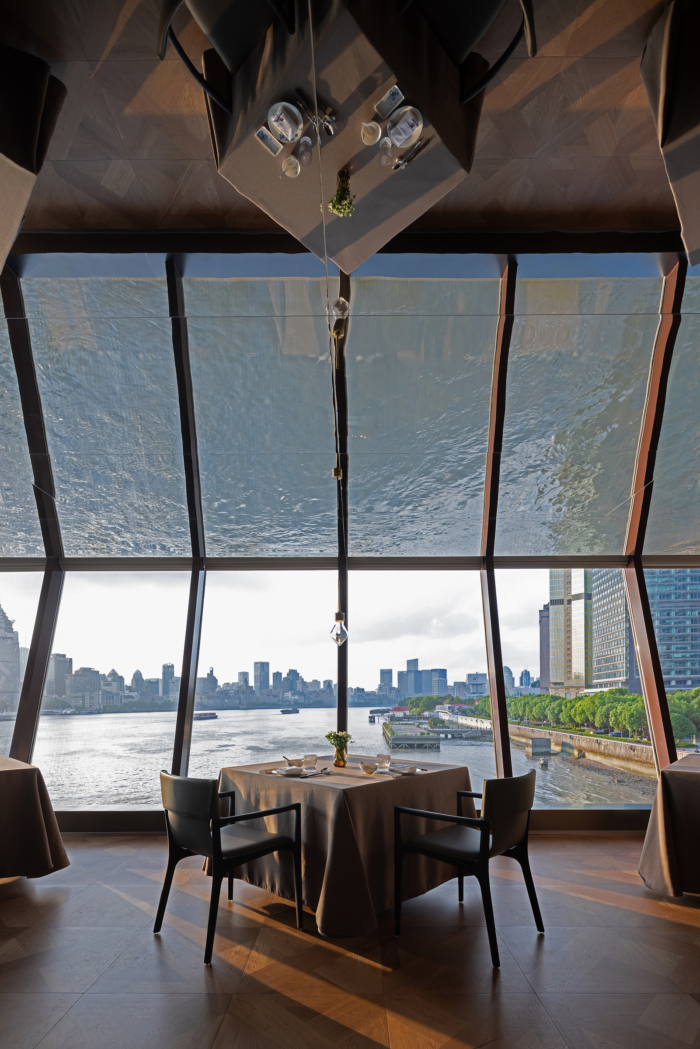
From the deck, the gentle river breeze, shimmering reflections, and drifting boats become part of the dining experience, dissolving the boundaries between the city, the water, and the space itself.
With over two millennia of heritage, Sichuan cuisine represents one of China’s most storied culinary traditions. Rong-style Sichuan Cuisine, founded in 1912 by Lan Guangjian, has refined its craft for more than a century—precise in the use of ingredients, gentle yet lingering in flavor, and renowned for the philosophy of “one dish, one style; a hundred dishes, a hundred expressions,” offering a uniquely nuanced gustatory experience.
Authentic Sichuan cuisine celebrates complexity in seasoning, weaving numbness, spice, umami, fragrance, sourness, and sweetness into harmony, often through slow braising and careful simmering, honoring seasonal and regional ingredients.
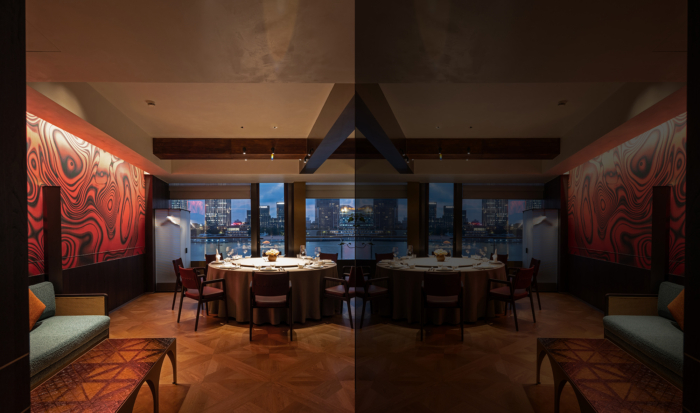
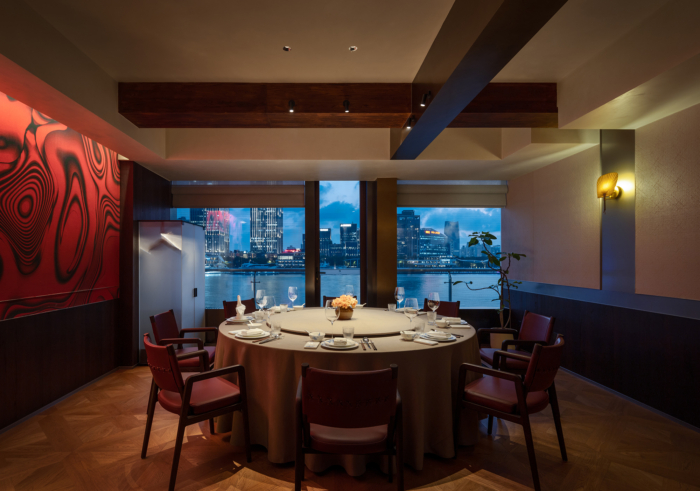
The project is located in Lujiazui, Pudong, Shanghai, on the third deck of a fixed floating pontoon named “Star of Pu” along the Huangpu River. Formerly home to the well-known Sea Palace Floating Restaurant, it remains a shared memory for generations of Shanghainese and is now one of Shanghai’s closest riverfront dining venues. Anchored beside the iconic Tomson Riviera in the heart of the city, the vessel occupies a prime vantage point. Its exterior, reimagined by international design studio SUL, features sweeping 270° panoramic glass façades, framing uninterrupted views of the Bund’s historic architecture and Lujiazui’s financial skyline.
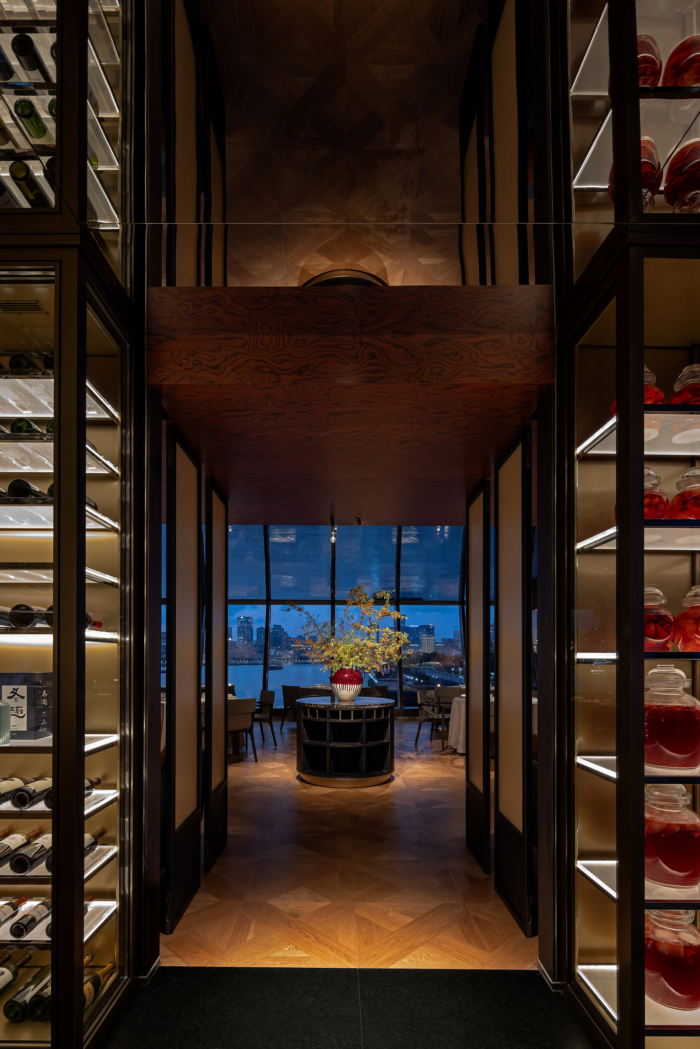
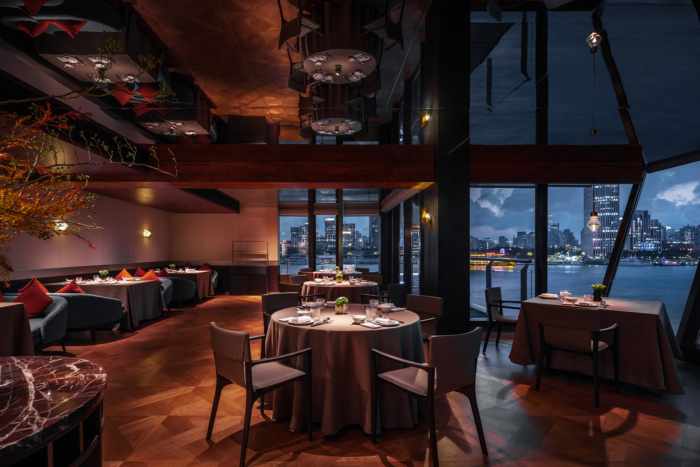
Conceived by AD ARCHITECTURE, the restaurant’s design interprets Chinese sensibilities through a modern lens, combining simplicity with subtle traditional accents. As dusk falls, soft lighting plays across wooden textures and classical motifs, creating a warm, serene atmosphere.
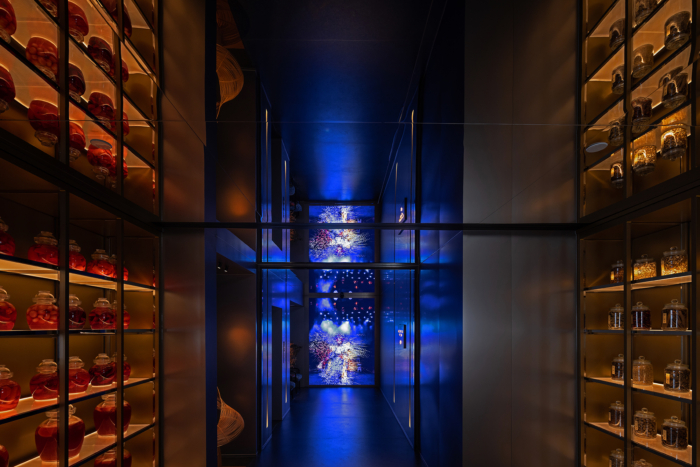
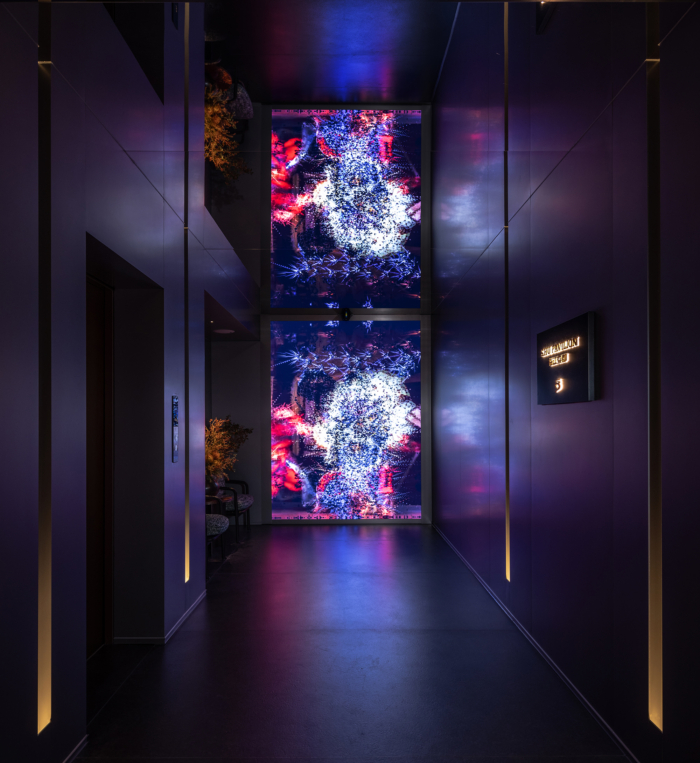
The entrance reinterprets Sichuan opera in abstracted forms, marking the prelude to the spatial journey. Reflected in stainless-steel mirrors, traditional opera masks and motifs are deconstructed, recombined, and renewed. The cool sheen of metal meets the vivid drama of Sichuan opera motifs, instantly establishing a spatial identity where tradition and modernity coexist.
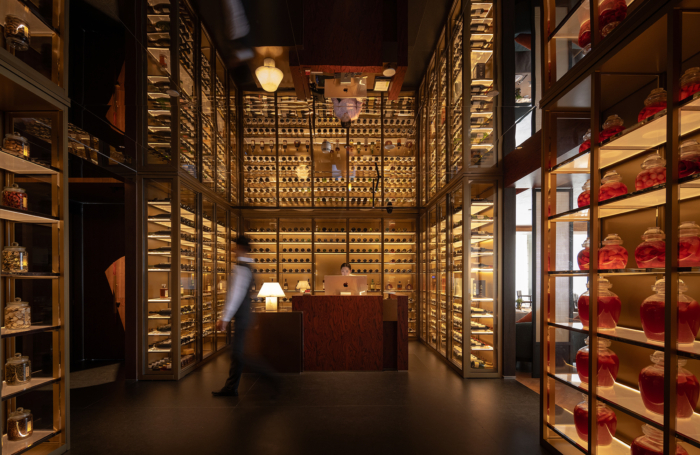
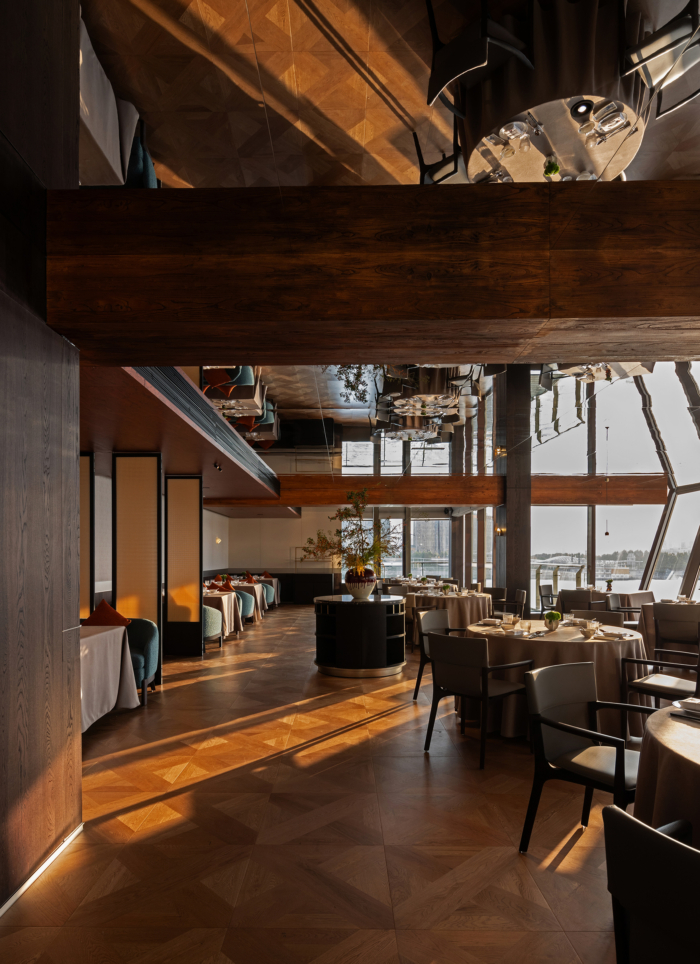
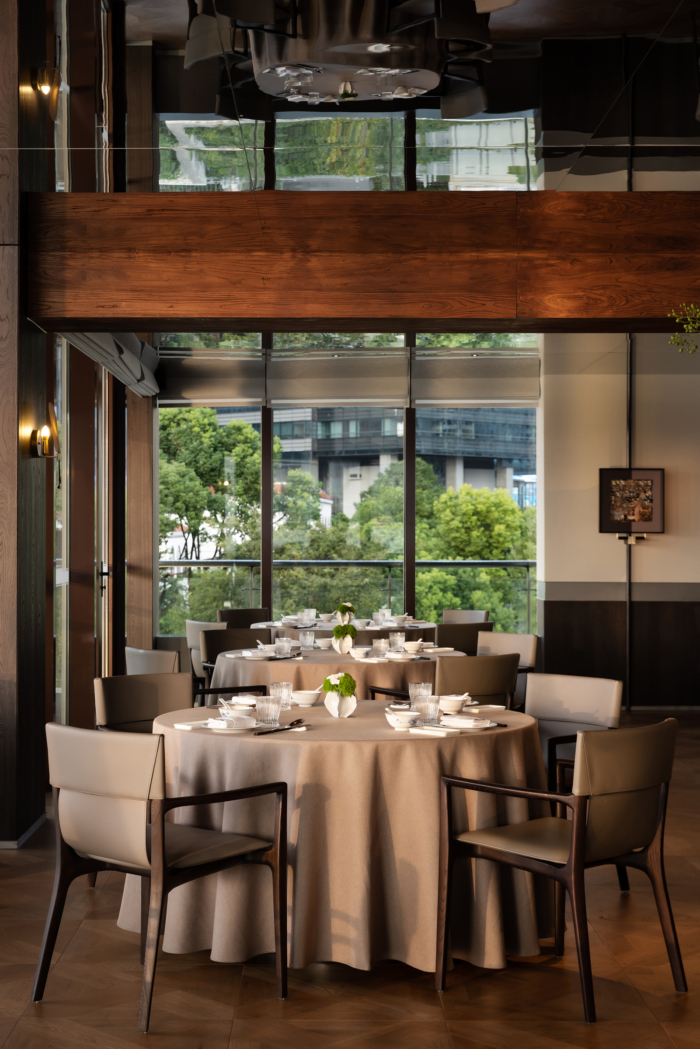
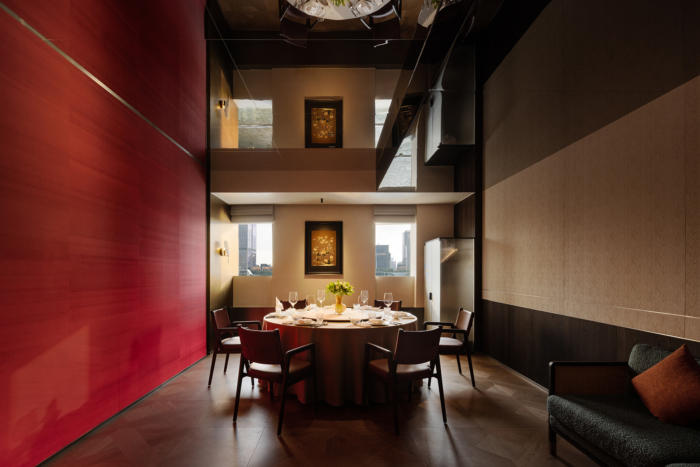
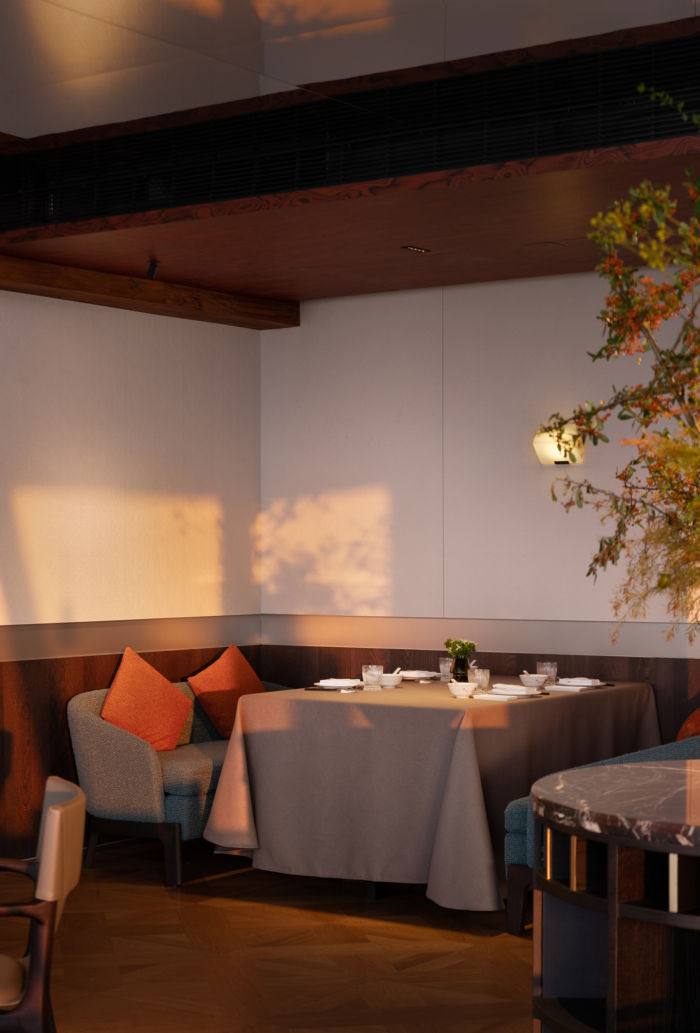
Natural wood brings warmth and tactility, softening the urban setting. Acrylic, metal, and wall coverings introduce a contemporary material palette. Rough and refined, simple and opulent qualities interplay, creating a richly layered material language. Textured wall coverings enhance comfort and a sense of enclosure, while bold hues energize the space, balancing ease with sophistication.
Mirrored surfaces become a defining feature, reflecting the shimmer of the Huangpu River, the Bund’s historic skyline, and the shifting sky, drawing the surrounding cityscape effortlessly indoors.
Sunlight filters through the vessel’s structure, intertwining with the shimmering river and the architecture beyond to create a dynamic visual tableau. The boundary between inside and outside gently dissolves, immersing diners in the riverfront panorama, where every step reveals a changing scene.
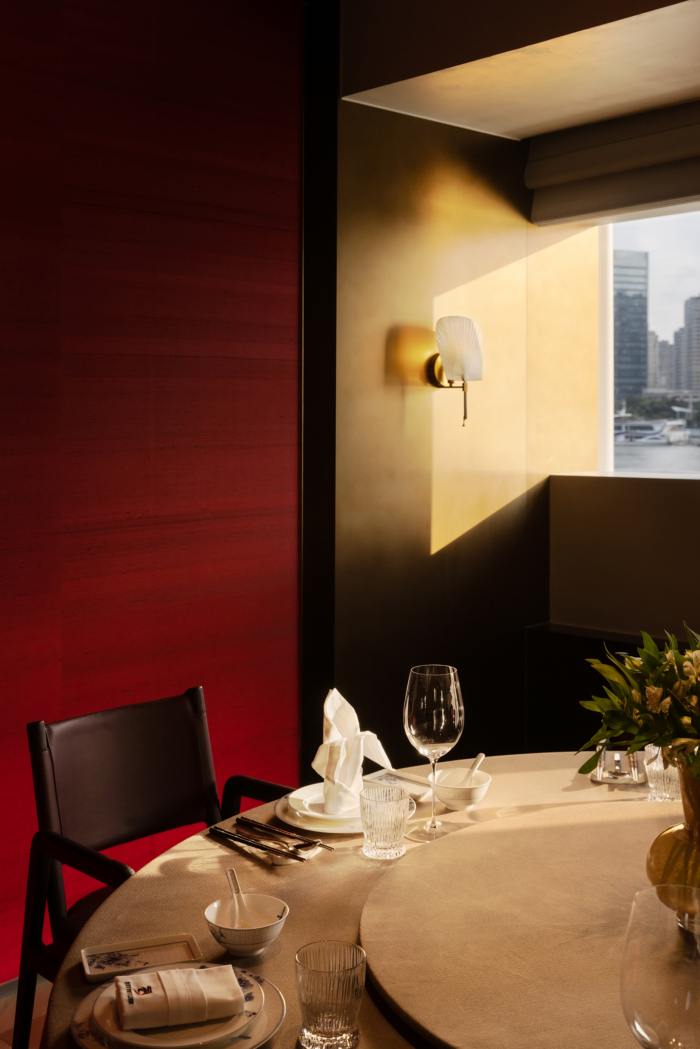
Lighting design prioritizes atmosphere, rejecting direct brightness in favor of warm tones and a nuanced play of light and shadow. Soft, low-temperature light wraps each table, highlighting the color and texture of the dishes, while accent illumination articulates material and décor details. Under this gentle glow, Sichuan cuisine takes on a touch of Western romance, elevating both visual and culinary enjoyment.
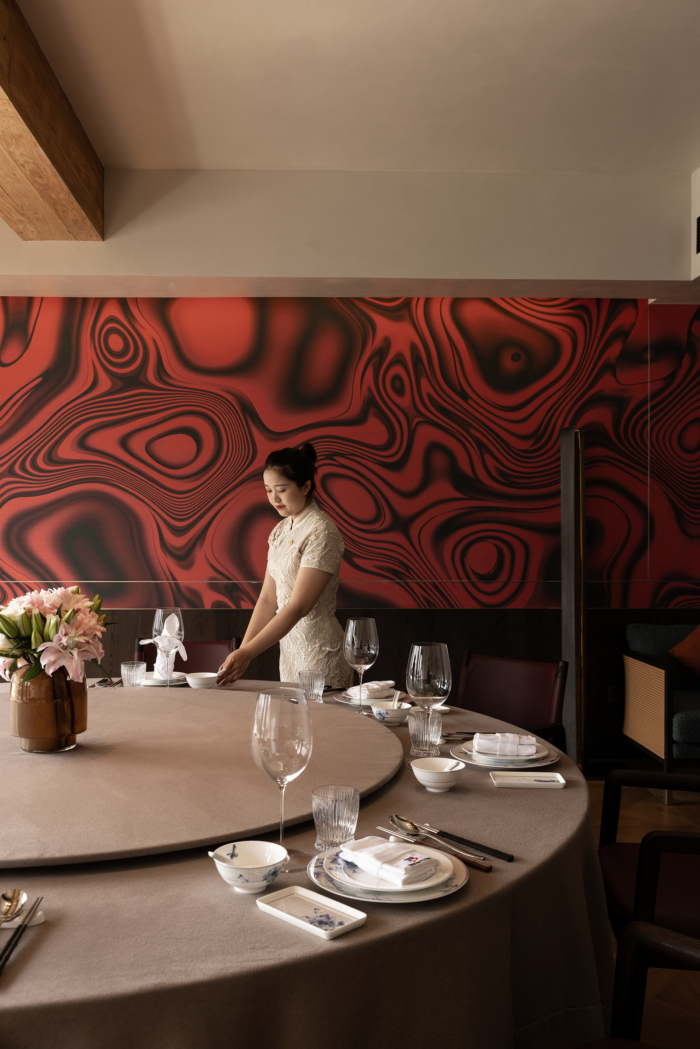
With subtle Sichuan flair at its core, the design eschews overt symbolism. Sichuan elements—bamboo weaving, Shu embroidery, opera motifs—are reinterpreted in contemporary forms, appearing across cushions, wall paintings, décor, and partitions. The palette draws on Sichuan red, peppercorn green, and natural wood brown, complemented by Shanghai-style gray and metallic silver—striking yet elegantly restrained. Every detail speaks of Sichuan culture, expressed through a refined Shanghai sensibility.
Design: AD ARCHITECTURE
Chief Designer: Xie Peihe
Lighting: Oway Lighting
Furniture: YALI
Photography: Hanmo Vision


Now editing content for LinkedIn.