TONANA
Estudio A-G designed TONANA, a cocktail bar on the rooftop of Casa Hoyos Hotel in San Miguel de Allende, transforming an underutilized space into an immersive experience that honors Mexican cultural heritage through its use of materials like tezontle and unique design elements.
TONANA is a cocktail bar located on the rooftop of Casa Hoyos Hotel in San Miguel de Allende, Mexico. Designed by Andrés Gutiérrez, the project transforms an underutilized rooftop into an immersive hospitality experience rooted in Mexican cultural memory, artisanal knowledge, and a contemporary interpretation of Mesoamerican symbolic systems.
The project extends the narrative established within Casa Hoyos, a historic building previously renovated by Gutiérrez. Its concept emerged from the family history of owner Vianney Torres, where women have traditionally occupied a central role in decision-making. This matriarchal legacy became the conceptual foundation for TONANA, with Tonantzin—understood as “our sacred mother” within Nahua tradition—as its symbolic axis.
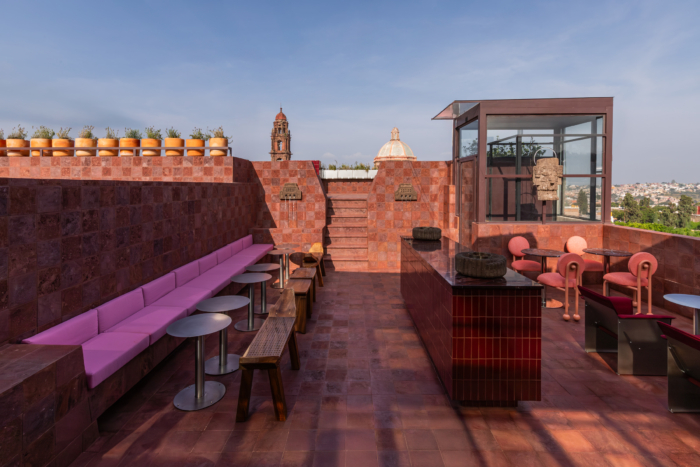
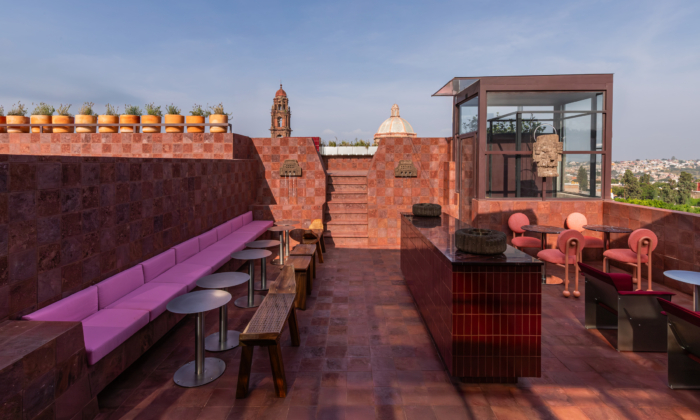
The rooftop is organized through an L-shaped plan and a sequence of level changes that turn circulation into an ascending spatial journey. The central connection between both ends reaches the highest elevation, while the floor drops 1.4 meters on one side and creates a more intimate VIP area on the other. Rather than treating the rooftop simply as an additional venue, the design uses its geometry to construct a layered experience of discovery.
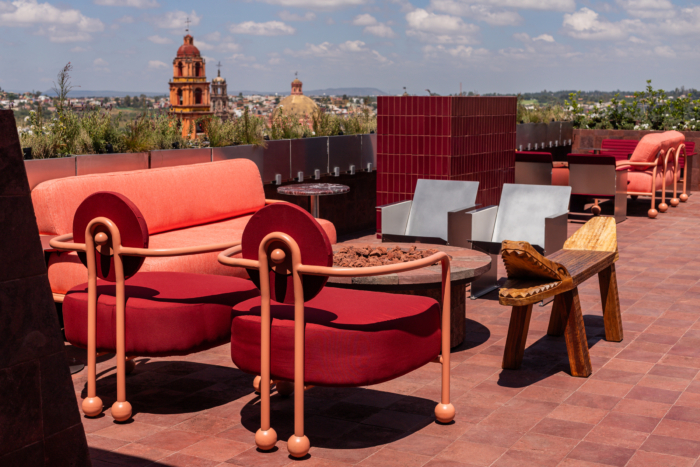
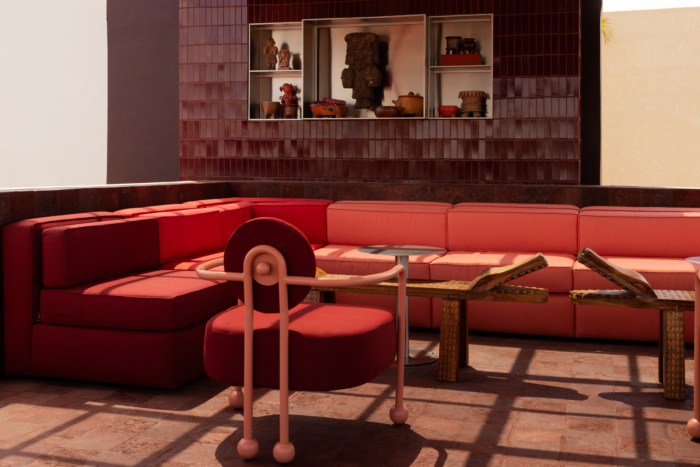
Materiality plays a central role. Tezontle, a porous volcanic stone, covers floors and walls, establishing a strong connection with the earth and the geological landscape of central Mexico. Two monolithic fountains flank the main staircase, introducing water as a symbol of nourishment and continuity. Crocodile-shaped wooden benches reference Cipactli, a mythological figure associated with the creation of the earth, while metal elements, reflective surfaces, and sculptural furniture introduce a contrasting, ethereal quality.
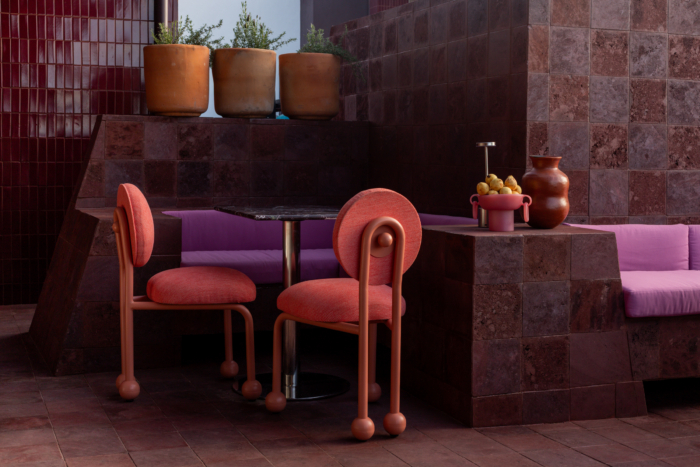
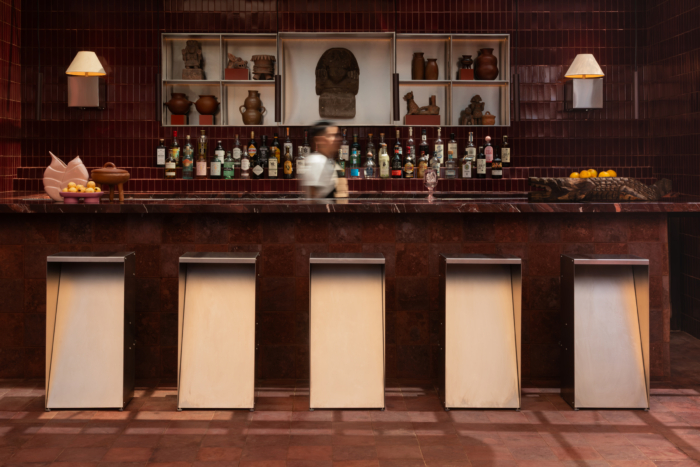
This dialogue between earthly and ethereal registers defines the atmosphere. Rough stone and monolithic volumes are paired with stainless steel, marble, glossy surfaces, pink textiles, and curved geometries. Fuchsia and coral tones shift toward deep reddish hues at sunset, creating a visual connection with the surrounding tezontle. Circular fire pits and outdoor fireplaces establish gathering points, while glazed tiles in burnt copper tones add warmth and reflection to the entrance altar, DJ booth, and bar.
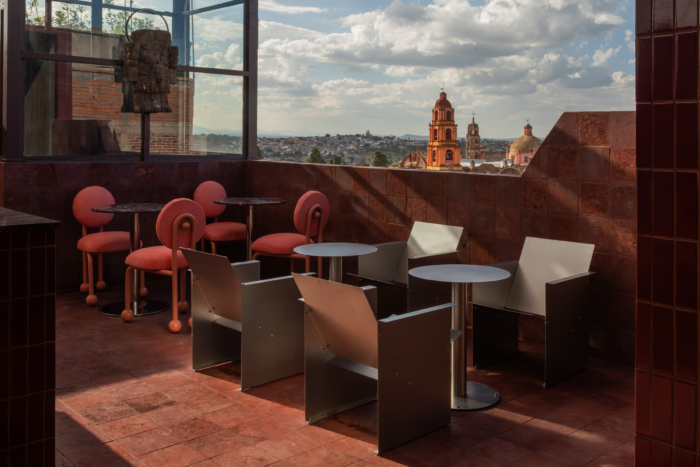
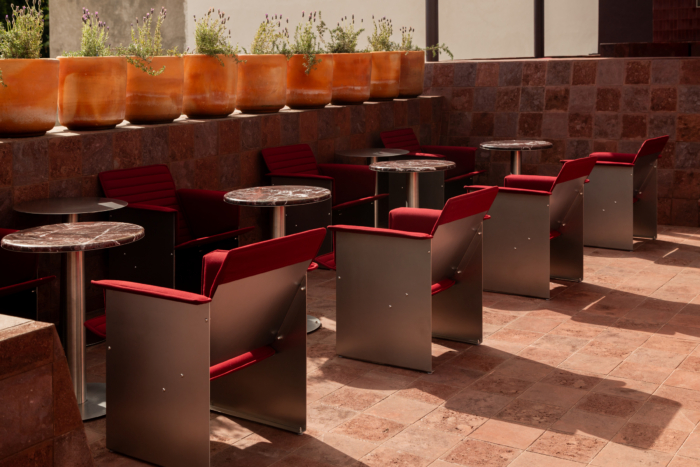
Furniture was conceived as an extension of the architecture. Oaxaca-based artisan Lorena Mendoza crafted the crocodile-shaped wooden benches, while Osla designed stainless steel tables and seating. Pink chairs developed with Los Patrones introduce softness and a more intimate relationship with the body. Additional pieces were custom-designed specifically for the project, creating continuity between furniture, architecture, and atmosphere.
Lighting reinforces this relationship between material and experience. During the day, natural light connects the rooftop to the open sky, the surrounding landscape, and San Miguel de Allende’s colonial architecture. At night, artificial lighting emphasizes textures, shadows, and reflections, giving the space a more intimate and ritual quality.
The landscape incorporates ancestral medicinal herbs through clay pots, integrated planters, and linear steel containers. The cocktail program, developed by Óscar Valle of Licorería Limantour, continues the narrative through ingredients and traditional infusions including garambullo, pulque, ancho chili, copal, and palo santo.
TONANA ultimately approaches hospitality as a multisensory experience in which architecture, interiors, landscape, furniture, cocktails, and cultural references converge. By transforming an existing rooftop within San Miguel de Allende’s historic urban fabric, the project creates a contemporary destination deeply connected to place, memory, and Mexican material culture.
Design: Estudio A-G
Design Lead: Andrés Gutiérrez
Photography: Leandro Bulzzano